 Preview
 Send
Send Share
Share
 Details

 Download
 Similars
 X-Ray
X-Ray Diaporama
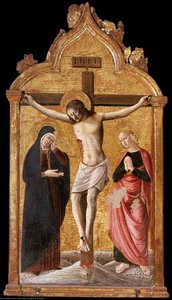
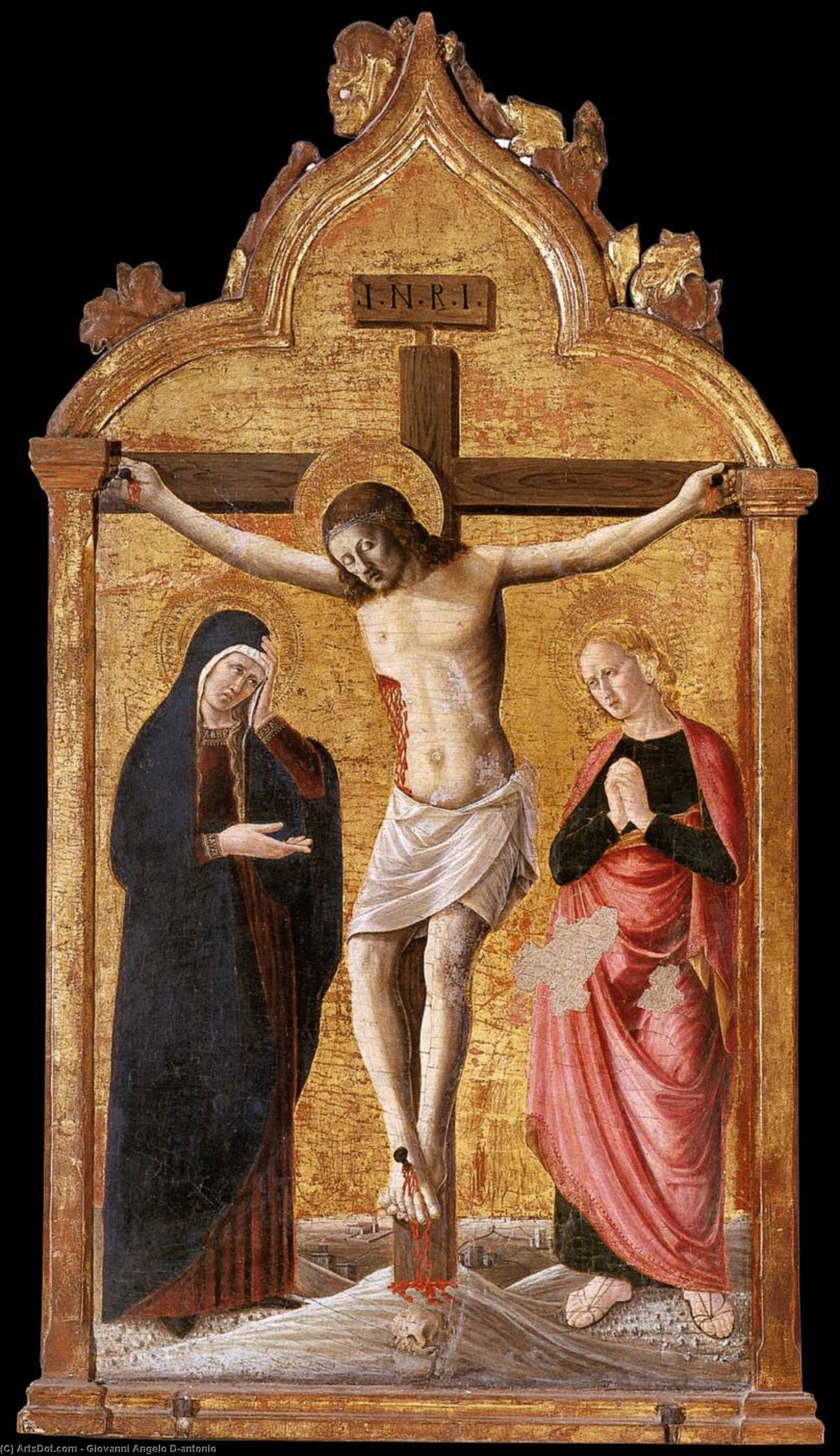
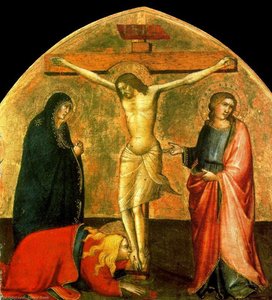
The Crucifixion
 Tempera On Panel
- Early Renaissance
 1456
1456- Renaissance
 126.0 x 76.0 cm
 Collegiata di Santa Maria di Piazza Alta
 Read More
Hand Made Oil Reproduction
Hand-painted oil on canvas in your size and frame, made to order by our artists. ( Buy Print Buy Image)




P118B $10

P118H $10

P118W $10

P438Z $10

P508JH $12

P508YH $12

P805H $10

P805Z $10

P919BZ $10

P919G $10

P919XJ $10

P959ZH $10

P968JZ $12

W106C $8

W218G $10

W218JH $8

W218Y $10

W307PJ $10

W316G $10

W316PJ $8

W316Y $10

W398PJ $8

W4111J $10

W500HY $15

W500JH $15

W692G $12

W849H $8

W940BG $15

W953PJ $8




Pick from our preset sizes that match the artwork's original proportions.

You may enter your own dimensions to fit a specific frame or space. If your selected size does not match the original image's proportions, we will either crop the artwork or extend the painting with additional hand-painted elements. A digital mockup will be sent for your approval before production begins.
Please note that the on-screen preview does not reflect the actual cropping or extension. Only the mockup will accurately show the final composition.
While custom sizes are available, we recommend selecting a dimension from the predefined list to preserve the original proportions.
After order, ArtsDot.com team will email client for instructions and provide a mockup preview
Worldwide Delivery () in 3/4 weeks instead of standard 5 weeks. (17 August). No compromise on quality.

Free Worldwide Express Shipping

High-Quality Linen Canvas

Full Shipping Insurance

Customs Tax Refund Guarantee

True Color Matching Guarantee

60-Day Return Policy (Defects Only)

100% Money-Back Guarantee

Bulk Discount Offer
 Glass option is only available in size under 110 CM

The Crucifixion
Reproduction Medium
Reproduction Size
-


Total Price
$ 313
Artwork Description
A Divine Encounter with the Early Renaissance
In the quiet, hallowed atmosphere of the mid-15th century, certain works of art were conceived not merely as decorations, but as windows into the divine. Giovanni Angelo d’Antonio’s The Crucifixion, dating to 1456, stands as a profound testament to this era of spiritual intensity. This exquisite tempera on panel painting captures the pivotal moment of Christian theology with a raw, devotional power that has captivated viewers for centuries. As one gazes upon the central figure of Christ, suspended upon the cross, there is an immediate sense of being drawn into a sacred narrative where every brushstroke serves to bridge the gap between the earthly and the eternal.
The composition is masterfully structured to direct the soul's eye toward the center of sacrifice. Flanked by the poignant figures of Mary Magdalene and Mary, the mother of James the Less, the scene is a study in human grief and divine endurance. The artist utilizes a shallow perspective, a hallmark of the Early Renaissance, which pushes the figures toward the viewer, creating an intimate, almost confrontational encounter with the sacred event. This lack of deep spatial recession ensures that the emotional weight of the mourning figures remains at the forefront, preventing any architectural distraction from the central tragedy.
Mastery of Light and Pigment
Technically, the work is a triumph of the tempera medium. The smooth application of paint allows for a meticulous rendering of anatomical detail and the heavy, rhythmic folds of drapery that define the figures' presence. D’Antonio employs a dramatic lighting scheme, where an unseen, celestial light source casts deep, evocative shadows across the flesh of Christ and the sorrowful faces of his companions. This chiaroscroll effect lends a sculptural volume to the bodies, making the suffering feel tangible and real.
The color palette is both somber and regal, dominated by rich ochres, deep reds, and midnight blues that emerge from a dark, atmospheric background. These tones are harmoniously balanced by the glint of gold, which lends the panel an ethereal glow. Such a palette does more than provide aesthetic beauty; it reinforces the symbolic weight of the scene, where the warmth of the earth meets the cold reality of death. For the discerning collector or interior designer, this piece offers a sophisticated interplay of light and shadow that can serve as a profound focal point in any curated space.
Symbolism and Emotional Resonance
Beyond its technical brilliance, The Crucifixion is a dense tapestry of religious symbolism. The halo above Christ’s head serves as a singular, luminous circle of divinity amidst the surrounding darkness, while the very structure of the ornate gilded frame acts as a visual reliquary, containing and protecting the sacred scene within. Every element—from the slumped posture of the mourners to the precise rendering of the cross—is designed to evoke a sense of reverence, sorrow, and deep contemplation.
For those seeking to bring a piece of history into their homes, a high-quality reproduction of this masterpiece offers more than just visual elegance. It brings an atmosphere of timelessness and spiritual depth. Whether placed in a quiet study, a grand hallway, or a dedicated gallery space, the painting invites a moment of pause, encouraging the viewer to reflect on the themes of sacrifice and enduring faith that have resonated through the ages.
Related Artworks
Artist Biography
The Enigmatic Portraitist: John Michael Wright (1617–1681)
John Michael Wright, a name often relegated to the footnotes of 17th-century English art history, emerges as a remarkably sophisticated and subtly powerful portraitist. Born in London around 1617 – though his precise origins remain tantalizingly debated – Wright’s life was a tapestry woven with threads of Scottish heritage, Roman artistic influence, and a complex engagement with the volatile political landscape of Restoration England. His work, characterized by an intimate realism and a profound understanding of human psychology, deserves renewed attention as a significant voice within a period dominated by the flamboyant style of Sir Peter Lely.
Wright’s early training unfolded in Edinburgh under the tutelage of George Jamesone, a Scottish painter who instilled in him a foundational knowledge of composition and technique. However, it was his extended sojourn in Rome that truly shaped his artistic vision. Admitted to the prestigious Accademia di San Luca in 1648, Wright immersed himself in the vibrant art scene of the Italian capital, absorbing the techniques of masters like Caravaggio and studying the classical ideals of Renaissance portraiture. This Roman period wasn’t merely a vacation; it was a deliberate investment in his artistic development, providing him with a critical understanding of light, shadow, and the nuances of human expression – elements he would later masterfully employ in his English portraits.
A Court Painter Amidst Turmoil
Returning to England in 1656, Wright quickly established himself as a sought-after portraitist, attracting patronage from both Protestant and Catholic circles. This period coincided with the tumultuous years of the Interregnum and the subsequent Restoration, creating a uniquely challenging environment for an artist navigating religious and political divisions. Wright’s ability to secure commissions from figures across the spectrum – including prominent Catholics like Charles II and James II – speaks volumes about his diplomatic skill and his capacity to transcend sectarian boundaries through his art.
His style diverged subtly from Lely's more overtly polished aesthetic. While Lely favored a glamorous, idealized representation of his subjects, Wright’s portraits possessed a greater sense of introspection and psychological depth. His sitters often appear thoughtful, engaged in private contemplation – a marked contrast to the carefully constructed smiles prevalent in many contemporary portraits. This subtle shift reflects a growing interest in capturing not just outward appearances but also the inner lives of his subjects.
The Influence of Rome and Baroque Techniques
Wright’s artistic development was profoundly influenced by the principles of Baroque painting, particularly as he encountered them during his time in Rome. The dramatic use of chiaroscuro – the interplay of light and shadow – became a defining characteristic of his work, lending depth and intensity to his portraits. He skillfully employed tenebrism, creating strong contrasts between illuminated areas and deep shadows, which heightened the drama and focused attention on key features of the subject’s face and expression. Furthermore, Wright's compositions often featured dynamic arrangements of figures and objects, reflecting a Baroque emphasis on movement and theatricality.
His engagement with the Accademia di San Luca also exposed him to contemporary Italian artists, including Rubens and Van Dyck, whose techniques he subtly incorporated into his own style. This cross-cultural fertilization resulted in a portraiture that was both distinctly English and infused with the sophistication of European artistic trends.
A Legacy of Realism and Psychological Insight
Despite facing periods of relative obscurity following his death in 1681, John Michael Wright’s work has been increasingly recognized for its remarkable realism and psychological insight. His portraits offer a rare glimpse into the inner lives of his subjects, revealing their thoughts, emotions, and personalities with subtle yet profound accuracy. Works like “Portrait of Mrs. Salesbury with her Grandchildren” exemplify this ability to capture not just physical likeness but also the complex relationships between individuals.
Today, Wright’s paintings are treasured within collections worldwide, serving as a testament to his artistic skill and his enduring contribution to the history of English portraiture. Further research continues to shed light on the complexities of his life and career, solidifying his place as a significant, though often overlooked, figure in the art world.
giovanni angelo d'antonio
1617 - 1666 , Italy
Quick Facts
- Artistic Movement Or Style: Baroque portraiture
- Artists Or Movements Influenced By This Artist:
- Velázquez
- Zurbarán
- Artists Who Influenced This Artist: ['George Jamesone']
- Date Of Birth: May 1617
- Date Of Death: July 1694
- Full Name: John Michael Wright
- Nationality: English
- Notable Artworks: ['Portrait of Mrs Salesbury']
- Place Of Birth: London, England
Related Articles
Illuminating Surfaces: A Comprehensive Exploration of Tempera on Panel Painting Techniques & Historical Significance
Explore the rich history & techniques of tempera painting! Discover Renaissance masters like Botticelli & Fra Angelico, conservation insights, and the enduring legacy of this captivating art form. Learn more now!
Tempera's Timeless Legacy: 10 Masterpieces That Revolutionized Art | ArtsDot
Journey through 10 legendary tempera on panel masterpieces by Giotto, Duccio & Botticelli. Explore the history, symbolism & enduring beauty of these iconic artworks. Find museum-quality reproductions for your home at ArtsDot.com.
Illuminating History: A Comprehensive Exploration of Tempera Painting Techniques & Artistic Legacy
Explore the rich history & techniques of tempera painting! Discover Renaissance masters like Botticelli & Fra Angelico, conservation insights, and the enduring legacy of this captivating art form.
Oil on Panel Masters: 10 Paintings That Revolutionized Art |
Journey through 10 legendary 'Oil on Panel' masterpieces by Van Eyck, Bosch & Bruegel. Explore the stories behind these iconic Renaissance & Baroque paintings and find museum-quality art reproductions to elevate your home decor. Discover all masterpieces on !
Fra Angelico's Masterpieces: 25 Renaissance Paintings for Your Home | ArtsDot
Explore 25 breathtaking masterpieces by Fra Angelico, a Renaissance master. Discover the stories behind his iconic frescoes, Annunciations & religious art. Find museum-quality reproductions and elevate your home decor with ArtsDot.com.