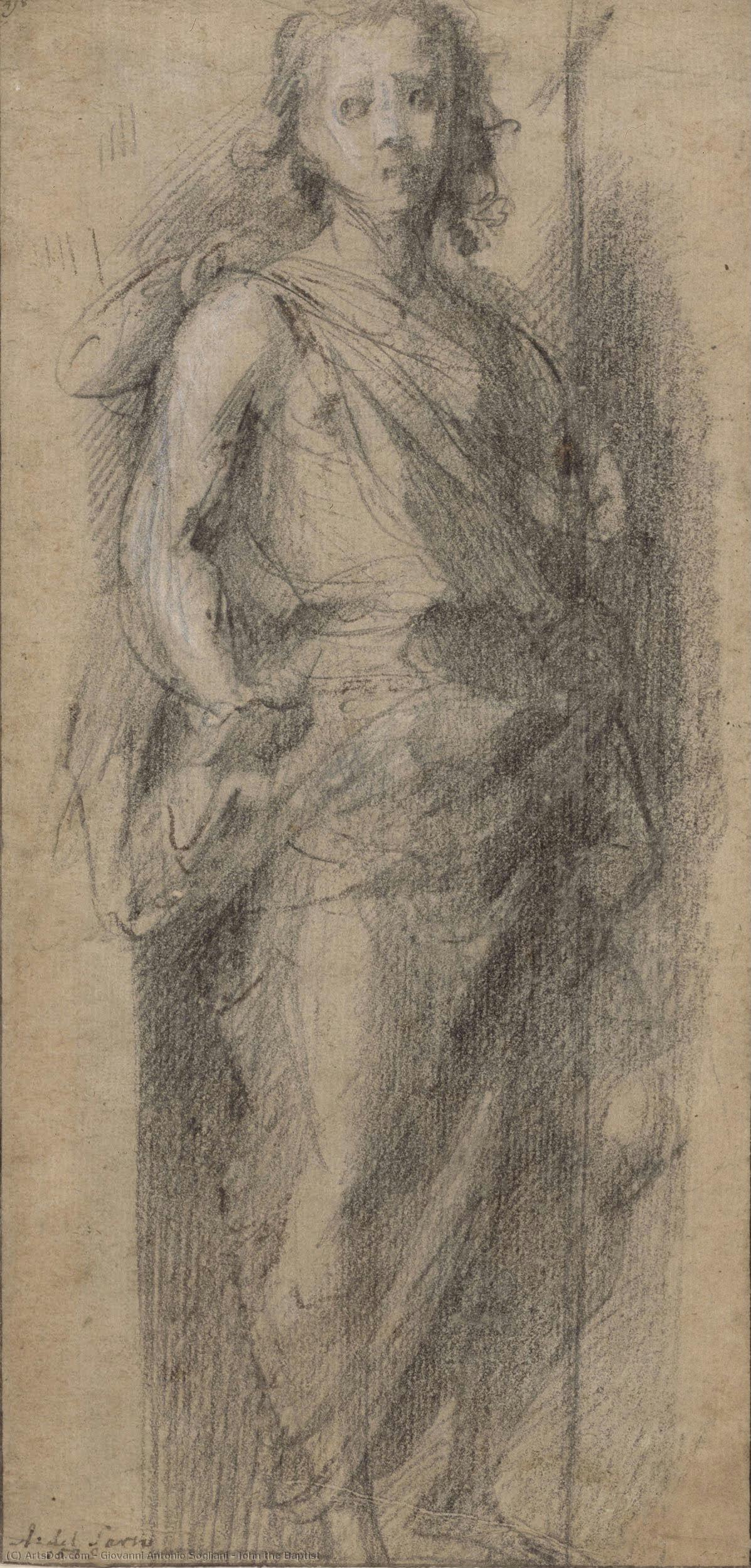
Giovanni Antonio Sogliani’s “John the Baptist”: A Study in Archaic Elegance
The artwork presented here—a monochromatic pencil drawing depicting Saint John the Baptist—offers a glimpse into the artistic sensibilities of Giovanni Antonio Sogliani, a Florentine Renaissance painter whose oeuvre embodies a distinctive blend of tradition and innovation. Produced sometime around 1520-1536, this piece exemplifies Sogliani’s masterful command of draughtsmanship and his unwavering dedication to capturing the essence of classical form within a restrained palette. It stands as a testament to the enduring influence of Lorenzo di Credi and Fra Bartolomeo on Sogliani's artistic development—artists whose stylistic choices profoundly shaped the broader landscape of Florentine painting during the High Renaissance.
- Subject Matter: The drawing portrays Saint John the Baptist in profile, capturing him with a subtle turn of the head towards the viewer. He holds a staff or scepter in his right hand—a symbol laden with significance representing authority and divine power—and wears flowing robes that partially obscure his body, emphasizing his dignified posture and conveying an aura of solemn contemplation.
- Style & Technique: Sogliani’s style is characterized by an archaic quality, reflecting the lasting impact of Credi's training. The artist employs hatching and cross-hatching techniques to build up tone and texture, creating a sense of depth and volume through meticulous attention to detail. Lines are predominantly dark grey, establishing a harmonious balance between form and shadow—a hallmark of Renaissance drawing practice.
- Historical Context: Sogliani’s work emerged during a period marked by intellectual ferment and artistic experimentation. The High Renaissance witnessed a revival of classical ideals and a renewed interest in human anatomy, mirroring the broader cultural currents of the time. Influenced by Fra Bartolomeo's expressive use of color and composition, Sogliani skillfully integrates these elements into his own distinctive visual language.
- Symbolism: The staff held by Saint John symbolizes leadership and divine grace—a motif frequently employed in religious iconography to convey spiritual aspiration and reverence for the sacred. Its placement within the composition directs the viewer’s gaze upwards, reinforcing the figure's connection to celestial realms and elevating its symbolic importance.
- Emotional Impact: Despite its muted tonal range, the drawing possesses a remarkable ability to evoke feelings of serenity and contemplation. The artist’s deliberate rendering of musculature and drapery—executed with painstaking precision—captures not only anatomical accuracy but also an underlying sense of dignity and solemn beauty—qualities that resonate deeply within the viewer's experience.
Materials Used: Graphite pencils on paper. This choice underscores Sogliani’s commitment to traditional artistic methods, prioritizing direct observation and skillful manipulation of tonal values to achieve maximum expressive effect. The resulting image embodies a timeless aesthetic—one rooted in the principles of Renaissance disegno and imbued with an enduring fascination for human form and idealized beauty.
Size: 13 x 27 cm (5.1 x 10.6 inches). This modest scale belies the profound artistic accomplishment contained within the drawing, highlighting Sogliani’s ability to convey complex ideas and emotions through a deceptively simple visual vocabulary.