 Preview
 Send
Send Share
Share
 Details

 Download
 Similars
 X-Ray
X-Ray Diaporama
John the Baptist
 Acrylic On Canvas
- WallArt
- Renaissance
 13.0 x 27.0 cm
 Kupferstichkabinett
 Read More
Hand Made Oil Reproduction
Hand-painted oil on canvas in your size and frame, made to order by our artists. ( Buy Print Buy Image)




P118B $10

P118H $10

P118W $10

P438Z $10

P508JH $12

P508YH $12

P805H $10

P805Z $10

P919BZ $10

P919G $10

P919XJ $10

P959ZH $10

P968JZ $12

W106C $8

W218G $10

W218JH $8

W218Y $10

W307PJ $10

W316G $10

W316PJ $8

W316Y $10

W398PJ $8

W4111J $10

W500HY $15

W500JH $15

W692G $12

W849H $8

W940BG $15

W953PJ $8




Pick from our preset sizes that match the artwork's original proportions.

You may enter your own dimensions to fit a specific frame or space. If your selected size does not match the original image's proportions, we will either crop the artwork or extend the painting with additional hand-painted elements. A digital mockup will be sent for your approval before production begins.
Please note that the on-screen preview does not reflect the actual cropping or extension. Only the mockup will accurately show the final composition.
While custom sizes are available, we recommend selecting a dimension from the predefined list to preserve the original proportions.
After order, ArtsDot.com team will email client for instructions and provide a mockup preview
Worldwide Delivery () in 3/4 weeks instead of standard 5 weeks. (16 August). No compromise on quality.

Free Worldwide Express Shipping

High-Quality Linen Canvas

Full Shipping Insurance

Customs Tax Refund Guarantee

True Color Matching Guarantee

60-Day Return Policy (Defects Only)

100% Money-Back Guarantee

Bulk Discount Offer
 Glass option is only available in size under 110 CM

John the Baptist
Reproduction Medium
Reproduction Size
-


Total Price
$ 263
Artwork Description
Giovanni Antonio Sogliani’s “John the Baptist”: A Study in Archaic Elegance
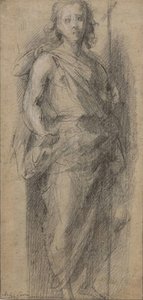
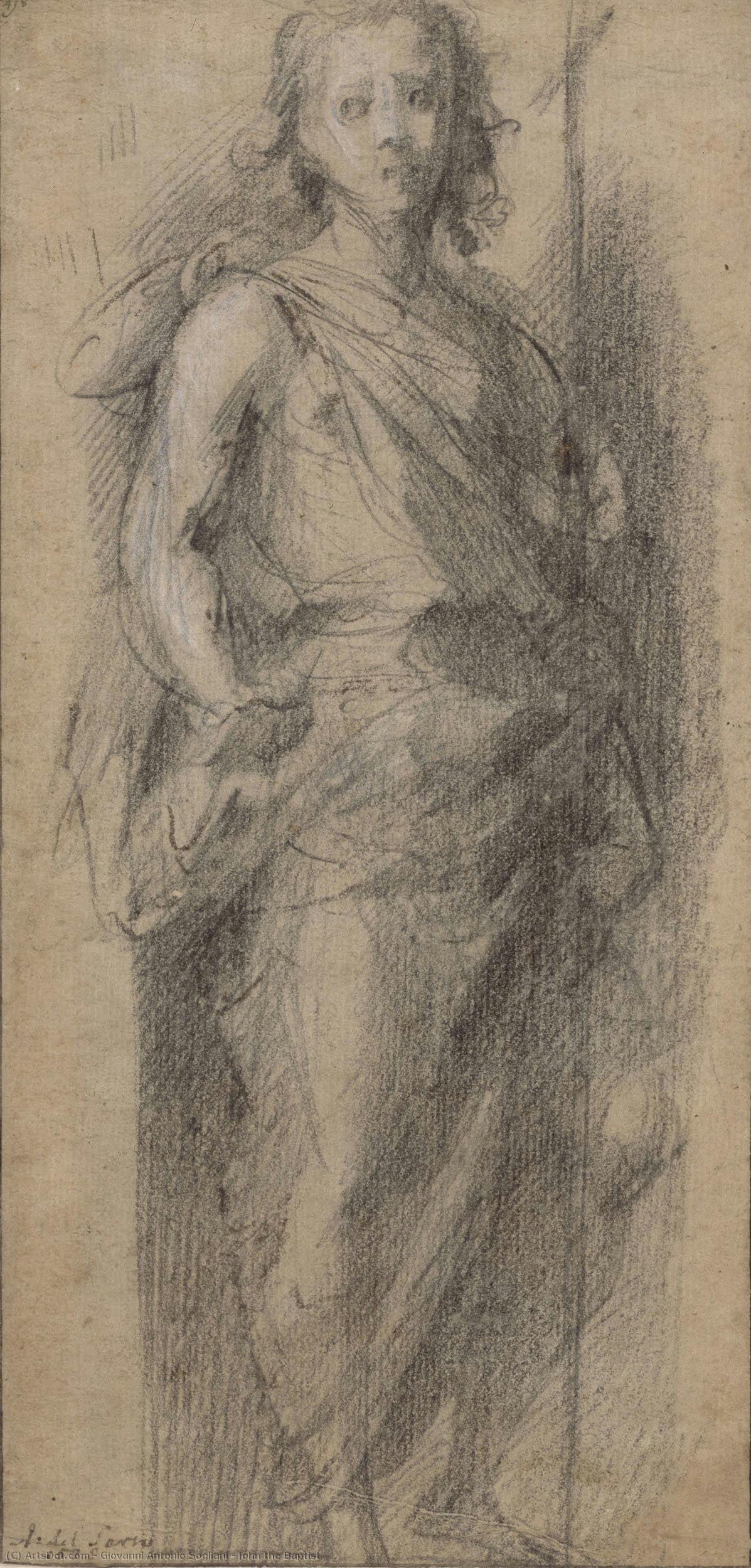
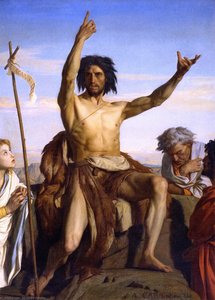
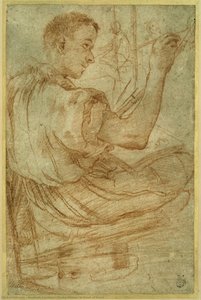
The artwork presented here—a monochromatic pencil drawing depicting Saint John the Baptist—offers a glimpse into the artistic sensibilities of Giovanni Antonio Sogliani, a Florentine Renaissance painter whose oeuvre embodies a distinctive blend of tradition and innovation. Produced sometime around 1520-1536, this piece exemplifies Sogliani’s masterful command of draughtsmanship and his unwavering dedication to capturing the essence of classical form within a restrained palette. It stands as a testament to the enduring influence of Lorenzo di Credi and Fra Bartolomeo on Sogliani's artistic development—artists whose stylistic choices profoundly shaped the broader landscape of Florentine painting during the High Renaissance.- Subject Matter: The drawing portrays Saint John the Baptist in profile, capturing him with a subtle turn of the head towards the viewer. He holds a staff or scepter in his right hand—a symbol laden with significance representing authority and divine power—and wears flowing robes that partially obscure his body, emphasizing his dignified posture and conveying an aura of solemn contemplation.
- Style & Technique: Sogliani’s style is characterized by an archaic quality, reflecting the lasting impact of Credi's training. The artist employs hatching and cross-hatching techniques to build up tone and texture, creating a sense of depth and volume through meticulous attention to detail. Lines are predominantly dark grey, establishing a harmonious balance between form and shadow—a hallmark of Renaissance drawing practice.
- Historical Context: Sogliani’s work emerged during a period marked by intellectual ferment and artistic experimentation. The High Renaissance witnessed a revival of classical ideals and a renewed interest in human anatomy, mirroring the broader cultural currents of the time. Influenced by Fra Bartolomeo's expressive use of color and composition, Sogliani skillfully integrates these elements into his own distinctive visual language.
- Symbolism: The staff held by Saint John symbolizes leadership and divine grace—a motif frequently employed in religious iconography to convey spiritual aspiration and reverence for the sacred. Its placement within the composition directs the viewer’s gaze upwards, reinforcing the figure's connection to celestial realms and elevating its symbolic importance.
- Emotional Impact: Despite its muted tonal range, the drawing possesses a remarkable ability to evoke feelings of serenity and contemplation. The artist’s deliberate rendering of musculature and drapery—executed with painstaking precision—captures not only anatomical accuracy but also an underlying sense of dignity and solemn beauty—qualities that resonate deeply within the viewer's experience.
Related Artworks
Artist Biography
Giovanni Antonio Sogliani: A Florentine Renaissance Painter
Life and Early Career
- Giovanni Antonio Sogliani was born in Florence, Italy, in 1492.
- Details of his early life are scarce, but he became a prominent painter during the High Renaissance period.
- According to Giorgio Vasari’s *Vite*, Sogliani apprenticed with Lorenzo di Credi for two decades. While the length of this apprenticeship is debated, it suggests a strong foundational influence on his artistic style.
- He served as the executor of Lorenzo di Credi's will in 1531, demonstrating a close professional relationship.
Artistic Style and Influences
- Sogliani’s style is characterized by an archaic quality, often attributed to the lasting impact of his training with Lorenzo di Credi.
- He blended elements of traditional Florentine painting with emerging Renaissance techniques.
- Fra Bartolomeo significantly influenced Sogliani’s work, particularly in his use of color and composition, as noted by Vasari in relation to the *Martyrdom of St Acasio*.
- His paintings often feature religious themes, reflecting the prevalent artistic patronage of the time.
Major Works and Commissions
- Martyrdom of St Acasio: Painted for the church of San Lorenzo in Florence, this work showcases Fra Bartolomeo’s influence.
- St Martin: A painting created for the Orsanmichele, a significant public building in Florence.
- St Brigitta Altarpiece: Now housed in the Museo di San Marco, this altarpiece demonstrates Sogliani’s skill in religious iconography.
- Pisa Cathedral Commissions: He received important commissions for the cathedral of Pisa, including three canvases depicting scenes from biblical stories – *Sacrifice of Abel*, *Sacrifice of Cain*, and *Sacrifice of Noah* (completed by May 15, 1533).
- Altarpiece of the Virgin with Child and Saints: Commissioned in 1536.
- Allegory of the Immaculate Conception: Currently located in the Accademia di Belli Arti in Florence.
Artistic Development & Historical Context
- Sogliani worked during a period of significant artistic transition, bridging the High Renaissance and early Mannerism.
- His work reflects the religious fervor and patronage prevalent in Florence during the 16th century.
- He navigated a competitive art scene alongside prominent artists like Perino del Vaga, from whom he took over some commissions at Pisa Cathedral.
Legacy and Significance
- Sogliani’s artistic legacy lies in his preservation of traditional Florentine painting techniques while incorporating Renaissance innovations.
- He trained several pupils, including Sigismondo Foschi and Zanobi di Poggino, continuing the artistic lineage.
- Although not as widely celebrated as some of his contemporaries, Sogliani’s work provides valuable insight into the artistic landscape of 16th-century Florence.
- His paintings remain important examples of religious art from the Renaissance period and are studied for their stylistic characteristics.
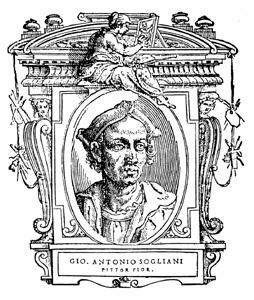
Giovanni Antonio Sogliani
1492 - 1544 , Italy
Quick Facts
- Birth Date: 1492
- Birth Place: Florence, Italy
- Death Date: 1544
- Influenced:
- Sigismondo Foschi
- Zanobi di Poggino
- Influenced By:
- Lorenzo di Credi
- Fra Bartolomeo
- Movement: Renaissance
- Name: Giovanni Antonio Sogliani
- Nationality: Italian
- Notable Works:
- Martyrdom of St Acasio
- St Martin
- St Brigitta altarpiece
- Sacrifice of Abel
- Sacrifice of Cain
- Sacrifice of Noah
- Allegory of the Immaculate Conception
Related Articles

John Singer Sargent's 25 Masterpieces: Portraits & Beyond | ArtsDot
Explore 25 iconic John Singer Sargent paintings – from dazzling portraits to Impressionist landscapes. Discover the stories behind Madame X, El Jaleo & more! Find museum-quality art reproductions and elevate your home decor with ArtsDot.com.

John Constable's Masterpieces: Explore 25 Iconic Landscapes for Your Home
Journey through John Constable's 25 most celebrated landscapes. Explore Romanticism, Dedham Vale & his masterful use of light in iconic paintings like 'Hay Wain'. Find museum-quality art reproductions and elevate your home decor on ArtsDot.com.
The Eloquent Line: Exploring the Artistic Significance of Sketches Across Movements and Media
Explore the profound artistic significance of sketches throughout history. From Renaissance masters to modern innovators like Van Gogh & Guston, discover how these foundational works reveal technique, emotion, and vision. Learn more at ArtsDot.

The Nuances of Graphite: Exploring Emotional Depth & Technical Mastery in Pencil Drawing
Explore the captivating world of graphite drawing! Discover its rich history, master essential techniques like chiaroscuro, and learn how artists evoke emotion through this timeless medium. Expert insights for art enthusiasts.

The Enduring Power of Line: Exploring Themes & Techniques in Drawing Across Art History
Explore the rich history of drawing! Discover key techniques like linear perspective & iconic artists from the Renaissance to modern times. Enhance your art appreciation with ArtsDot.