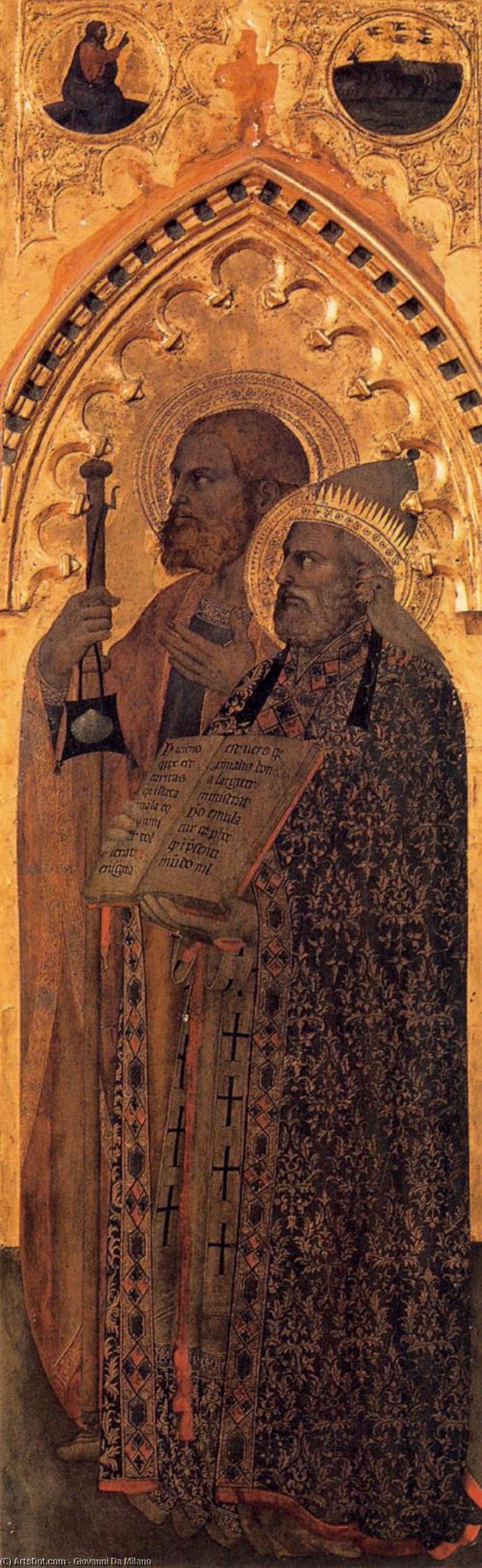
The Ognissanti Polyptych by Giovanni da Milano is a monumental religious painting from Florence (circa 1360), featuring six panels depicting saints and biblical narratives. Its intricate iconography and masterful technique exemplify the burgeoning naturalism of the Proto-Renaissance, marking a pivotal transition from Gothic art to Renaissance aesthetics.
Giovanni da Milano: A Pioneer of Florentine Proto-Renaissance
Giovanni da Milano (1346 – 1369), a name whispered with reverence within the annals of early Renaissance art, stands as an emblem of artistic transformation—a crucial nexus between the opulent grandeur of Gothic tradition and the nascent embrace of naturalism that would herald the flowering of the Florentine Renaissance. Born Giovanni di Jacopo di Guido da Caversaccio in Lombardy around 1346, his artistic journey unfolded primarily within the vibrant intellectual and cultural crucible of Florence during a period defined by seismic shifts in artistic sensibilities and burgeoning humanist ideals. Though tragically curtailed by premature death at just twenty-three, Giovanni’s legacy endures as a testament to his singular contribution—a foundational step toward redefining visual representation and establishing the stylistic bedrock upon which subsequent masters would build their reputations.
- Early Life & Training: Little is known definitively about Giovanni's formative years beyond documented records indicating he resided in Florence from 1346, where he was listed as Johannes Jacobi de Commo amongst foreign painters actively engaged in the artistic ferment of Tuscany. This initial Florentine presence underscores the city’s irresistible allure for artists seeking to transcend stylistic conventions and explore new avenues of creative expression.
- The Ognissanti Polyptych: Giovanni's most celebrated achievement—the monumental Ognissanti Polyptych—commissioned by the Humiliati order in Florence, exemplifies his mastery of Gothic techniques infused with proto-Renaissance sensibilities. Completed circa 1360, this ambitious altarpiece showcases a masterful blend of Byzantine influence and Florentine innovation, reflecting the broader artistic currents shaping the era.
- Stylistic Characteristics: Giovanni’s distinctive style is characterized by an exceptional sensitivity to color—particularly iridescent hues—and meticulous attention to detail. His figures possess remarkable anatomical accuracy, achieved through painstaking observation and rendering techniques reminiscent of Giotto di Bondone, marking a decisive departure from stylized depictions prevalent in preceding generations.
- Symbolism & Narrative: The polyptych’s iconography draws heavily upon biblical narratives, conveying profound theological themes—primarily the Coronation of the Virgin—through carefully orchestrated compositions and symbolic gestures. Giovanni skillfully employs drapery folds and facial expressions to imbue his figures with emotional depth, capturing the spiritual fervor characteristic of medieval piety.
- Legacy & Rediscovery: Despite a tragically brief artistic career, Giovanni da Milano’s influence extended far beyond his immediate output. Giorgio Vassari's account in 1568 cemented his reputation as a pivotal figure in Florentine art history—a testament to the enduring power of observation and artistic innovation. The Uffizi Gallery acquired the polyptych in 1863, ensuring its preservation for posterity and cementing Giovanni’s place among the titans of Proto-Renaissance painting.
The Ognissanti Polyptych: A Masterpiece of Florentine Gothic Revival
The Ognissanti Polyptych—a cornerstone of Florentine art history—represents a remarkable synthesis of Byzantine artistic traditions and emerging naturalistic tendencies. Measuring approximately four metres tall and three metres wide, this monumental altarpiece commissioned by the Humiliati order embodies the spiritual aspirations of Florence during its formative years as a Renaissance centre. Its six panels depict scenes from Genesis, meticulously rendered with vibrant colours and imbued with profound symbolic significance—a testament to Giovanni’s unwavering commitment to conveying theological truths through visual eloquence. The meticulous drapery folds and expressive facial features achieved by Giovanni da Milano are particularly noteworthy, demonstrating his mastery of technique and foreshadowing the stylistic breakthroughs that would characterize the Renaissance movement.
Technique & Materials: A Fusion of Tradition
Giovanni da Milano’s artistic prowess is evident in his masterful manipulation of pigments—primarily iridescent hues—and painstaking application of paint onto gesso panels. His meticulous observation of human anatomy—inspired by Giotto di Bondone—is reflected in the remarkably realistic depiction of figures, achieved through a technique characterized by densely packed lines that capture subtle nuances of form and texture. The use of gold leaf—particularly prominent in the central panel—further enhances the polyptych’s visual splendor and underscores its status as a devotional masterpiece.
Emotional Impact & Artistic Significance
The Ognissanti Polyptych transcends mere decorative grandeur; it communicates profound spiritual emotion—capturing the fervor of medieval piety through carefully orchestrated compositions and symbolic gestures. Giovanni da Milano's ability to convey psychological depth—evident in his expressive facial expressions and nuanced portrayal of human emotions—solidifies his position as a pioneer of Renaissance artistic sensibility, marking a decisive step away from stylized representations toward an idealized vision of humanity rooted in observation and anatomical accuracy. Its enduring influence continues to inspire artists today, serving as a timeless exemplar of artistic excellence and spiritual contemplation.