Giuseppe Arcimboldo’s “Nature Studies (10)” – A Renaissance Rhapsody of Form and Flora
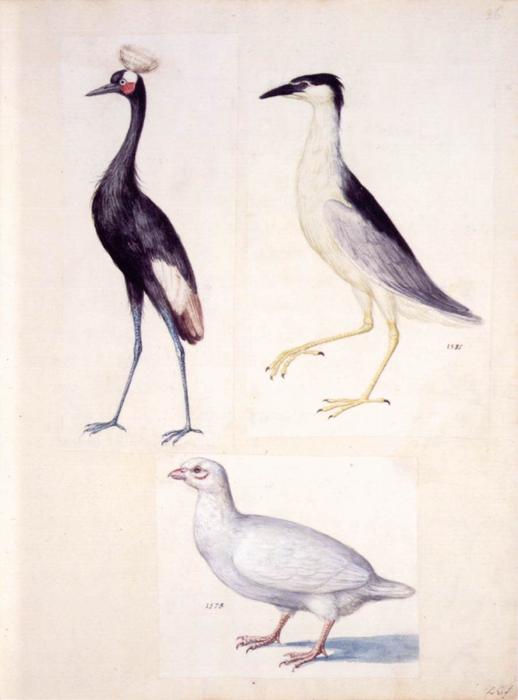
Giuseppe Arcimboldo's "Nature Studies (10)," painted in 1578, isn’t merely a portrait; it’s an immersive theatrical tableau, a vibrant testament to the Renaissance fascination with symbolism, illusion, and the interconnectedness of all things. Housed within the Österreichische Nationalbibliothek in Vienna, this remarkable watercolor on parchment invites viewers into a meticulously constructed world where the boundaries between human and nature blur, creating a deeply affecting and intellectually stimulating experience. The painting’s immediate impact is one of joyous abundance – a riot of avian forms, each rendered with astonishing detail and imbued with distinct personalities. Arcimboldo masterfully employs a technique reminiscent of still life painting, yet elevates it to the level of allegory, transforming commonplace objects into profound visual statements.
A Symphony of Birds: Symbolism in Flight
The four birds depicted – a black heron, an egret, a crane, and a goose – are far more than decorative elements. Each species carries a carefully considered symbolic weight rooted in Renaissance thought. The heron, with its long, elegant beak, often represents wisdom and vigilance, qualities highly valued within the intellectual circles of the time. The white egret, embodying purity and grace, stands as a counterpoint to the heron’s more grounded nature. The crane, a symbol of longevity and fidelity, suggests an enduring connection between humanity and the natural world. Finally, the goose, traditionally associated with abundance and prosperity, anchors the composition with its robust presence. Arcimboldo's skill lies not just in his technical proficiency but in his ability to imbue these familiar creatures with layers of meaning, transforming a simple bird study into a complex meditation on human values.
The Mannerist Masterpiece: A World Reimagined
“Nature Studies (10)” firmly establishes Arcimboldo as a pivotal figure within the Mannerist movement. Mannerism, flourishing in Europe during the late 16th century, rejected the strict realism of the High Renaissance in favor of heightened emotion, dramatic compositions, and an embrace of illusionistic techniques. Arcimboldo’s work exemplifies this shift perfectly. He deliberately manipulates perspective and employs a flattened spatial arrangement to create a sense of theatricality, drawing the viewer into his constructed world. The painting's background, a simple expanse of white, serves only to amplify the vibrant colors and intricate details of the birds themselves, directing all attention towards their captivating forms. His approach aligns with the broader Renaissance interest in Neo-Platonism – the belief that beauty and truth could be found within the natural world—and his art reflects this philosophy through its celebration of organic forms and harmonious relationships.
Beyond Decoration: Arcimboldo’s Political and Personal Statements
While initially commissioned for the court of Rudolf II, Holy Roman Emperor, “Nature Studies (10)” transcends mere decorative function. Arcimboldo's portraits were often laden with political symbolism, reflecting the emperor’s power, wealth, and intellectual pursuits. The careful selection of each bird—its color, posture, and even its arrangement within the composition—served as a visual language, communicating complex ideas about governance, prosperity, and the relationship between humanity and nature. Furthermore, Arcimboldo's life itself was marked by intrigue and transformation; he served multiple emperors, constantly reinventing himself through his art. This fluidity of identity is mirrored in “Nature Studies (10),” where the boundaries between reality and illusion are deliberately blurred, inviting viewers to question their own perceptions and consider the multifaceted nature of human experience.
A Timeless Legacy: Reproduction and Inspiration
Today, "Nature Studies (10)" continues to captivate audiences with its ingenious artistry and profound symbolism. ArtsDot offers meticulously crafted reproductions that faithfully capture Arcimboldo’s original vision, allowing art lovers to bring this remarkable masterpiece into their homes or offices. Beyond its aesthetic appeal, the painting serves as a powerful reminder of the enduring relevance of nature study—a practice that encourages us to observe, appreciate, and understand the world around us with both our eyes and our minds. Consider how Arcimboldo’s innovative approach to portraiture has influenced countless artists throughout history, demonstrating his lasting impact on the evolution of visual art.