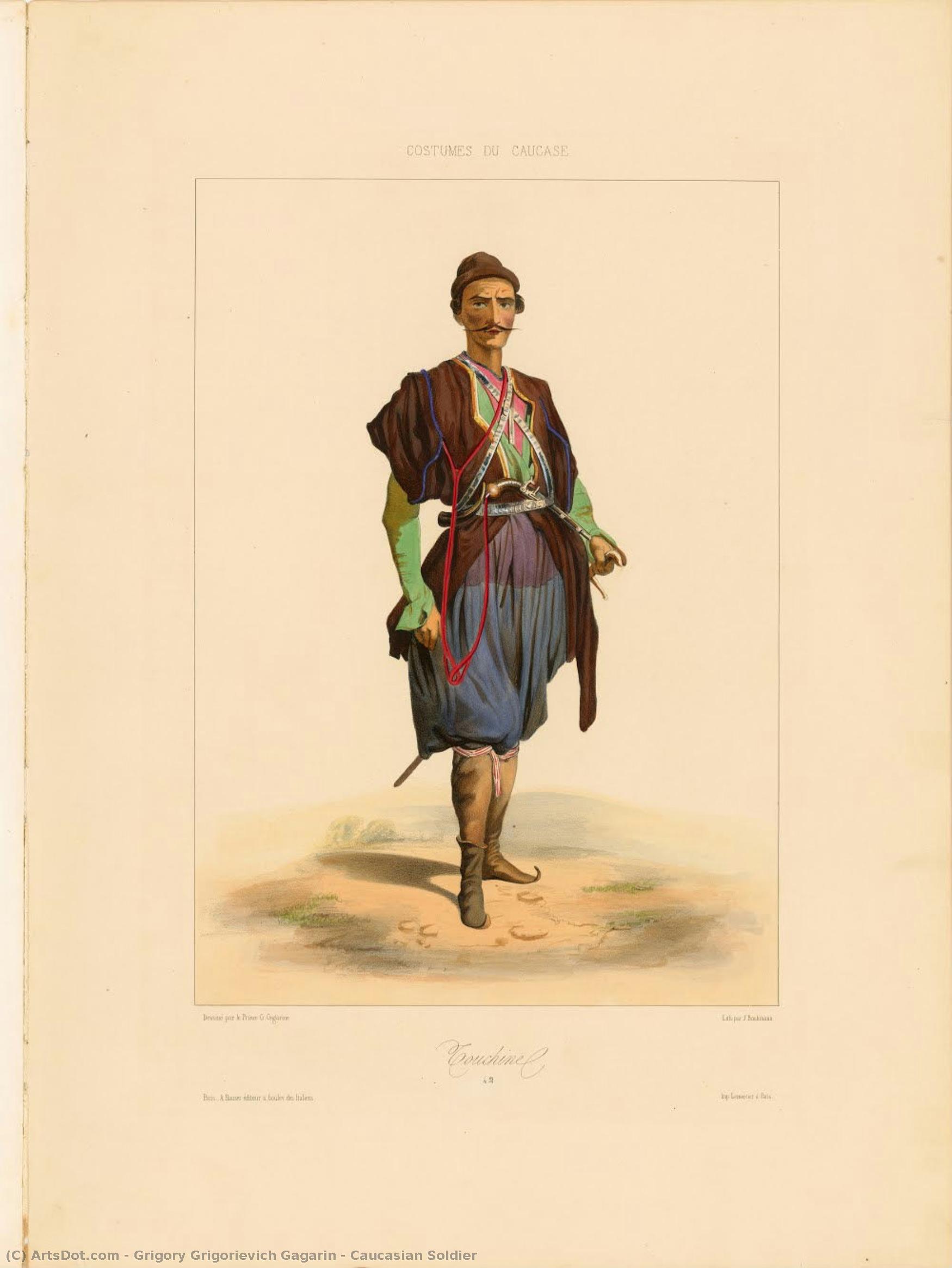
A Portrait of Resilience: Grigory Gagarin’s “Caucasian Soldier”
Grigory Gagarin's "Caucasian Soldier," completed in 1855, transcends mere depiction; it embodies the spirit of a pivotal moment in Russian history – the Caucasian War. More than just an image of military personnel, this painting serves as a testament to Gagarin’s artistic vision and his profound engagement with documenting the diverse cultures inhabiting the Caucasus region during Tsar Nicholas I's ambitious expansionist policies. The artwork resides within the Art Palace of Georgia—Museum of Cultural History in Tbilisi—a treasure trove of Georgian art history.
- Subject Matter: The painting portrays a Circassian soldier standing firmly on earthen ground, radiating quiet determination. Alongside him are two figures – presumably observers – adding depth to the composition and hinting at the broader narrative surrounding military service and cultural exchange during this turbulent era.
- Style & Technique: Gagarin’s masterful brushwork exemplifies Realism, prioritizing accurate representation of form and texture. He skillfully captures the soldier's uniform—detailed stitching and fabric folds—reflecting meticulous observation and a commitment to portraying reality with uncompromising honesty. The muted color palette contributes to an atmosphere of solemn contemplation, emphasizing the seriousness of the subject matter.
- Historical Context: The Caucasian War (1854-1864) pitted Russia against Ottoman vassals and indigenous peoples resisting imperial domination. Gagarin’s work captures this dynamic tension, reflecting the anxieties and aspirations of a nation striving for territorial dominance while simultaneously grappling with questions of cultural understanding. Duma's observation about the theatre building’s resemblance to Pompey Theatre underscores Gagarin’s artistic influences and his desire to elevate art beyond mere documentation.
- Symbolism: The soldier’s posture conveys resilience and unwavering resolve—a visual metaphor for Russia’s struggle against formidable adversaries. Furthermore, the inclusion of two observers symbolizes the importance of perspective in interpreting historical events and underscores Gagarin's artistic intention to provoke reflection on themes of duty, courage, and cultural interaction.
- Emotional Impact: “Caucasian Soldier” evokes a sense of solemn grandeur and contemplative introspection. The painting’s subdued tones and meticulous detail invite viewers to contemplate the human cost of conflict while simultaneously appreciating the beauty inherent in portraying historical narratives with artistic precision. It stands as an enduring symbol of Russia's ambition and its engagement with the cultural landscape of the Caucasus.
Further Exploration: Gagarin’s Artistic Influences
Grigory Gagarin’s artistic journey was profoundly shaped by his association with luminaries like Alexander Pushkin and Mikhail Lermontov, whose literary works explored themes of heroism and national identity—influences that undeniably permeated Gagarin's visual representations. His dedication to capturing the essence of Georgian culture is evident in his meticulous depictions of architectural landmarks and ethnographic subjects.
Provenance & Significance
Currently housed within the Art Palace of Georgia – Museum of Cultural History, Tbilisi, “Caucasian Soldier” represents a cornerstone of Georgian art heritage. Its preservation ensures that future generations can appreciate Gagarin’s artistic legacy and contemplate the enduring themes embedded within this remarkable artwork.