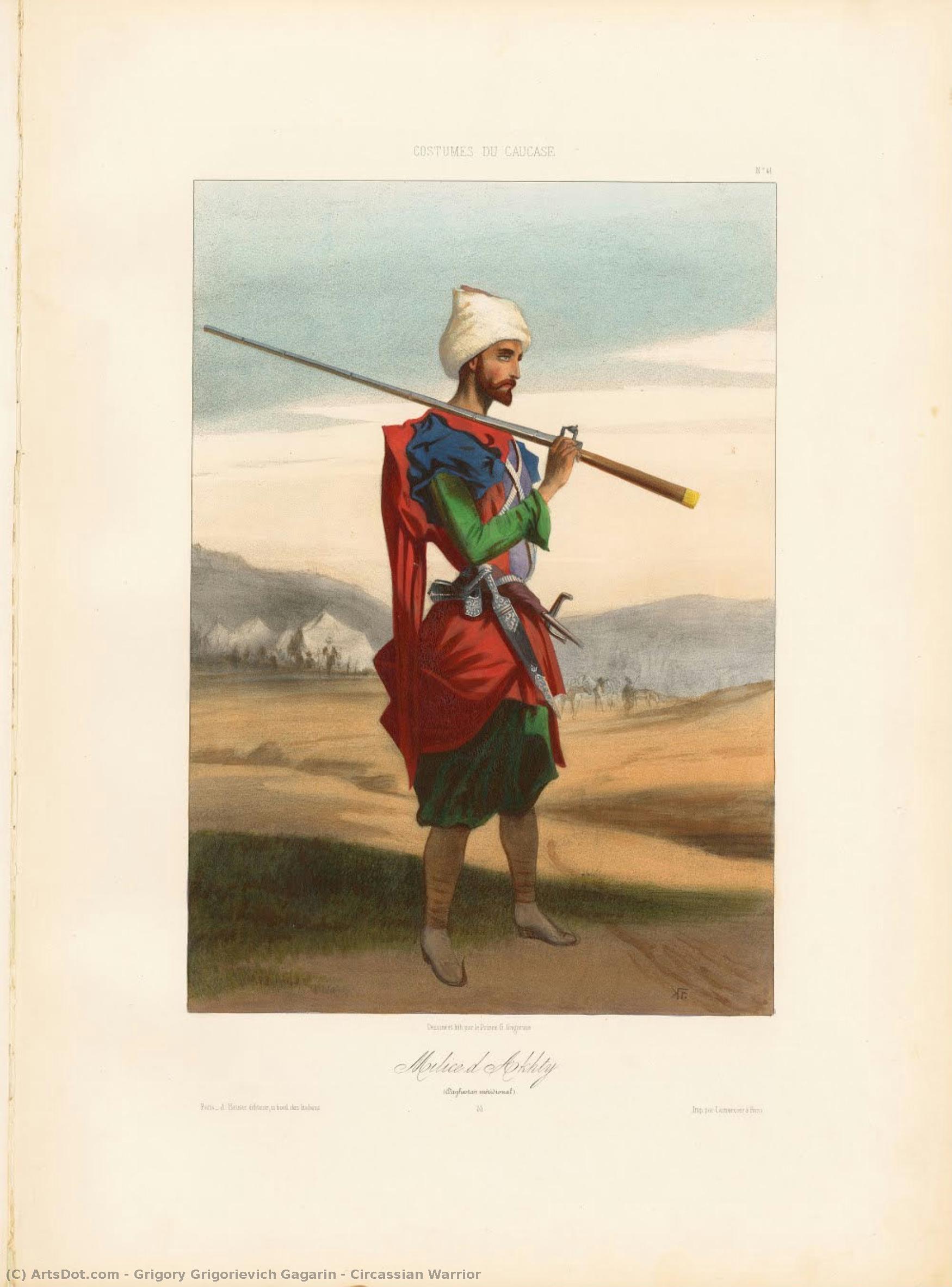
Grigory Gagarin’s ‘Circassian Warrior,’ painted in 1855, captures the spirit of Caucasus mountaineers resisting Russian dominion. Executed with guache on paper, this artwork exemplifies Gagarin’s dedication to documenting Caucasian life and culture, mirroring themes explored in Pushkin's literary works.
Explore Grigory Gagarin’s captivating Circassian Warrior (1855), a masterful depiction of Cauc
Circassian Warrior: A Window Into Georgian Artistic Patronage
Grigory Gagarin’s “Circassian Warrior,” completed in 1855, stands as a remarkable testament to the burgeoning artistic spirit of Tbilisi during Mikhail Vorontsov’s reign – a period marked by ambitious cultural endeavors and a fascination with documenting the Caucasus region. This painting isn't merely a depiction of a warrior; it’s an embodiment of Georgian identity and a reflection of the Romantic ideals prevalent in European art at the time.
Subject Matter & Composition
The artwork portrays a Circassian chieftain, rendered with meticulous detail against a stark desert backdrop. The central figure dominates the canvas, positioned confidently amidst swirling sands, holding aloft a formidable sword – a symbol of strength and defiance. Surrounding him are several attendants, subtly conveying a narrative of leadership and protection. Gagarin’s masterful composition utilizes diagonal lines to create dynamism and emphasize the warrior's commanding presence.
Style & Technique: Romantic Realism
Gagarin adhered to Romantic realism, blending expressive brushstrokes with accurate observation of human anatomy and costume. The artist skillfully employed guache pigments on paper – a technique favored for its vibrancy and luminosity—to capture the textures of fabric and skin. Notice the subtle shading that lends depth to the warrior’s face and torso, demonstrating Gagarin's dedication to portraying his subject with psychological nuance.
Historical Context & Patronage
Commissioned by Mikhail Vorontsov, Governor-General of Georgia, “Circassian Warrior” exemplifies the artistic patronage system characteristic of the era. Vorontsov recognized the importance of elevating Georgian culture and commissioned artists like Gagarin to create works that celebrated the region’s heritage. The painting's creation coincided with Duma’s visit to Tbilisi and Gagarin’s fascination with documenting Caucasian peoples, reflecting a broader interest in ethnographic studies fueled by Romanticism.
Symbolism & Emotional Impact
Beyond its visual beauty, “Circassian Warrior” carries symbolic weight. The warrior represents courage, resilience, and resistance against oppression – themes central to the Romantic movement’s engagement with political upheaval. Gagarin's portrayal captures not only physical prowess but also inner determination, conveying a powerful message about upholding honor and defending one’s beliefs. Viewing this artwork evokes feelings of admiration for bravery and contemplation on the enduring spirit of cultural preservation.
The Art Palace Legacy
Today, “Circassian Warrior” resides within the Art Palace of Georgia – Museum of Cultural History in Tbilisi—a symbol of Georgian artistic heritage. Its inclusion in Duma’s sketchbook underscores Gagarin's contribution to capturing the essence of Caucasian culture and serves as an inspiring reminder of the transformative power of art.