A Portrait of Georgian Culture: Grigory Gagarin’s “Circassian Woman”
Grigory Grigorievich Gagarin (1810-1893) stands as a pivotal figure in Russian art history, celebrated not only for his diplomatic service but also for his profound engagement with the artistic spirit of his era. Born into the noble Rurikid family – descendants of Vladimir I – Gagarin’s upbringing instilled within him an appreciation for both intellectual pursuits and aesthetic excellence. Recognizing his innate talent, he pursued private lessons with Karl Briullov, arguably Russia's foremost painter of the Romantic period, shaping his artistic vision and establishing a connection to the prevailing stylistic currents. This formative influence would ultimately manifest in his enduring legacy as an artist who captured the essence of Georgian culture during the Victorian age.
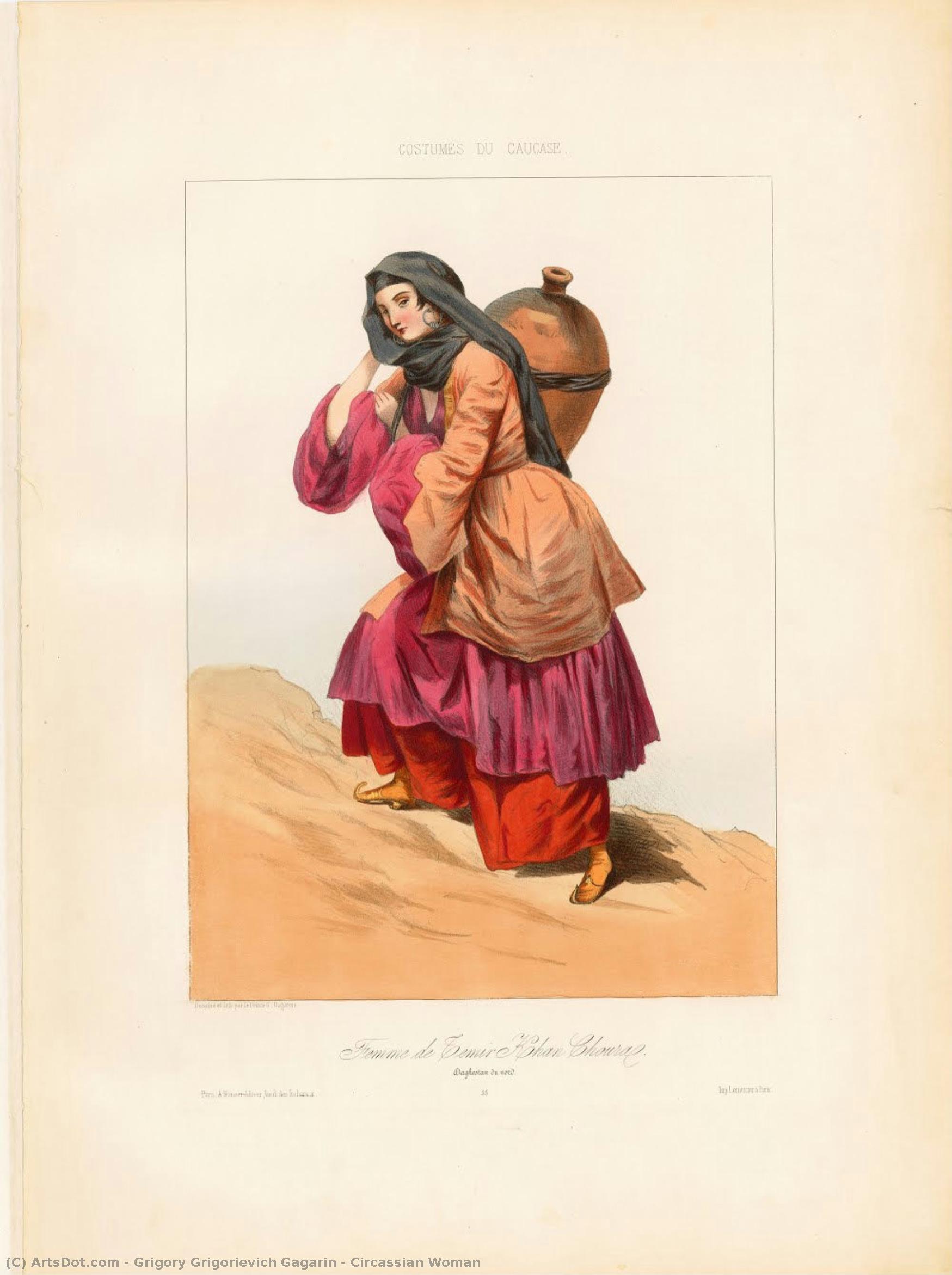
- Subject Matter: Gagarin’s “Circassian Woman” (1855) depicts a Caucasian woman carrying a large jug on her back while ascending a hillside – a scene emblematic of daily life in Tbilisi, Georgia. The painting portrays a woman dressed in traditional Georgian attire, highlighting the region's distinctive cultural heritage.
- Style: The artwork embodies Romantic idealism, characterized by an emphasis on emotion and dramatic narrative. Gagarin skillfully employs chiaroscuro – the interplay of light and shadow – to sculpt form and convey depth, mirroring the artistic conventions prevalent during his time.
Technique & Materials
Gagarin’s meticulous approach to technique is evident in his use of oil paints on canvas. He meticulously blended pigments to achieve subtle tonal variations, capturing the textures and nuances of fabric and skin with remarkable precision. The artist's attention to detail extends beyond mere representation; he strives to evoke a palpable sense of atmosphere—the warmth of the sun, the ruggedness of the terrain—creating an immersive experience for the viewer. Furthermore, Gagarin’s preparatory sketches reveal his dedication to capturing accurate anatomical proportions and conveying psychological nuance.
Historical Context & Significance
Painted during Gagarin's tenure as ambassador to Italy (1848-1855), “Circassian Woman” reflects the broader fascination with Caucasian landscapes and peoples that gripped European artistic circles. The painting aligns perfectly with the Romantic movement’s preoccupation with exotic locales and idealized portrayals of humanity—a reaction against Enlightenment rationalism. Gagarin's involvement in Tbilisi’s cultural revitalization – including the construction of a theater modeled after Pompey Theatre and the restoration of frescoes in historic churches – underscores his commitment to preserving Georgian heritage and elevating artistic standards.
Symbolism & Emotional Impact
The woman carrying the jug symbolizes resilience, strength, and practicality—qualities admired within Georgian culture. The uphill climb represents aspiration and perseverance, mirroring the challenges faced by individuals striving for progress and fulfillment. Gagarin’s masterful rendering of facial expressions conveys a quiet dignity and contemplative gaze, inviting viewers to contemplate themes of femininity, tradition, and human connection. Ultimately, “Circassian Woman” transcends mere visual representation; it serves as a poignant testament to Gagarin's artistic vision and his enduring contribution to Georgian art history.
Location & Preservation
“Circassian Woman” resides at the Art Palace of Georgia – Museum of Cultural History (Tbilisi, Georgia), safeguarding its artistic integrity for future generations. Its dimensions are 59 x 42 cm and it remains a treasured exemplar of Romantic painting—a captivating glimpse into Tbilisi’s cultural landscape during the Victorian era.