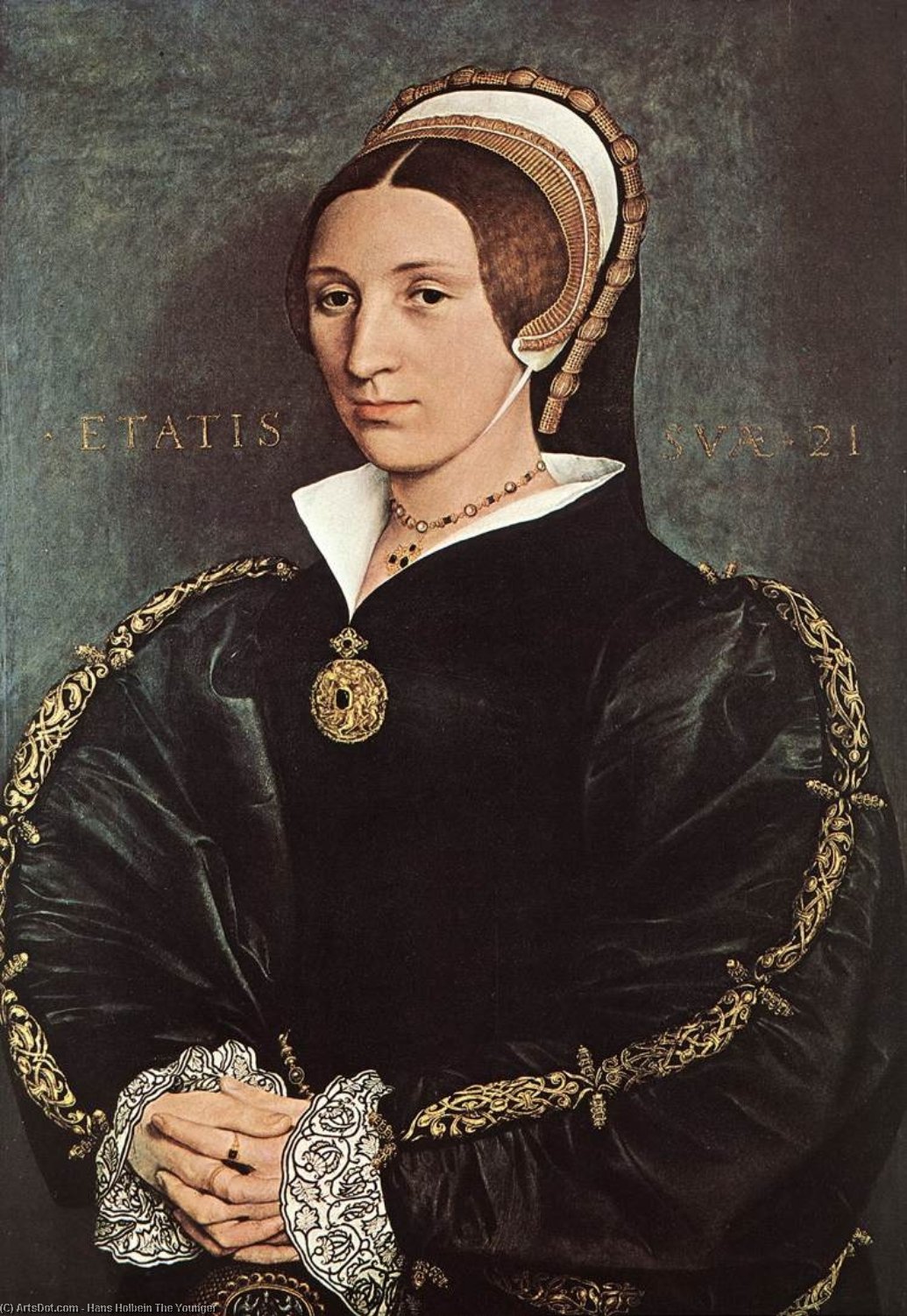
Portrait of Catherine Howard: A Glimpse into Tudor Intrigue
Hans Holbein the Younger’s “Portrait of Catherine Howard” – a captivating oil on panel painting housed within the Toledo Museum of Art – is more than just a likeness; it's a meticulously crafted window into the tumultuous world of 16th-century England. Completed in 1540, this remarkable artwork transcends mere representation, offering a poignant glimpse into the life and character of a young queen caught amidst political intrigue and personal tragedy. Holbein’s skill lies not simply in his ability to capture physical features, but in his profound understanding of how appearance can convey status, personality, and even unspoken anxieties.
The painting immediately draws the eye with Catherine Howard's elegant attire – a testament to the opulent fashion favored by the English court during the Renaissance. The deep black dress, adorned with delicate white lace around her neck and sleeves, speaks volumes about her position as Queen of England. A long pearl necklace, a symbol of wealth and refinement, rests against her skin, while a ruffled collar adds a touch of aristocratic grace. These details aren’t merely decorative; they are carefully chosen to project an image of regal beauty and composure – qualities that were desperately sought after by Henry VIII in his quest for a stable marriage.
The Artist: Hans Holbein the Younger - A Master of Psychological Portraiture
Hans Holbein the Younger, a German artist and printmaker who flourished during the Northern Renaissance, was renowned for his exceptional portraiture skills. He served as King’s Painter to Henry VIII, a position that afforded him unparalleled access to the royal court and its most prominent figures. Unlike many of his contemporaries who focused solely on external appearances, Holbein possessed a remarkable ability to delve beneath the surface, capturing not just what his subjects looked like but also their inner character and emotional state. This is particularly evident in “Portrait of Catherine Howard,” where a subtle hint of melancholy seems to linger in her eyes – a foreshadowing of the tragic events that would ultimately define her life.
Holbein’s meticulous attention to detail is immediately apparent. The rendering of fabric, skin texture, and jewelry is astonishingly realistic, showcasing his mastery of oil painting techniques. He employed sfumato—a subtle blurring technique—to soften edges and create a sense of depth and atmosphere. The background, featuring a wall adorned with text, likely served as a didactic element, perhaps providing information about the subject or referencing relevant historical events. The inclusion of this textual backdrop further emphasizes the painting’s role as both a portrait and a document of its time.
A Portrait Within a Turbulent Era
“Portrait of Catherine Howard” was painted during a pivotal moment in English history – the reign of Henry VIII, a period marked by religious upheaval, political maneuvering, and dramatic personal transformations. The break with Rome, the assertion of royal authority over the Church, and the relentless pursuit of a male heir fueled intense social and artistic change. Holbein’s work reflects this dynamic environment, capturing not only the outward appearance of royalty but also the underlying currents of power and uncertainty that shaped their lives.
Catherine Howard herself was a figure of considerable historical significance – the fifth wife of Henry VIII, a woman whose youthful beauty and charm initially captivated the King. However, her life was tragically short-lived, marred by scandal, adultery, and ultimately, execution. The painting serves as a poignant reminder of this dramatic trajectory, offering a glimpse into the fate of a young queen caught in the crosscurrents of Tudor politics.
Recreating History: A ArtsDot Reproduction
ArtsDot offers meticulously crafted, handmade oil painting reproductions of “Portrait of Catherine Howard,” allowing art enthusiasts to own a piece of this iconic artwork. Our skilled artisans replicate Holbein’s techniques and attention to detail with the utmost precision, ensuring that each reproduction captures the essence of the original while retaining its own unique character. These reproductions provide an affordable and authentic way to appreciate the artistry of Hans Holbein the Younger and immerse oneself in the captivating world of Tudor England.
Discover more about Hans Holbein the Younger and his works on ArtsDot.com.