A Moment of Stillness: Exploring Henri Fantin-Latour’s *Asters and Fruit on a Table*
Henri Fantin-Latour's *Asters and Fruit on a Table* is more than just a depiction of commonplace objects; it’s a carefully constructed meditation on beauty, light, and the quiet dignity of everyday life. Painted in 1880, this remarkable work exemplifies the artist’s mastery of Realism, offering a glimpse into his profound understanding of color, texture, and composition – qualities that secured his place as one of the most significant figures in late 19th-century French art.
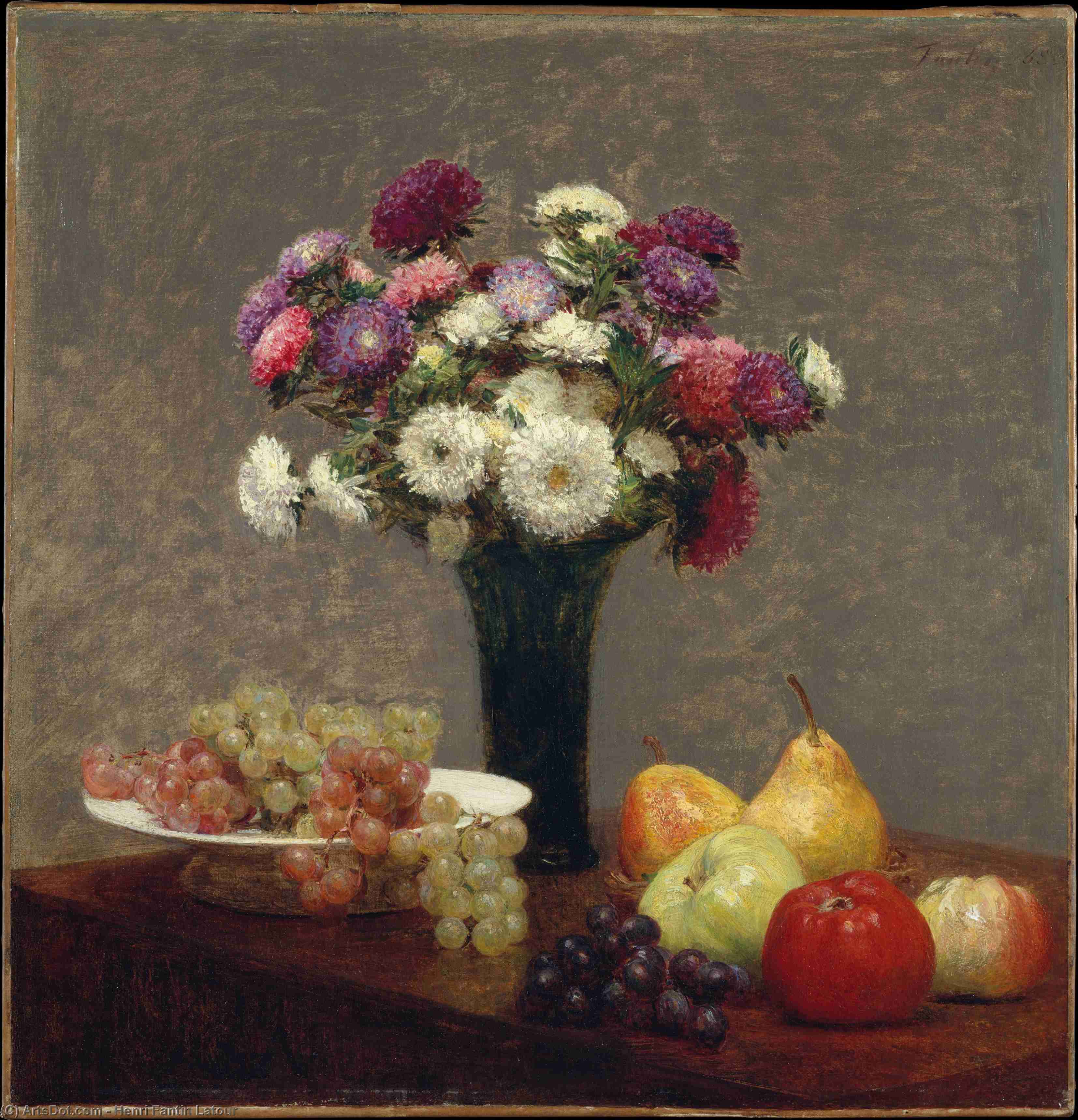
- Subject Matter: The scene is deceptively simple: a table laden with an assortment of fruits—apples and grapes—interspersed with vibrant asters, their delicate purple blooms providing a striking contrast to the richer tones of the produce. This deliberate choice of subject matter reflects Fantin-Latour’s fascination with capturing the transient beauty of nature, elevating the ordinary to the realm of art.
- Style & Technique: As a key proponent of Realism, Fantin-Latour eschewed romanticized or idealized depictions in favor of an honest and meticulous representation of reality. His brushwork is remarkably smooth and controlled, creating a sense of polished elegance while simultaneously conveying the tactile qualities of each object – the waxy sheen of the apples, the plumpness of the grapes, the velvety texture of the flowers.
The Language of Light and Color
Fantin-Latour’s genius lies in his masterful manipulation of light and color. The painting is characterized by a muted palette dominated by earthy tones – ochres, browns, and greens – punctuated by the vibrant purple of the asters. This restrained use of color creates an atmosphere of serene contemplation, inviting the viewer to lose themselves in the subtle nuances of the scene. The artist’s careful attention to light sources—likely natural daylight—casts soft shadows that enhance the three-dimensionality of the objects and adds a remarkable sense of depth to the composition. The play of light on the fruit's surfaces is particularly noteworthy, suggesting a delicate understanding of how light interacts with different textures.
Historical Context & Symbolism
Painted in 1880, *Asters and Fruit on a Table* reflects the broader artistic currents of its time. The Realist movement, championed by artists like Gustave Courbet, sought to depict contemporary life without idealization or sentimentality. Fantin-Latour’s work aligns with this trend, offering a realistic portrayal of still life that was both aesthetically pleasing and intellectually engaging. The inclusion of asters, often associated with remembrance and mourning, subtly introduces an element of melancholy, perhaps reflecting the artist's own personal reflections on mortality and beauty.
A Legacy of Serenity
*Asters and Fruit on a Table* is a testament to Fantin-Latour’s ability to transform simple objects into works of profound emotional resonance. Its quiet elegance and meticulous detail continue to captivate viewers, offering a moment of stillness in an increasingly chaotic world. Reproductions of this iconic painting, meticulously crafted by ArtsDot.com, allow art lovers everywhere to experience the beauty and tranquility of Fantin-Latour’s vision.