 Preview
 Send
Send Share
Share
 Details

 Download
 Similars
 X-Ray
X-Ray Diaporama
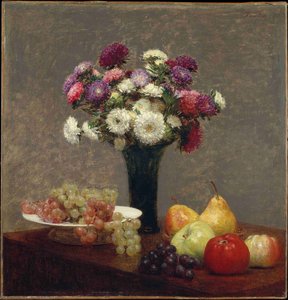
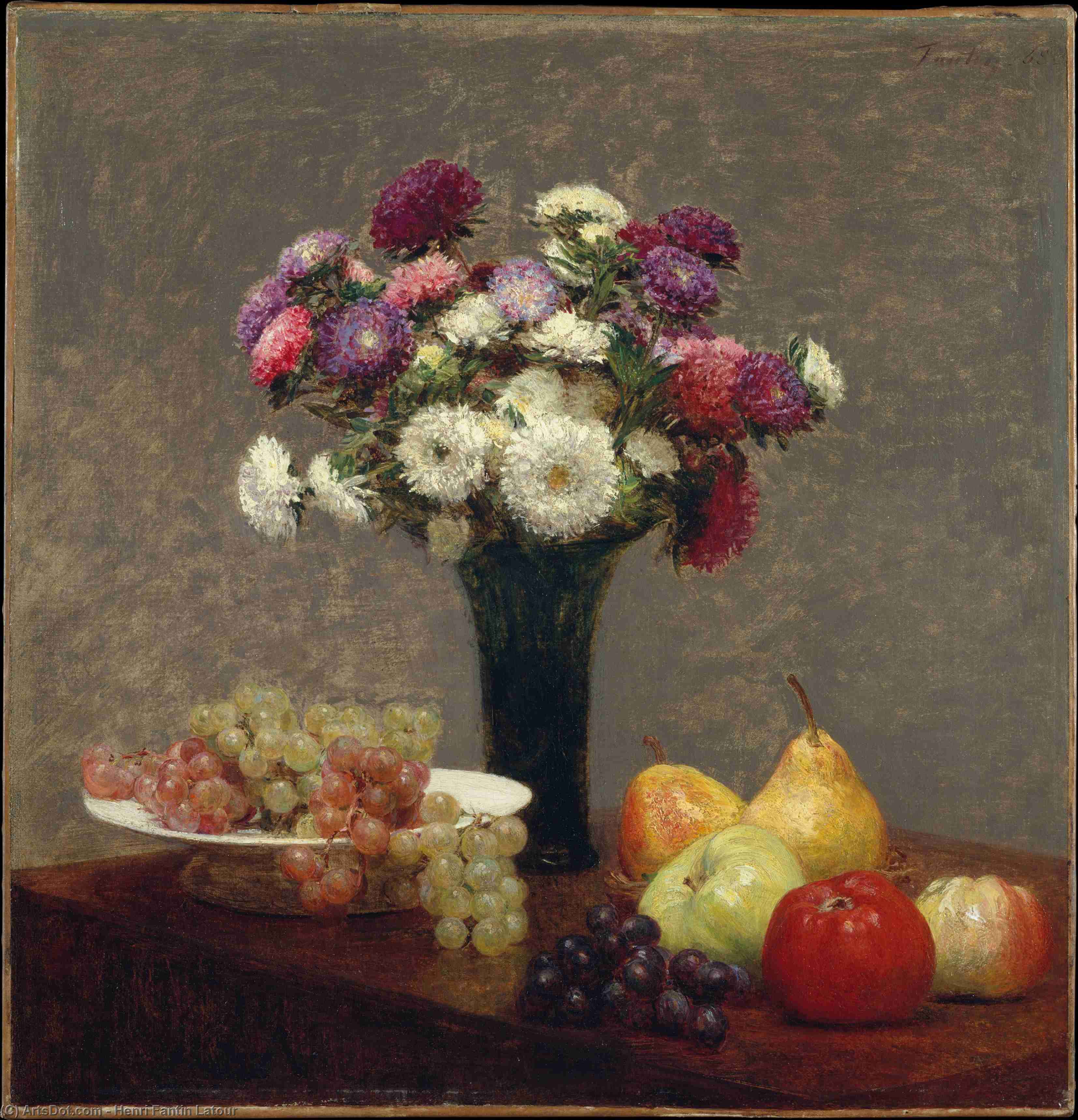
Asters and Fruit on a Table


 Read More
Hand Made Oil Reproduction
Hand-painted oil on canvas in your size and frame, made to order by our artists. ( Buy Print Buy Image)




P118B $10

P118H $10

P118W $10

P438Z $10

P508JH $12

P508YH $12

P805H $10

P805Z $10

P919BZ $10

P919G $10

P919XJ $10

P959ZH $10

P968JZ $12

W106C $8

W218G $10

W218JH $8

W218Y $10

W307PJ $10

W316G $10

W316PJ $8

W316Y $10

W398PJ $8

W4111J $10

W500HY $15

W500JH $15

W692G $12

W849H $8

W940BG $15

W953PJ $8




Pick from our preset sizes that match the artwork's original proportions.

You may enter your own dimensions to fit a specific frame or space. If your selected size does not match the original image's proportions, we will either crop the artwork or extend the painting with additional hand-painted elements. A digital mockup will be sent for your approval before production begins.
Please note that the on-screen preview does not reflect the actual cropping or extension. Only the mockup will accurately show the final composition.
While custom sizes are available, we recommend selecting a dimension from the predefined list to preserve the original proportions.
After order, ArtsDot.com team will email client for instructions and provide a mockup preview
Worldwide Delivery () in 3/4 weeks instead of standard 5 weeks. (16 August). No compromise on quality.

Free Worldwide Express Shipping

High-Quality Linen Canvas

Full Shipping Insurance

Customs Tax Refund Guarantee

True Color Matching Guarantee

60-Day Return Policy (Defects Only)

100% Money-Back Guarantee

Bulk Discount Offer
 Glass option is only available in size under 110 CM

Asters and Fruit on a Table
Reproduction Medium
Reproduction Size
-


Total Price
$ 263
Artwork Description
A Moment of Stillness: Exploring Henri Fantin-Latour’s *Asters and Fruit on a Table*
Henri Fantin-Latour's *Asters and Fruit on a Table* is more than just a depiction of commonplace objects; it’s a carefully constructed meditation on beauty, light, and the quiet dignity of everyday life. Painted in 1880, this remarkable work exemplifies the artist’s mastery of Realism, offering a glimpse into his profound understanding of color, texture, and composition – qualities that secured his place as one of the most significant figures in late 19th-century French art.
- Subject Matter: The scene is deceptively simple: a table laden with an assortment of fruits—apples and grapes—interspersed with vibrant asters, their delicate purple blooms providing a striking contrast to the richer tones of the produce. This deliberate choice of subject matter reflects Fantin-Latour’s fascination with capturing the transient beauty of nature, elevating the ordinary to the realm of art.
- Style & Technique: As a key proponent of Realism, Fantin-Latour eschewed romanticized or idealized depictions in favor of an honest and meticulous representation of reality. His brushwork is remarkably smooth and controlled, creating a sense of polished elegance while simultaneously conveying the tactile qualities of each object – the waxy sheen of the apples, the plumpness of the grapes, the velvety texture of the flowers.
The Language of Light and Color
Fantin-Latour’s genius lies in his masterful manipulation of light and color. The painting is characterized by a muted palette dominated by earthy tones – ochres, browns, and greens – punctuated by the vibrant purple of the asters. This restrained use of color creates an atmosphere of serene contemplation, inviting the viewer to lose themselves in the subtle nuances of the scene. The artist’s careful attention to light sources—likely natural daylight—casts soft shadows that enhance the three-dimensionality of the objects and adds a remarkable sense of depth to the composition. The play of light on the fruit's surfaces is particularly noteworthy, suggesting a delicate understanding of how light interacts with different textures.
Historical Context & Symbolism
Painted in 1880, *Asters and Fruit on a Table* reflects the broader artistic currents of its time. The Realist movement, championed by artists like Gustave Courbet, sought to depict contemporary life without idealization or sentimentality. Fantin-Latour’s work aligns with this trend, offering a realistic portrayal of still life that was both aesthetically pleasing and intellectually engaging. The inclusion of asters, often associated with remembrance and mourning, subtly introduces an element of melancholy, perhaps reflecting the artist's own personal reflections on mortality and beauty.
A Legacy of Serenity
*Asters and Fruit on a Table* is a testament to Fantin-Latour’s ability to transform simple objects into works of profound emotional resonance. Its quiet elegance and meticulous detail continue to captivate viewers, offering a moment of stillness in an increasingly chaotic world. Reproductions of this iconic painting, meticulously crafted by ArtsDot.com, allow art lovers everywhere to experience the beauty and tranquility of Fantin-Latour’s vision.
Related Artworks
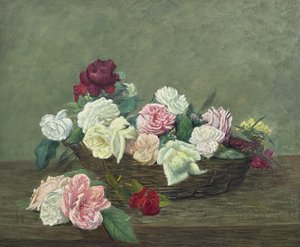
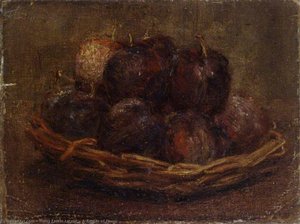
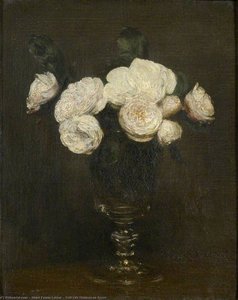
Artist Biography
A Life Immersed in Artistic Harmony
Ignace Henri Jean Théodore Fantin-Latour, born in Grenoble, France, in 1836, was a painter whose life unfolded as a delicate interplay between realism and the burgeoning symbolism of his era. His early artistic inclinations were nurtured by his father, Théodore Fantin-Latour, himself a portrait artist, who provided young Henri with foundational drawing lessons. This familial encouragement propelled him towards Paris in 1850, where he enrolled at the École de Dessin and studied under the innovative Horace Lecoq de Boisbaudran. Lecoq’s unconventional methods—emphasizing drawing from memory rather than strict imitation—instilled in Fantin-Latour a unique approach to observation and representation that would characterize his mature work. He continued his formal training at the École des Beaux-Arts, immersing himself in the study of Old Masters within the hallowed halls of the Louvre, meticulously copying their techniques and compositions. Though he moved among the avant-garde circles that would soon ignite Impressionism—befriending artists like Whistler and Manet—Fantin-Latour charted his own course, remaining steadfastly committed to a more conservative style while subtly absorbing the changing artistic currents around him.The Poetic Still Life and Literary Portraits
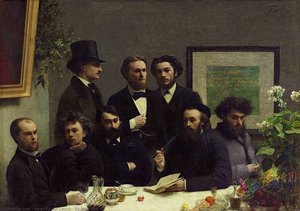
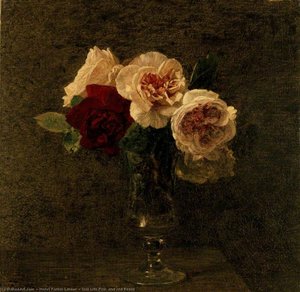
Fantin-Latour’s name is most readily associated with his exquisite still lifes, particularly those featuring flowers. These were not merely botanical studies; they were carefully orchestrated arrangements imbued with a quiet emotional resonance. He elevated the genre beyond simple representation, imbuing each bloom with symbolic weight and exploring nuanced harmonies of color and form. His *Still Life with Flowers and Fruit*, for example, is a testament to his mastery of light and texture, transforming everyday objects into subjects of profound beauty. But Fantin-Latour’s artistic vision extended beyond the floral realm. He became renowned for his evocative portraits, most notably those depicting gatherings of prominent literary and artistic figures. These group compositions—often arranged in the manner of 17th-century Dutch guild portraits—offer a fascinating glimpse into the intellectual life of 19th-century Paris. *By the Table* (1872), capturing a gathering of the Parnassian poets, is perhaps his most celebrated work in this vein, immortalizing figures like Théophile Gautier and Charles Baudelaire with remarkable sensitivity and psychological insight. These portraits weren’t simply likenesses; they were celebrations of creativity and intellectual camaraderie.Bridging Realism and Symbolism
Fantin-Latour occupied a fascinating position in the art world, straddling the boundaries between realism and symbolism. While his meticulous attention to detail and faithful rendering of form align him with realist traditions, his use of color, composition, and subject matter hints at deeper symbolic meanings. The flowers in his still lifes, for instance, were often chosen for their allegorical associations—violets representing humility, lilies symbolizing purity. His portraits, too, weren’t merely representations of individuals but explorations of the creative spirit and the complexities of human relationships. He wasn't driven by a desire to shock or revolutionize like some of his contemporaries; instead, he sought to create works that were both beautiful and intellectually stimulating. This delicate balance—between observation and interpretation, realism and symbolism—is what sets Fantin-Latour apart and contributes to the enduring appeal of his art. He was a master of nuance, subtly infusing his paintings with layers of meaning that reward careful contemplation.Later Years and Enduring Legacy
In 1875, Henri Fantin-Latour married Victoria Dubourg, a fellow painter who would become both his life partner and artistic collaborator. They spent their summers at her family’s estate in Normandy, finding inspiration in the tranquil countryside. During this period, Fantin-Latour increasingly turned to lithography, a medium that allowed him to explore new expressive possibilities. He created striking portraits of composers like Richard Wagner and Hector Berlioz, capturing their personalities with remarkable sensitivity. His lithographs often served as illustrations for biographical works, further cementing his reputation as an artist deeply engaged with the intellectual currents of his time. Fantin-Latour passed away in 1904 at Buré, Orne, leaving behind a body of work that continues to captivate and inspire. His influence can be seen in the works of later artists who sought to combine realism with symbolic meaning, and his paintings remain highly prized by collectors and museums around the world. He stands as a testament to the power of quiet observation, subtle symbolism, and enduring artistic harmony.Key Works & Artistic Connections
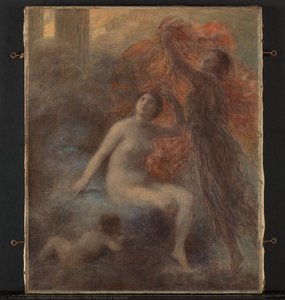
- The Palace of Aurora (1873): A captivating Symbolist painting depicting the goddess of dawn, showcasing Fantin-Latour’s dreamlike aesthetic and rich symbolism.
- By the Table (1872): A masterpiece of Realism capturing a gathering of literary figures from the Parnassus poetry group, offering insight into 19th-century Parisian intellectual life.
- Still Life with Flowers and Fruit (various dates): Exemplifies his mastery of color, composition, and symbolic representation within the still life genre.
- Portrait of Charlotte Dubourg (1882): Demonstrates his skill in portraiture, capturing both physical likeness and psychological depth.
- Influences: Thomas Couture, whose emphasis on historical scenes and dramatic composition influenced Fantin-Latour’s early work. The Old Masters he studied at the Louvre provided a foundation in technique and classical principles.
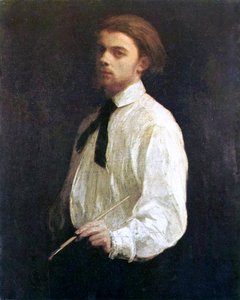
Henri Fantin-Latour
1836 - 1904 , France
Quick Facts
- Artistic Movement Or Style: Realism, Symbolism
- Artists Or Movements Influenced By This Artist: ['Impressionism']
- Artists Who Influenced This Artist:
- Old Masters
- Courbet
- Date Of Birth: January 14, 1836
- Date Of Death: August 25, 1904
- Full Name: Henri Fantin-Latour
- Nationality: French
- Notable Artworks:
- Still life with flowers
- By the Table
- The Palace of Aurora
- Place Of Birth: Grenoble, France
Related Articles
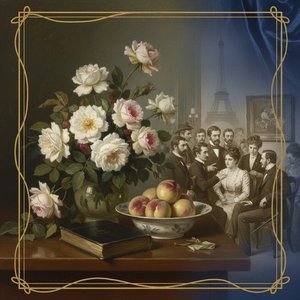
Henri Fantin-Latour: A Poetic Realism Between Still Life and the Parisian Avant-Garde
Explore the captivating world of Henri Fantin-Latour, a master of still life and portraiture. Discover his unique blend of Realism & Symbolism, Parisian connections, and enduring legacy with ArtsDot.
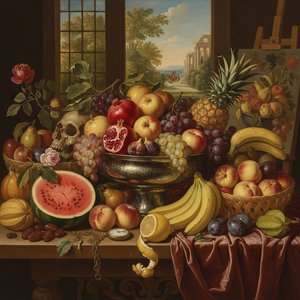
The Bountiful Still Life: Symbolism & Artistic Representation of Fruit Across Art History
Explore the rich history of still life painting & the symbolism of fruit across art movements. Discover masterpieces from Caravaggio to Cézanne with ArtsDot – expert guidance & museum-quality reproductions.

The Enduring Legacy of Oil on Canvas: Technique, History & Aesthetic Impact
Explore the rich history & techniques of oil painting – from Renaissance masters to Impressionism. Discover pigments, layering methods, and why this timeless medium endures. Expert insights for artists & art enthusiasts.
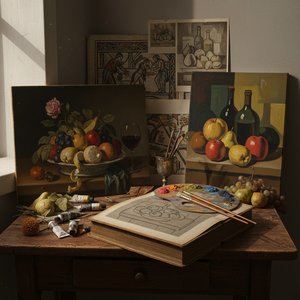
Silent Narratives: Exploring the Enduring Appeal of Still Life Painting Across Centuries
Explore the rich history of still life painting with ArtsDot. Discover Dutch Masters, decode vanitas symbolism & learn about collecting timeless art. Expert insights and museum-quality reproductions.

Oil on Canvas: A Historical & Technical Exploration of a Timeless Artistic Medium
Explore the rich history & enduring techniques of oil painting on canvas. Discover the science behind its longevity, conservation practices, and contemporary relevance. Expert insights for art enthusiasts.