 Preview
 Send
Send Share
Share
 Details

 Download
 Similars
 X-Ray
X-Ray Diaporama
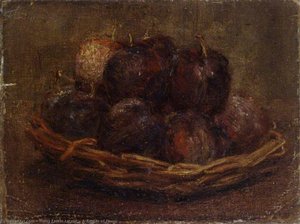
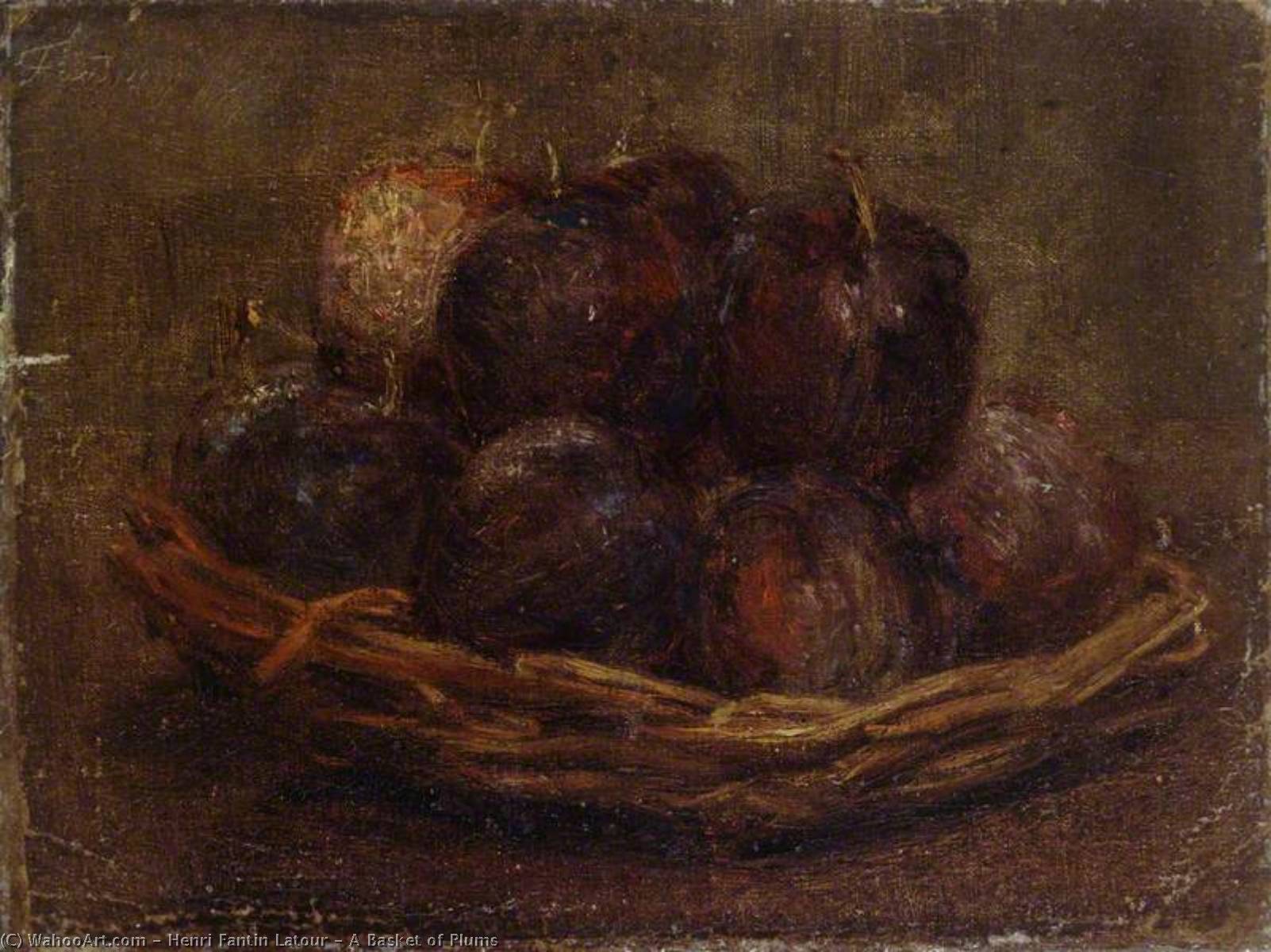
A Basket of Plums
 Oil On Canvas
- WallArt
- Symbolist Realism
 1869
1869 13.0 x 18.0 cm
 The Ashmolean Museum of Art And Archaeology
 Read More
Hand Made Oil Reproduction
Hand-painted oil on canvas in your size and frame, made to order by our artists. ( Buy Print Buy Image)




P118B $10

P118H $10

P118W $10

P438Z $10

P508JH $12

P508YH $12

P805H $10

P805Z $10

P919BZ $10

P919G $10

P919XJ $10

P959ZH $10

P968JZ $12

W106C $8

W218G $10

W218JH $8

W218Y $10

W307PJ $10

W316G $10

W316PJ $8

W316Y $10

W398PJ $8

W4111J $10

W500HY $15

W500JH $15

W692G $12

W849H $8

W940BG $15

W953PJ $8




Pick from our preset sizes that match the artwork's original proportions.

You may enter your own dimensions to fit a specific frame or space. If your selected size does not match the original image's proportions, we will either crop the artwork or extend the painting with additional hand-painted elements. A digital mockup will be sent for your approval before production begins.
Please note that the on-screen preview does not reflect the actual cropping or extension. Only the mockup will accurately show the final composition.
While custom sizes are available, we recommend selecting a dimension from the predefined list to preserve the original proportions.
After order, ArtsDot.com team will email client for instructions and provide a mockup preview
Worldwide Delivery () in 3/4 weeks instead of standard 5 weeks. (16 August). No compromise on quality.

Free Worldwide Express Shipping

High-Quality Linen Canvas

Full Shipping Insurance

Customs Tax Refund Guarantee

True Color Matching Guarantee

60-Day Return Policy (Defects Only)

100% Money-Back Guarantee

Bulk Discount Offer
 Glass option is only available in size under 110 CM

A Basket of Plums
Reproduction Medium
Reproduction Size
-


Total Price
$ 263
Artwork Description
A Symphony of Color and Stillness: Henri Fantin-Latour’s “A Basket of Plums”
Henri Fantin-Latour's "A Basket of Plums," painted in 1869, is more than a simple depiction of fruit; it’s a poignant meditation on beauty, mortality, and the quiet dignity of everyday life. This intimate still life, now residing within the Ashmolean Museum in Oxford, offers a glimpse into the artist's unique approach to capturing fleeting moments and imbuing them with profound emotional resonance. Fantin-Latour, a key figure in the Parisian art scene during the late 19th century, masterfully blended realism with subtle Symbolism, creating works that are both visually arresting and deeply contemplative.
The painting immediately draws the eye to its rich palette – a masterful orchestration of deep reds, vibrant purples, and dusky greens. Fantin-Latour’s technique is characterized by meticulous detail and a remarkable ability to render the textures of the plums with astonishing accuracy. Notice how he captures the velvety sheen of the skin, the delicate folds of the fruit, and the subtle variations in color that suggest ripeness and decay. He employs a broken brushstroke technique, layering thin glazes of paint to build up depth and luminosity – a hallmark of his style, influenced by the Old Masters but infused with a distinctly modern sensibility.
The Language of Still Life
Still life painting was a favored genre during Fantin-Latour’s time, often serving as a vehicle for exploring philosophical themes. While seemingly straightforward, “A Basket of Plums” transcends mere representation. The arrangement itself is carefully considered – the basket, a symbol of abundance and domesticity, anchors the composition. The plums, in their varying stages of ripeness, subtly evoke the passage of time and the inevitability of mortality. The artist’s choice to depict fruit, so ephemeral and transient, invites reflection on the beauty of the present moment and the bittersweet awareness of its fleeting nature.
Fantin-Latour's background as a botanical illustrator is evident in his precise rendering of the plums. He wasn’t simply painting fruit; he was studying them with scientific rigor, observing their form, color, and texture with an artist’s eye. This meticulous attention to detail elevates the work beyond a decorative piece, transforming it into a study of nature's intricacies.
A Parisian Intimacy
Fantin-Latour’s life and career were deeply intertwined with the vibrant artistic community of Paris. He was part of a circle of artists who sought to break free from academic traditions and explore new forms of expression. His work reflects this spirit of innovation, characterized by a quiet intensity and an understated elegance. He often depicted his fellow artists and writers in intimate portraits, capturing their personalities with remarkable sensitivity – a practice that cemented his reputation as a keen observer of human nature.
The painting’s composition also subtly references the burgeoning Symbolist movement, which sought to express emotions and ideas through suggestive imagery rather than literal representation. The basket itself can be interpreted as a metaphor for life's bounty, while the plums represent the fleeting joys and sorrows that punctuate our existence. Fantin-Latour masterfully uses color and form to create an atmosphere of quiet contemplation, inviting the viewer to engage with the painting on a deeply emotional level.
A Timeless Masterpiece
"A Basket of Plums" is a testament to Fantin-Latour’s artistic vision and technical skill. It's a work that rewards repeated viewing, revealing new nuances and subtleties with each encounter. The painting’s enduring appeal lies in its ability to capture the beauty of the ordinary, transforming a simple still life into a profound meditation on life, death, and the power of art. Its delicate balance of realism and symbolism continues to resonate with viewers today, solidifying Fantin-Latour's place as one of the most important artists of his era.
Related Artworks
Artist Biography
A Life Immersed in Artistic Harmony
Ignace Henri Jean Théodore Fantin-Latour, born in Grenoble, France, in 1836, was a painter whose life unfolded as a delicate interplay between realism and the burgeoning symbolism of his era. His early artistic inclinations were nurtured by his father, Théodore Fantin-Latour, himself a portrait artist, who provided young Henri with foundational drawing lessons. This familial encouragement propelled him towards Paris in 1850, where he enrolled at the École de Dessin and studied under the innovative Horace Lecoq de Boisbaudran. Lecoq’s unconventional methods—emphasizing drawing from memory rather than strict imitation—instilled in Fantin-Latour a unique approach to observation and representation that would characterize his mature work. He continued his formal training at the École des Beaux-Arts, immersing himself in the study of Old Masters within the hallowed halls of the Louvre, meticulously copying their techniques and compositions. Though he moved among the avant-garde circles that would soon ignite Impressionism—befriending artists like Whistler and Manet—Fantin-Latour charted his own course, remaining steadfastly committed to a more conservative style while subtly absorbing the changing artistic currents around him.The Poetic Still Life and Literary Portraits
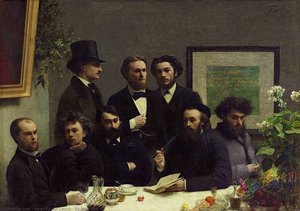
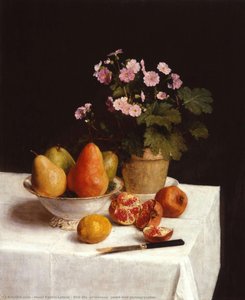
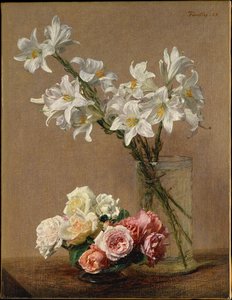
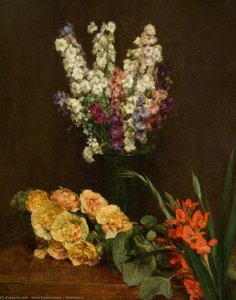
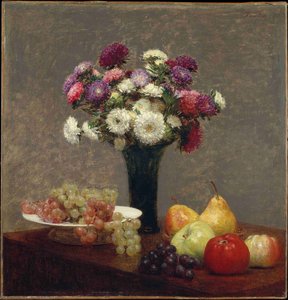
Fantin-Latour’s name is most readily associated with his exquisite still lifes, particularly those featuring flowers. These were not merely botanical studies; they were carefully orchestrated arrangements imbued with a quiet emotional resonance. He elevated the genre beyond simple representation, imbuing each bloom with symbolic weight and exploring nuanced harmonies of color and form. His *Still Life with Flowers and Fruit*, for example, is a testament to his mastery of light and texture, transforming everyday objects into subjects of profound beauty. But Fantin-Latour’s artistic vision extended beyond the floral realm. He became renowned for his evocative portraits, most notably those depicting gatherings of prominent literary and artistic figures. These group compositions—often arranged in the manner of 17th-century Dutch guild portraits—offer a fascinating glimpse into the intellectual life of 19th-century Paris. *By the Table* (1872), capturing a gathering of the Parnassian poets, is perhaps his most celebrated work in this vein, immortalizing figures like Théophile Gautier and Charles Baudelaire with remarkable sensitivity and psychological insight. These portraits weren’t simply likenesses; they were celebrations of creativity and intellectual camaraderie.Bridging Realism and Symbolism
Fantin-Latour occupied a fascinating position in the art world, straddling the boundaries between realism and symbolism. While his meticulous attention to detail and faithful rendering of form align him with realist traditions, his use of color, composition, and subject matter hints at deeper symbolic meanings. The flowers in his still lifes, for instance, were often chosen for their allegorical associations—violets representing humility, lilies symbolizing purity. His portraits, too, weren’t merely representations of individuals but explorations of the creative spirit and the complexities of human relationships. He wasn't driven by a desire to shock or revolutionize like some of his contemporaries; instead, he sought to create works that were both beautiful and intellectually stimulating. This delicate balance—between observation and interpretation, realism and symbolism—is what sets Fantin-Latour apart and contributes to the enduring appeal of his art. He was a master of nuance, subtly infusing his paintings with layers of meaning that reward careful contemplation.Later Years and Enduring Legacy
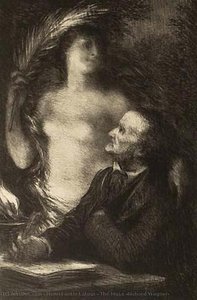
In 1875, Henri Fantin-Latour married Victoria Dubourg, a fellow painter who would become both his life partner and artistic collaborator. They spent their summers at her family’s estate in Normandy, finding inspiration in the tranquil countryside. During this period, Fantin-Latour increasingly turned to lithography, a medium that allowed him to explore new expressive possibilities. He created striking portraits of composers like Richard Wagner and Hector Berlioz, capturing their personalities with remarkable sensitivity. His lithographs often served as illustrations for biographical works, further cementing his reputation as an artist deeply engaged with the intellectual currents of his time. Fantin-Latour passed away in 1904 at Buré, Orne, leaving behind a body of work that continues to captivate and inspire. His influence can be seen in the works of later artists who sought to combine realism with symbolic meaning, and his paintings remain highly prized by collectors and museums around the world. He stands as a testament to the power of quiet observation, subtle symbolism, and enduring artistic harmony.Key Works & Artistic Connections
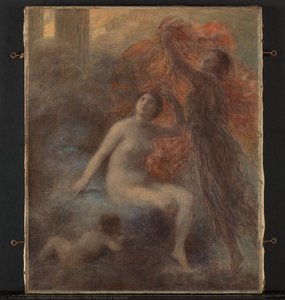
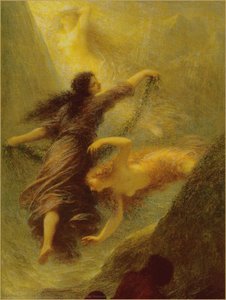
- The Palace of Aurora (1873): A captivating Symbolist painting depicting the goddess of dawn, showcasing Fantin-Latour’s dreamlike aesthetic and rich symbolism.
- By the Table (1872): A masterpiece of Realism capturing a gathering of literary figures from the Parnassus poetry group, offering insight into 19th-century Parisian intellectual life.
- Still Life with Flowers and Fruit (various dates): Exemplifies his mastery of color, composition, and symbolic representation within the still life genre.
- Portrait of Charlotte Dubourg (1882): Demonstrates his skill in portraiture, capturing both physical likeness and psychological depth.
- Influences: Thomas Couture, whose emphasis on historical scenes and dramatic composition influenced Fantin-Latour’s early work. The Old Masters he studied at the Louvre provided a foundation in technique and classical principles.
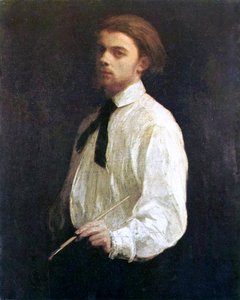
Henri Fantin-Latour
1836 - 1904 , France
Quick Facts
- Artistic Movement Or Style: Realism, Symbolism
- Artists Or Movements Influenced By This Artist: ['Impressionism']
- Artists Who Influenced This Artist:
- Old Masters
- Courbet
- Date Of Birth: January 14, 1836
- Date Of Death: August 25, 1904
- Full Name: Henri Fantin-Latour
- Nationality: French
- Notable Artworks:
- Still life with flowers
- By the Table
- The Palace of Aurora
- Place Of Birth: Grenoble, France
Related Articles
Henri Matisse's Masterpieces: Explore 25 Iconic Paintings & Art Decor Ideas
Journey through Henri Matisse's 25 most iconic paintings! Explore Fauvism, vibrant colors & the stories behind masterpieces like 'The Dance'. Find museum-quality art reproductions and curated decor ideas to elevate your space. Discover all masterpieces on ArtsDot.com.
Henri Fantin-Latour: A Poetic Realism Between Still Life and the Parisian Avant-Garde
Explore the captivating world of Henri Fantin-Latour, a master of still life and portraiture. Discover his unique blend of Realism & Symbolism, Parisian connections, and enduring legacy with ArtsDot.

The Enduring Legacy of Oil on Canvas: Technique, History & Aesthetic Impact
Explore the rich history & techniques of oil painting – from Renaissance masters to Impressionism. Discover pigments, layering methods, and why this timeless medium endures. Expert insights for artists & art enthusiasts.

Oil on Canvas: A Historical & Technical Exploration of a Timeless Artistic Medium
Explore the rich history & enduring techniques of oil painting on canvas. Discover the science behind its longevity, conservation practices, and contemporary relevance. Expert insights for art enthusiasts.

The Enduring Power of Painting: A Historical & Contemporary Exploration of Form and Emotion
Explore the rich history & enduring techniques of oil painting with ArtsDot. Discover masterpieces, learn about art collecting, and find authentic handmade reproductions crafted by skilled artists.