Early Life and Artistic Foundations: From Grenoble to the École des Beaux-Arts
 Wikipedia: Henri Fantin-Latour
Ignace Henri Jean Theodore Fantin-Latour (French pronunciation: [ɑ̃ʁi fɑ̃tɛ̃ latuʁ]; 14 January 1836 – 25 August 1904) was a French painter and lithographer best known for his flower paintings and group portraits of Parisian artists and writers. ==...
Ignace Henri Jean Théodore Fantin-Latour, born in 1836 in the picturesque city of Grenoble, France, embarked on an artistic journey deeply rooted in familial tradition. His father, a painter himself, provided young Henri with his earliest lessons, nurturing a nascent talent that would blossom into a distinctive and celebrated style. The move to Paris in 1850 marked a pivotal moment, as he enrolled in the small School of Drawing before gaining admission to the prestigious École des Beaux-Arts in 1854. Here, amidst a cohort including Edgar Degas and Alphonse Legros, Fantin-Latour honed his skills, diligently copying Old Masters at the Louvre – a practice that instilled within him a profound respect for classical principles and technique. While befriending artists who would later define Impressionism—Whistler and Manet among them—Fantin-Latour charted a course distinctly his own, one characterized by restraint and meticulous observation rather than radical innovation.
His early studies under Horace Lecoq de Boisbaudran proved particularly influential. Boisbaudran’s unconventional method, emphasizing drawing from memory, fostered an internal understanding of form and composition that would become a hallmark of Fantin-Latour's work. This emphasis wasn’t merely about replicating what the eye saw but about distilling its essence, building a visual vocabulary based on feeling and recollection. These formative years laid the groundwork for his future explorations in still life and portraiture, establishing a foundation of technical proficiency that would allow him to seamlessly blend realism with subtle symbolic undertones.
The Charm of Still Life: Fantin-Latour’s Floral Masterpieces and Technical Brilliance
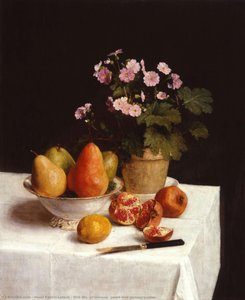
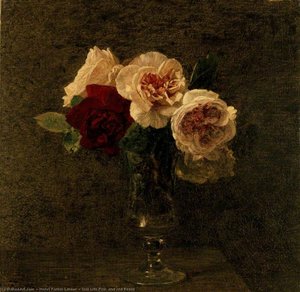
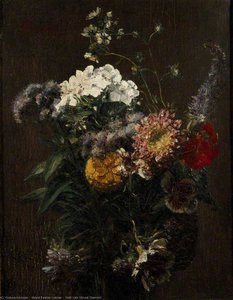
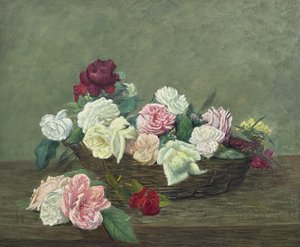
Though he initially pursued historical painting, it was in the realm of still life—specifically floral arrangements—that Henri Fantin-Latour truly found his voice. Encouraged by James McNeill Whistler, whom he met at the Louvre, he began a series of compositions that would captivate audiences and secure his reputation. These were not merely decorative exercises; they were carefully constructed symphonies of color and texture, imbued with a quiet contemplation rarely seen in contemporary art. Unlike the vibrant palettes of the Impressionists, Fantin-Latour favored muted tones and soft lighting, creating an atmosphere of serene intimacy.
His success in England was remarkable, where his paintings were consistently exhibited at the Royal Academy and eagerly acquired by discerning collectors. Edwin and Ruth Edwards, a prominent art dealing couple, played a crucial role in championing his work, advising him to maintain simplicity in his arrangements—a choice that allowed his mastery of color and texture to shine through. Paintings like The Palace of Aurora (1873) exemplify this approach, depicting the goddess of dawn surrounded by dreamlike blooms, rich with symbolism yet grounded in a palpable sense of realism. The delicate rendering of petals, the subtle gradations of light and shadow, and the harmonious composition all speak to Fantin-Latour’s exceptional technical skill.
Portraits of an Era: Capturing Parisian Intellectual Life and the ‘Cénacle’
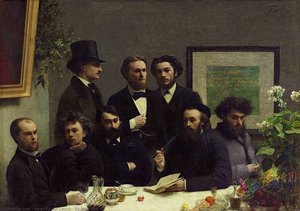 By the Table
Henri Fantin-Latour's 'By the Table' (1872) captures a gathering of literary figures, offering a glimpse into 19th-century Parisian intellectual life and the Parnassus poetry group. A masterpiece of Realism.
Beyond his celebrated still lifes, Fantin-Latour gained recognition for his evocative group portraits—visual chronicles of the vibrant intellectual circles of 19th-century Paris. These were not simply likenesses; they were carefully staged representations of alliances, ideologies, and artistic kinship. He documented key figures of the literary and artistic avant-garde, offering a glimpse into the salons and studios where ideas flourished.
By the Table (1872) stands as a prime example, capturing a gathering of poets from the Parnassus group—Verlaine, Rimbaud, and others—in a somber yet compelling atmosphere. The painting is a testament to his ability to convey not just physical appearance but also the complex relationships and intellectual currents that defined this era. A Studio at Les Batignolles (1870), depicting Manet surrounded by friends including Monet and Renoir, further solidifies his position as a chronicler of Parisian artistic life. These portraits are invaluable historical documents, offering insight into the personalities and dynamics that shaped modern art.
Bridging Realism and Symbolism: A Unique Aesthetic in a Changing Art World
Fantin-Latour occupied a unique space within the rapidly evolving landscape of 19th-century art. While he associated with the Impressionists, his own style remained resolutely conservative—characterized by restraint, sensitivity, and technical precision. He wasn’t driven to capture fleeting moments of light or subjective impressions; instead, he sought to create works that were both beautiful and meaningful, blending realism with subtle symbolic undertones.
In the latter part of his career, Fantin-Latour increasingly turned toward Symbolist themes, producing imaginative lithographs inspired by music—particularly Wagner. These works reveal a more introspective side of the artist, a desire to transcend the purely representational and explore deeper emotional and spiritual realms. His admiration for composers like Schumann and Berlioz is evident in the dreamlike qualities of these pieces, which often feature allegorical figures and evocative imagery. This shift towards Symbolism wasn’t a radical departure but rather a natural extension of his existing aesthetic—a deepening of the emotional resonance within his already meticulously crafted compositions.
Fantin-Latour's Legacy: Influence, Recognition, and Enduring Appeal
Despite being somewhat reserved and reclusive, Fantin-Latour earned the respect of his peers and left a lasting mark on the art world. His still lifes continue to inspire admiration for their subtle beauty and technical mastery, regarded as some of the finest floral paintings of the 19th century. His portraits offer invaluable insight into the intellectual life of Paris, documenting key figures and movements that shaped modern art.
Today, his works are held in major collections worldwide, including the Musée d'Orsay in Paris and the National Gallery in London. While largely ignored in France during his lifetime, Fantin-Latour’s paintings found a receptive audience in England, where they were celebrated for their delicate beauty and refined aesthetic. His legacy lies not only in his exceptional technical skill but also in his ability to bridge the gap between Realism and Symbolism—creating works that are both visually stunning and emotionally resonant. Explore the timeless elegance of Henri Fantin-Latour’s oeuvre with ArtsDot, where museum-quality reproductions bring these masterpieces into your home.