The Barbizon Legacy: Harpignies’ Artistic Roots
Henri-Joseph Harpignies (French pronunciation: [ɑ̃ʁi ʒozɛf aʁpiɲi]; June 28, 1819 – August 28, 1916) was a French landscape painter of the Barbizon school. == Life == He was born at Valenciennes. His parents intended for him to pursue a business ca...
Henri-Joseph Harpignies, a name synonymous with the tranquil beauty of 19th-century French landscapes, occupies a unique and cherished position within the annals of art history. Though not always as immediately recognizable as some of his contemporaries, his influence is deeply woven into the fabric of landscape painting, particularly for those who seek a harmonious blend of realism and poetic sensibility. Harpignies’ story isn't one of radical innovation, but rather of masterful refinement – a dedication to capturing the essence of nature through meticulous observation and an artist’s profound emotional connection to the countryside. His journey began in Valenciennes, France, in 1819, yet his initial path wasn’t directed towards art. A career in business was envisioned for him by his parents, but the pull of artistic expression proved too strong to resist. At the age of twenty-seven, he entered Jean Achard's atelier in Paris, a pivotal moment that laid the foundation for his distinctive style.
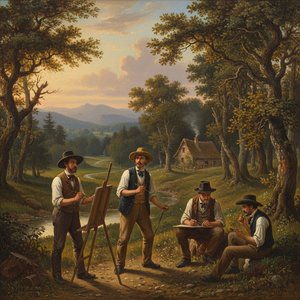
The true turning point, however, came with his embrace of the Barbizon School. This loosely affiliated group of artists, gathering around the village of Barbizon at the edge of the Forest of Fontainebleau, represented a shift away from academic formalism and towards direct engagement with the natural world. Artists like Théodore Rousseau, Charles-François Daubigny, and Jean-François Millet championed a realism that prioritized authentic representation over idealized depictions. Harpignies found kinship in their principles, though his work would ultimately develop a more lyrical quality than some of his peers. His close friendship with Camille Corot proved particularly influential; the two artists shared a deep appreciation for atmospheric effects and a commitment to capturing the subtle nuances of light and shadow.
A Master of Atmosphere: Light, Shadow, and Tonal Qualities in Harpignies’ Work
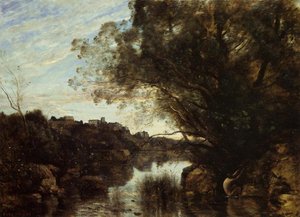
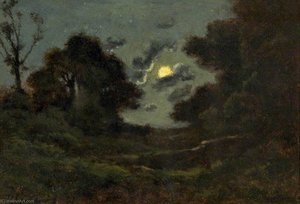 Clair de lune
Explore 'Clair de lune' by Henri-Joseph Harpignies – a serene 1897 landscape painting in the Barbizon style. Delicate brushstrokes & muted colors evoke tranquility. #Impressionism #LandscapeArt
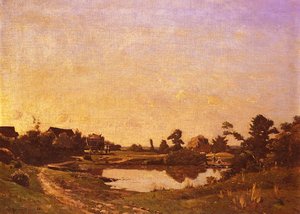
What truly sets Harpignies apart is his extraordinary ability to evoke atmosphere. His paintings aren't merely representations of landscapes; they are imbued with a sense of mood, tranquility, and the ephemeral beauty of fleeting moments. This mastery stems from his exceptional control of light and shadow – not as stark contrasts, but as delicate gradations that define form and create depth. He wasn’t interested in dramatic displays of sunlight, but rather in the soft, diffused glow that permeates a scene on an overcast day or the gentle luminescence of twilight. Consider works like “Midday In The Meadows,” where the sun-drenched fields seem to shimmer with warmth, or “Clair de lune” (1897), a serene nocturne bathed in the silvery light of the moon.
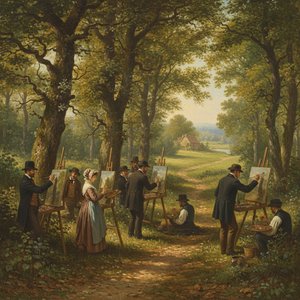
Harpignies’ technique involved layering subtle washes of color and employing delicate brushstrokes to create a sense of depth and texture. He often worked *en plein air*, sketching directly from nature, but his paintings were rarely direct transcriptions of reality. Instead, he would synthesize his observations in the studio, carefully constructing compositions that balanced realism with an idealized vision of the countryside. This process allowed him to distill the essence of a place – its atmosphere, its light, its emotional resonance – and translate it onto canvas with remarkable sensitivity.
Recurring Motifs & Beloved Landscapes: Exploring the Themes of Harpignies' Oeuvre
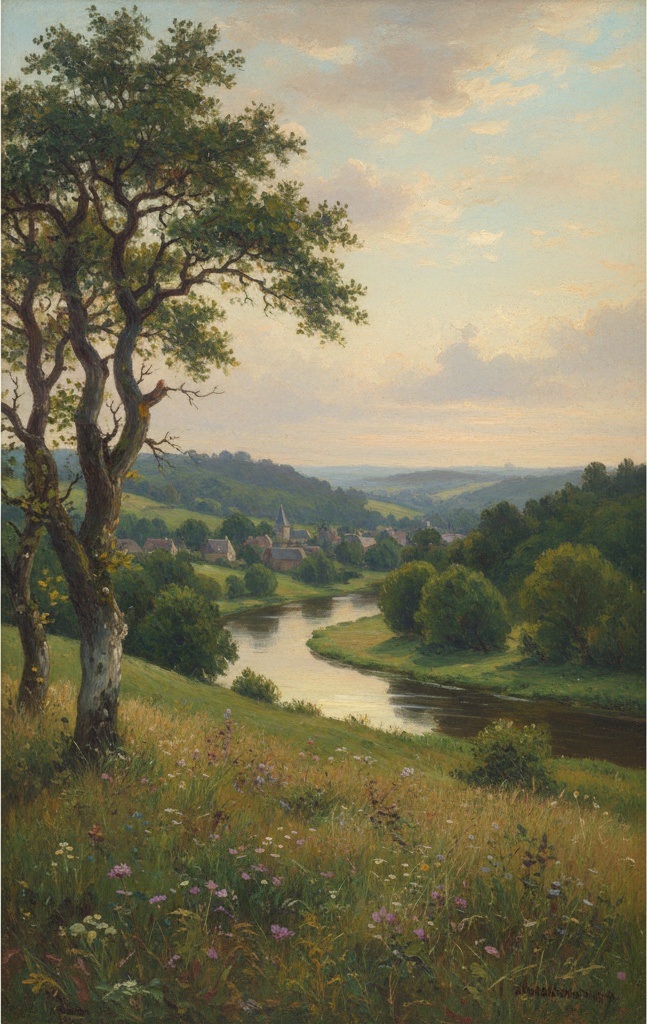
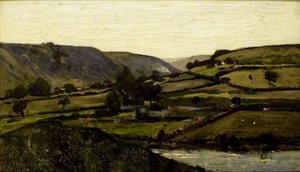 Valley Landscape
Admire 'Valley Landscape' by Henri-Joseph Harpignies – a serene 19th-century Barbizon painting of French countryside. Explore this captivating artwork online.
Throughout his prolific career, certain motifs and landscapes consistently reappear in Harpignies’ work. Rivers, particularly the Loire and Allier, feature prominently, serving as both compositional anchors and symbols of life and renewal. Trees, too, are a recurring presence – majestic oaks, delicate birches, and windswept willows, each rendered with meticulous attention to detail. These weren't simply aesthetic choices; they reflected Harpignies’ deep connection to the French countryside and his desire to capture its enduring beauty.
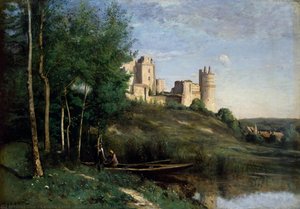
He frequently returned to specific regions, such as Hérisson in the Bourbonnais region of central France, finding inspiration in their rolling hills, verdant valleys, and tranquil rural settings. His later years saw him drawn to Menton on the French Riviera, where he captured glimpses of the Mediterranean landscape – though even here, his focus remained on the interplay of light and atmosphere rather than grand panoramic vistas. A sense of quiet contemplation pervades much of his work, inviting viewers to immerse themselves in the serenity of nature.
Harpignies’ Technique: Bridging Realism and Romantic Idealism
While firmly rooted in the principles of realism championed by the Barbizon School, Harpignies' art transcends mere imitation. He wasn’t simply documenting what he saw; he was interpreting it through a lens of poetic sensibility. This delicate balance between observation and imagination is achieved through his masterful technique. His watercolor skills, honed over decades, allowed him to create nuanced tonal values and subtle gradations of color that capture the ephemeral qualities of light and atmosphere.
He often employed a limited palette, favoring earth tones – browns, greens, grays, and ochres – which further enhance the sense of tranquility and harmony. His brushwork is typically loose and fluid, creating a sense of movement and texture without sacrificing detail. The use of graphite underdrawing is also notable, providing a solid foundation for his compositions and adding depth to his tonal studies. This meticulous approach, combined with his innate artistic sensitivity, allowed him to create paintings that are both realistic and deeply evocative.
Beyond the Canvas: The Enduring Influence of Harpignies on Landscape Painting
Henri-Joseph Harpignies’ influence extends far beyond the confines of the Barbizon School. His dedication to capturing the essence of nature, his mastery of atmosphere, and his ability to blend realism with poetic sensibility continue to inspire artists today. While he may not have been a revolutionary figure in the same vein as some of his contemporaries, his work represents a profound commitment to artistic refinement and a deep appreciation for the beauty of the natural world.
His paintings offer a respite from the complexities of modern life – a chance to immerse oneself in the tranquility of the French countryside and experience the enduring power of nature. At ArtsDot, we are proud to offer high-quality reproductions of Harpignies’ masterpieces, allowing you to bring his serene landscapes into your own home. Explore our collection today and discover the timeless beauty of this remarkable artist. Whether you're a seasoned art collector or simply seeking a moment of peace and tranquility, Harpignies’ work is sure to captivate and inspire.