The Language of Flowers: Ancient Roots & Early Symbolism
Long before the advent of formal art movements, flowers held a potent significance for humankind, woven into the very fabric of myth, ritual, and early belief systems. Their ephemeral beauty, their cyclical nature of bloom and decay, naturally lent themselves to symbolic interpretation. In ancient Greece and Rome, blossoms were associated with deities – roses with Aphrodite, lilies with Hera – embodying ideals of love, fertility, and power. These associations weren’t merely aesthetic; they permeated daily life, influencing ceremonies, perfumes, and even burial practices. The earliest visual representations of flowers, found in frescoes and mosaics, often served as coded messages, hinting at religious devotion or celebrating the bounty of nature. While direct evidence of specific ‘meanings’ is scarce, it's clear that flowers were far more than decorative elements; they were vessels of cultural understanding, imbued with layers of unspoken significance.
This inherent symbolism carried forward into medieval art, though often filtered through a Christian lens. The white lily, for example, transformed from its association with the Greek goddess Hera to become a powerful emblem of purity and the Virgin Mary’s chastity – a shift beautifully illustrated in countless Annunciation scenes where the flower rests at her feet or is offered by the angel Gabriel. The careful selection of blooms wasn't accidental; it was a deliberate act of visual storytelling, communicating complex theological concepts to an audience often illiterate but deeply attuned to symbolic imagery.
Renaissance Blossoms: Religious Allegory & Botanical Detail
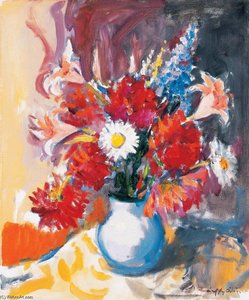 Flower Still-life With Lily, Delphinium And Daisy
Discover Ödön Márffy’s vibrant ‘Flower Still-life’ – an expressive post-impressionist oil painting bursting with color & texture. Explore its dynamic composition & symbolic beauty.
The Renaissance witnessed a renewed interest in classical learning and a blossoming (pun intended) of artistic skill. Artists like Sandro Botticelli didn’t simply depict flowers; they meticulously rendered their forms, showcasing an emerging fascination with botanical accuracy. However, this newfound realism wasn't solely about scientific observation. Flowers continued to serve as potent allegorical devices within religious narratives. The Madonna Lily remained a steadfast symbol of Marian virtue, while red roses alluded to Christ’s sacrifice and the passion of his love. The inclusion of specific flower arrangements became a visual shorthand for conveying complex theological ideas.
Beyond religious contexts, Renaissance portraits also began incorporating flowers as subtle indicators of character or status. A bouquet might signify wealth and refinement, while a single bloom could represent romantic affection or impending marriage. This period marked a transition towards a more nuanced understanding of floral symbolism – one that acknowledged both the inherent beauty of nature and its capacity to communicate deeper emotional truths.
Dutch Masters & Vanitas: Mortality, Luxury, and Floral Still Life
Flower still life with a watch is a 1663 floral painting by Willem van Aelst. It is in the collection of the Mauritshuis and exhibited at the Gallery Prince Willem V. == Early history and creation == This work was painted in Amsterdam where it was ...
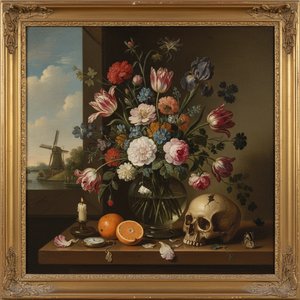
The 17th-century Dutch Golden Age saw an explosion in still life painting, particularly floral arrangements. This wasn’t merely a celebration of aesthetic beauty; it was deeply intertwined with the economic prosperity of the Netherlands and a growing awareness of the transience of earthly possessions. The ‘tulip mania’ – a period of speculative frenzy surrounding tulip bulbs – fueled both artistic production and a moralizing undercurrent that found expression in *vanitas* paintings.
Vanitas still lifes, often featuring wilting flowers alongside skulls, hourglasses, and decaying fruit, served as stark reminders of the fleeting nature of life and the inevitability of death. These weren’t cynical depictions; they were intended to encourage contemplation on spiritual values and the emptiness of material wealth. Artists like Adriaen van Utrecht masterfully captured the textures and luminosity of flowers even as they depicted their decay, creating a poignant juxtaposition between beauty and mortality. Simultaneously, other Dutch masters celebrated the sheer abundance and exoticism of imported blooms, showcasing the Netherlands’ global trade networks and the luxury available to its burgeoning merchant class.
Impressionism's Embrace: Capturing Ephemeral Beauty in Bloom
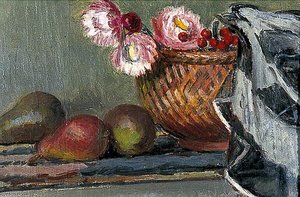 Still Life Of Pears And Everlasting Flowers
Vanessa Bell’s "Still Life Of Pears & Everlasting Flowers" – an Impressionistic masterpiece! Explore loose brushstrokes, muted colors & symbolic beauty in this serene fruit & floral study.
The Impressionists, rejecting the rigid academic traditions of the past, turned their attention to capturing fleeting moments of light and color. Flowers became an ideal subject for this exploration – their delicate forms and vibrant hues perfectly suited to showcasing the effects of atmosphere and perception. Claude Monet’s iconic Water Lilies series exemplifies this approach. Rather than striving for botanical accuracy, Monet sought to convey his *impression* of the garden at Giverny, focusing on the interplay of light, shadow, and color.
Unlike earlier depictions where flowers often carried specific symbolic weight, Impressionist blossoms were more about evoking a mood or sensation. The loose brushstrokes and vibrant palettes created an immersive experience for the viewer, inviting them to share in the artist’s subjective perception of beauty. This shift reflected a broader cultural move towards valuing individual experience and emotional response over strict adherence to established conventions.
Modern Visions: O’Keeffe, Warhol, and the Reinvention of Flower Painting
The 20th century saw a radical reinvention of flower painting, driven by artists seeking new ways to express their inner worlds. Georgia O’Keeffe’s magnified depictions of blossoms – often interpreted as veiled representations of female sexuality – challenged traditional notions of floral representation. Her close-up views stripped away extraneous detail, focusing on the sensual forms and vibrant colors of the flowers themselves.
Later, Andy Warhol appropriated the imagery of flowers for his iconic screenprints, transforming them into symbols of mass culture and consumerism. Warhol’s *Flowers* series wasn't about celebrating natural beauty; it was a commentary on repetition, commercialization, and the blurring lines between high art and popular culture. From O’Keeffe’s intimate explorations to Warhol’s bold appropriations, Modern artists demonstrated the enduring power of flowers as vehicles for expressing complex ideas and challenging conventional perceptions.
At ArtsDot.com, we celebrate this rich history of floral representation by offering stunning handmade oil paintings and museum-quality prints of iconic artworks. Explore our collection today and discover the beauty and symbolism that blossoms have held throughout Western art – bringing a touch of timeless elegance to your home.