Explore the art of Henry Roderick Newman (1833-1918), known for his vibrant watercolors capturing landscapes, architecture, and floral studies in Italy, Egypt, and Japan. Discover his unique blend of Pre-Raphaelite detail with Impressionistic color.
Discover American art at the Amon Carter Museum of American Art! Explore masterpieces by Remington & Russell, plus photography & 19th/20th-century works. Free admission!
A Watercolor Reverie: Capturing Nature's Ephemeral Grace
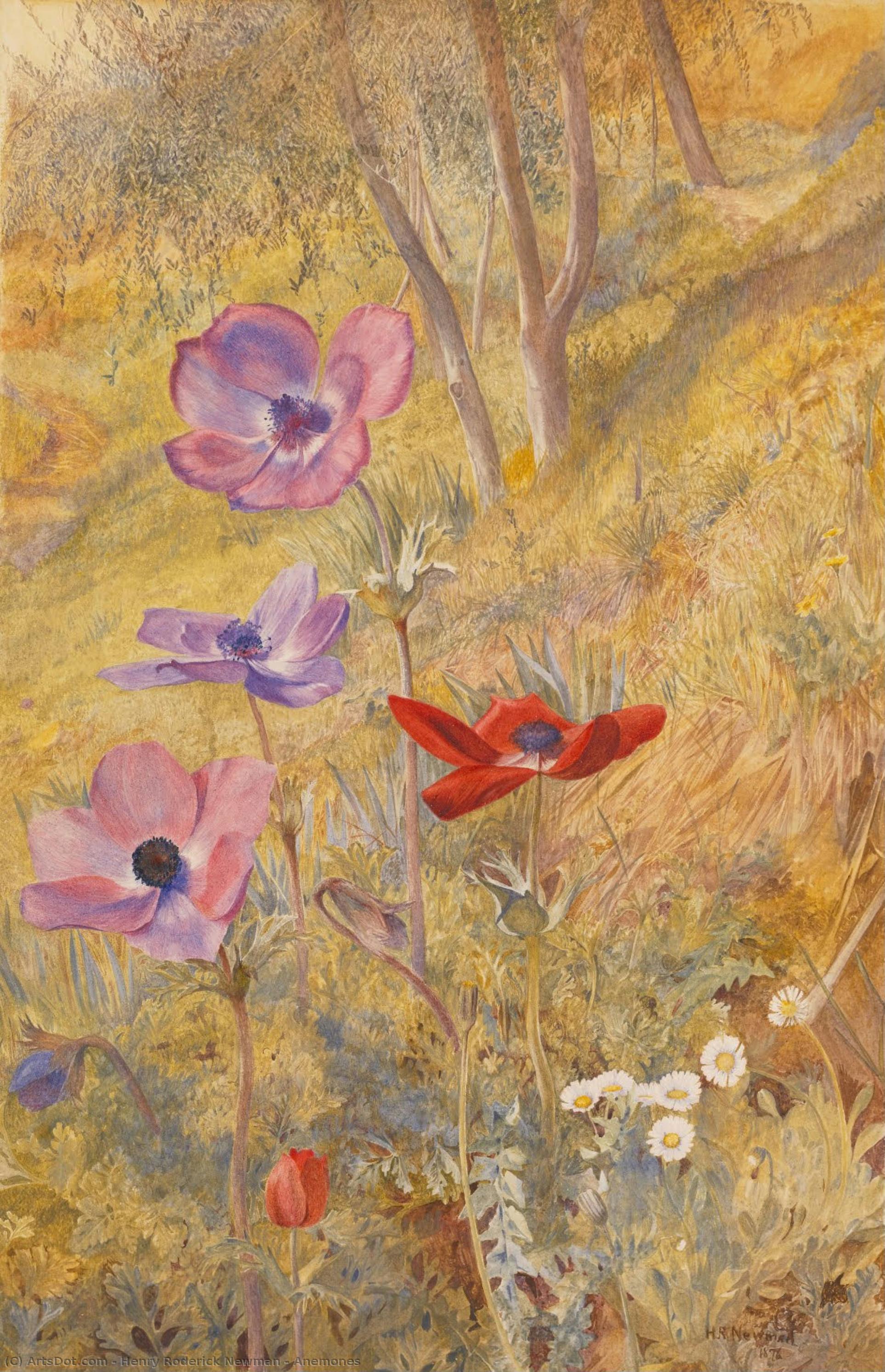
To gaze upon Henry Roderick Newman’s "Anemones" is to step directly into a sun-dappled moment of pastoral perfection. This watercolor, executed in 1876, is far more than a mere depiction of flowers; it is a captured breath of late Victorian tranquility. The composition immediately draws the eye into a lush foreground where fields burst forth with vibrant hues—deep purples mingling with passionate reds and softer pinks. These anemones, scattered like jewels across the earth, invite contemplation on the fleeting beauty that characterizes all things natural. Newman possesses an extraordinary gift for rendering botanical life, making each petal seem imbued with its own delicate luminescence.
The Artistry of Light and Color
Technically, this piece showcases the mastery inherent in watercolor painting. The medium itself lends a characteristic luminosity, allowing the light to appear as if it is filtering through the very pigments applied by Newman’s brush. While the foreground explodes with saturated color, the background offers a necessary counterpoint: soft, receding trees that lend depth and dimension to the scene. This interplay between detailed foreground flora and atmospheric background suggestion speaks volumes about Newman's technical prowess. His style beautifully marries the meticulous observation of botanical study with the airy, suggestive quality that hints at Impressionist sensibilities, all while retaining a romantic undercurrent.
Echoes of Romanticism in Victorian Life
Painted during the height of the late Victorian era, "Anemones" resonates deeply with the period's fascination with nature as a source of spiritual solace. For artists like Newman, who were influenced by Transcendentalist thought, the natural world was not just scenery; it was a mirror reflecting the soul’s own sublime capacity for wonder and contemplation. The abundance of flowers suggests themes of cyclical life, renewal, and the persistent beauty found even in wild, untamed settings. It is an artwork that speaks to the yearning for simplicity amidst the burgeoning complexities of industrializing society.
Bringing Pastoral Serenity Home
For the discerning collector or interior designer, this reproduction offers an unparalleled opportunity to infuse a space with natural elegance and historical depth. Imagine this scene gracing a drawing-room wall; the gentle vibrancy of the anemones will provide a focal point that is both restful and richly colored. The delicate nature of the watercolor technique ensures that even in reproduction, the sense of airy grace remains intact. It serves not only as decoration but as a quiet conversation piece—a tangible link to the romantic artistic spirit of 19th-century America.