A Masterpiece of Theatrical Elegance
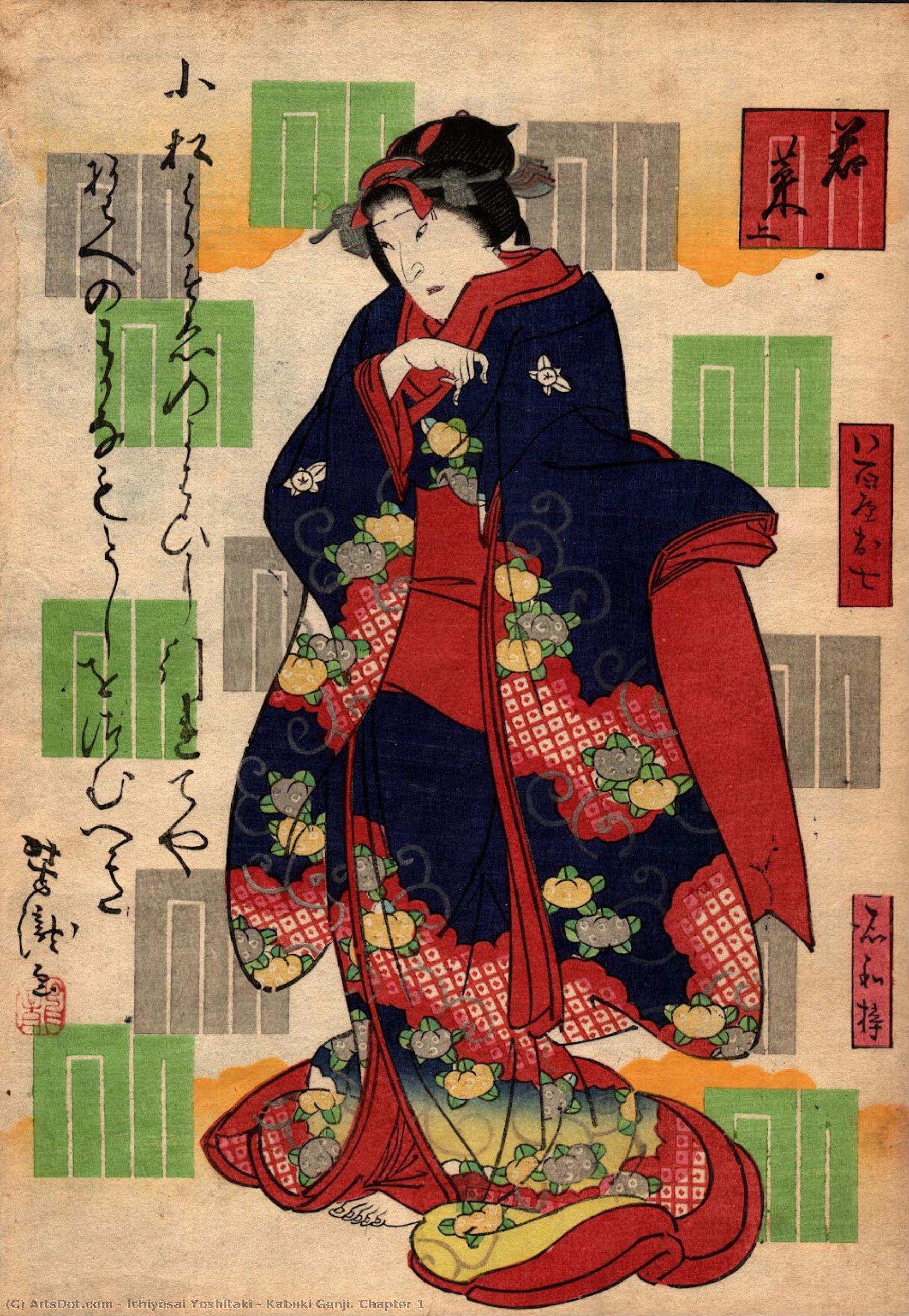
In the delicate dance between literature and performance, Kabuki Genji. Chapter 1 emerges as a breathtaking testament to the golden age of Japanese woodblock printing. Created in 1860 by the master Ichiyōsai Yoshitaki, this exquisite ukiyo-e print serves as a bridge between two of Japan's most cherished cultural pillars: the epic prose of Murasaki Shikibu’s Tale of Genji and the electrifying spectacle of Kabuki theater. The artwork captures a moment of profound grace, presenting a figure adorned in traditional Japanese attire that vibrates with color. Clad in a striking blue and red kimono accented by bright yellow floral motifs, the subject embodies the stylized beauty characteristic of the yakusha-e genre, where every fold of fabric and every subtle gesture is designed to evoke the grandeur of the stage.
The composition is far more than a mere portrait; it is a sophisticated tapestry of symbolism. As part of a monumental series of fifty-four prints, this specific work honors the first chapter of the Genji saga. This connection is masterfully woven into the very fabric of the print through the repetition of the Genji-mon—the heraldic emblems of Prince Genji. These geometric motifs, subtly layered into the background, act as a silent narrative device, anchoring the theatrical performer to the ancient literary legend. For the discerning collector, these details offer a layer of intellectual depth, transforming the print from a beautiful image into a complex historical document that celebrates the continuity of Japanese identity.
The Artistry of the Kamigata Tradition
Technically, this work showcases the unparalleled skill of the Osaka-based (Kamigata) school of printmaking. Unlike some contemporary styles that favored idealized beauty, Yoshitaki was celebrated for his commitment to a nuanced realism. In this print, one can observe the meticulous precision of the woodblock carving, which allows for the sharp definition of the floral patterns and the delicate contours of the subject's pose. The interplay of bold primary colors against the more muted, patterned background creates a visual rhythm that draws the eye across the 26 x 19 cm surface, making it an impactful piece even at a smaller scale.
For interior designers and art enthusiasts, a high-quality reproduction of this work offers a unique opportunity to introduce a sense of historical prestige and cultural richness into a space. The vibrant blues and warm yellows provide a sophisticated focal point that complements both minimalist modern settings and more ornate, classical decors. Owning such a piece is not merely about decoration; it is about preserving the legacy of Ichiyōsai Yoshitaki, a maestro who captured the fleeting essence of the theater and turned it into an eternal visual symphony. This print invites viewers to step back into the late Edo period, feeling the pulse of a vibrant, theatrical world that continues to inspire awe centuries later.