 Preview
 Send
Send Share
Share
 Details

 Download
 Similars
 X-Ray
X-Ray Diaporama
Kabuki Genji. Chapter 1
 Woodblock Print
- Ukiyo-e
 1860
1860- 19th Century
 26.0 x 19.0 cm
 Bujalance Collection
 Read More
Hand Made Oil Reproduction
Hand-painted oil on canvas in your size and frame, made to order by our artists. ( Buy Print Buy Image)




P118B $10

P118H $10

P118W $10

P438Z $10

P508JH $12

P508YH $12

P805H $10

P805Z $10

P919BZ $10

P919G $10

P919XJ $10

P959ZH $10

P968JZ $12

W106C $8

W218G $10

W218JH $8

W218Y $10

W307PJ $10

W316G $10

W316PJ $8

W316Y $10

W398PJ $8

W4111J $10

W500HY $15

W500JH $15

W692G $12

W849H $8

W940BG $15

W953PJ $8




Pick from our preset sizes that match the artwork's original proportions.

You may enter your own dimensions to fit a specific frame or space. If your selected size does not match the original image's proportions, we will either crop the artwork or extend the painting with additional hand-painted elements. A digital mockup will be sent for your approval before production begins.
Please note that the on-screen preview does not reflect the actual cropping or extension. Only the mockup will accurately show the final composition.
While custom sizes are available, we recommend selecting a dimension from the predefined list to preserve the original proportions.
After order, ArtsDot.com team will email client for instructions and provide a mockup preview
Worldwide Delivery () in 3/4 weeks instead of standard 5 weeks. (17 August). No compromise on quality.

Free Worldwide Express Shipping

High-Quality Linen Canvas

Full Shipping Insurance

Customs Tax Refund Guarantee

True Color Matching Guarantee

60-Day Return Policy (Defects Only)

100% Money-Back Guarantee

Bulk Discount Offer
 Glass option is only available in size under 110 CM

Kabuki Genji. Chapter 1
Reproduction Medium
Reproduction Size
-


Total Price
$ 263
Artwork Description
A Masterpiece of Theatrical Elegance
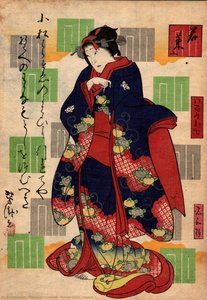
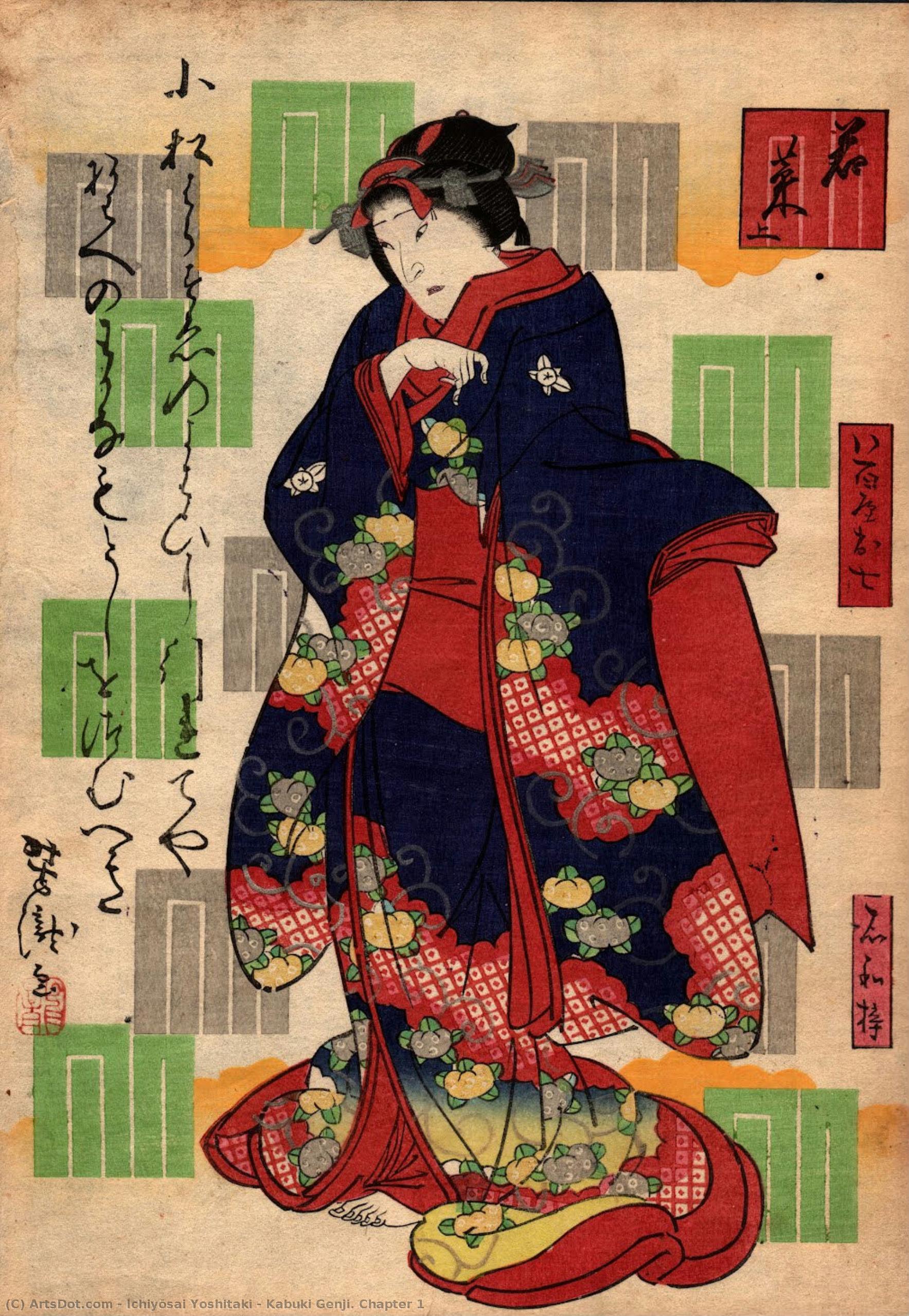
In the delicate dance between literature and performance, Kabuki Genji. Chapter 1 emerges as a breathtaking testament to the golden age of Japanese woodblock printing. Created in 1860 by the master Ichiyōsai Yoshitaki, this exquisite ukiyo-e print serves as a bridge between two of Japan's most cherished cultural pillars: the epic prose of Murasaki Shikibu’s Tale of Genji and the electrifying spectacle of Kabuki theater. The artwork captures a moment of profound grace, presenting a figure adorned in traditional Japanese attire that vibrates with color. Clad in a striking blue and red kimono accented by bright yellow floral motifs, the subject embodies the stylized beauty characteristic of the yakusha-e genre, where every fold of fabric and every subtle gesture is designed to evoke the grandeur of the stage.
The composition is far more than a mere portrait; it is a sophisticated tapestry of symbolism. As part of a monumental series of fifty-four prints, this specific work honors the first chapter of the Genji saga. This connection is masterfully woven into the very fabric of the print through the repetition of the Genji-mon—the heraldic emblems of Prince Genji. These geometric motifs, subtly layered into the background, act as a silent narrative device, anchoring the theatrical performer to the ancient literary legend. For the discerning collector, these details offer a layer of intellectual depth, transforming the print from a beautiful image into a complex historical document that celebrates the continuity of Japanese identity.
The Artistry of the Kamigata Tradition
Technically, this work showcases the unparalleled skill of the Osaka-based (Kamigata) school of printmaking. Unlike some contemporary styles that favored idealized beauty, Yoshitaki was celebrated for his commitment to a nuanced realism. In this print, one can observe the meticulous precision of the woodblock carving, which allows for the sharp definition of the floral patterns and the delicate contours of the subject's pose. The interplay of bold primary colors against the more muted, patterned background creates a visual rhythm that draws the eye across the 26 x 19 cm surface, making it an impactful piece even at a smaller scale.
For interior designers and art enthusiasts, a high-quality reproduction of this work offers a unique opportunity to introduce a sense of historical prestige and cultural richness into a space. The vibrant blues and warm yellows provide a sophisticated focal point that complements both minimalist modern settings and more ornate, classical decors. Owning such a piece is not merely about decoration; it is about preserving the legacy of Ichiyōsai Yoshitaki, a maestro who captured the fleeting essence of the theater and turned it into an eternal visual symphony. This print invites viewers to step back into the late Edo period, feeling the pulse of a vibrant, theatrical world that continues to inspire awe centuries later.
Related Artworks
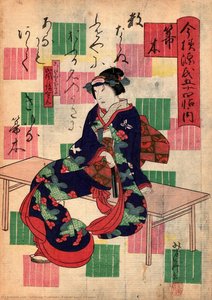
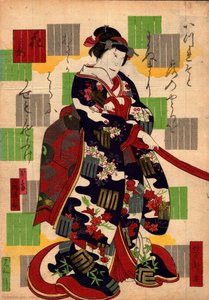
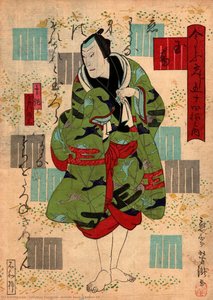
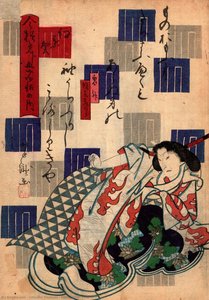
Artist Biography
Ichiyosai Yoshitaki: The Maestro of Kabuki Portraits
Ichiyosai Yoshitaki (歌川 芳滝, April 13, 1841 – June 28, 1899), also known as Utagawa Yoshitaki, stands as a towering figure in the history of Japanese woodblock prints. Active primarily during the late Edo and early Meiji periods, he dedicated his life to capturing the dynamism and captivating presence of Kabuki actors—a pursuit that cemented his legacy as Osaka’s most prolific designer of *yakusha-e* (役者絵) for nearly four decades. His output, numbering over 1,200 distinct prints, offers an unparalleled visual record of a vibrant theatrical world, revealing not only the artistry of the actors themselves but also the social and cultural currents of his time. Yoshitaki’s origins were humble; born Nakai Tsunejirō in Shimizucho, Osaka, to a paste merchant father. At the tender age of twelve, he began his artistic apprenticeship under Utagawa Yoshiume (1819–1879), a respected printmaker who had previously studied under the renowned Utagawa Kuniyoshi. This early training instilled in him a foundational understanding of woodblock techniques and design principles, providing a crucial springboard for his future success. Crucially, Yoshitaki quickly surpassed his teacher, establishing himself as an independent artist by 1855, marking the beginning of a remarkable career defined by sheer volume and artistic refinement.Osaka’s Printmaking Powerhouse
Yoshitaki's rise to prominence was inextricably linked to Osaka’s thriving printmaking scene during the mid-19th century. Unlike Kyoto, which traditionally dominated Japanese art production, Osaka had emerged as a vibrant center for commercial printing, fueled by its bustling port and burgeoning merchant class. Yoshitaki skillfully capitalized on this environment, becoming the dominant designer of *yakusha-e* in Osaka from the 1860s through the 1880s. His workshop became a hub of activity, employing numerous carvers, printers, and binders – a testament to his considerable influence and demand for his work. He wasn’t merely producing prints; he was orchestrating an entire artistic ecosystem.A Symphony of Color and Form: Artistic Techniques
Yoshitaki's prints are characterized by their remarkable detail, vibrant colors, and dynamic compositions. He mastered the complex techniques of *nishiki-e* (錦絵), utilizing multiple woodblocks to achieve a full spectrum of hues – a significant advancement over earlier monochrome or limited-color prints. His skillful use of shading and perspective created an illusion of depth and movement, effectively capturing the theatricality of the Kabuki stage. He paid meticulous attention to costume design, meticulously recreating the elaborate robes and accessories worn by the actors, reflecting both their individual roles and the broader social status they represented. The influence of Kuniyoshi is evident in Yoshitaki’s bold outlines and dramatic lighting, but he developed a distinctly personal style characterized by a remarkable sensitivity to human expression.Subjects: The Stars of Kabuki
Yoshitaki's oeuvre is overwhelmingly dominated by portraits of Kabuki actors – *yakusha-e*. He depicted a vast array of performers, from established stars to rising talents, capturing their distinctive personalities and stage mannerisms. His subjects included legendary figures like Enjaku Jitsukawa I (as Saijō Takanori), Wagō Soga Homare no Fuji, and countless others. These prints weren’t simply representations; they were carefully constructed narratives, conveying not only the actors' appearances but also their roles, emotions, and relationships within the larger theatrical drama. His ability to capture a fleeting expression or a dramatic pose was truly remarkable, transforming static images into vibrant snapshots of a dynamic art form.Legacy and Historical Significance
Ichiyosai Yoshitaki’s prolific output provides an invaluable window into 19th-century Japanese society. His prints reflect the popularity of Kabuki theater, the rise of Osaka as a commercial center, and the evolving tastes of a rapidly changing nation. Beyond their artistic merit, his works offer insights into social hierarchies, fashion trends, and cultural values. Yoshitaki’s influence extended beyond his own lifetime; he trained numerous students who continued to produce *yakusha-e*, ensuring that his style and techniques remained influential for generations. Today, his prints are highly sought after by collectors worldwide, representing a crucial link in the chain of Japanese artistic heritage. They stand as a testament to one man’s dedication, skill, and profound understanding of the captivating world of Kabuki theater.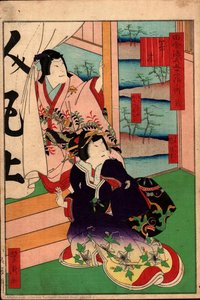
ichiyōsai yoshitaki
1841 - 1899 , Japan
Quick Facts
- Artistic Movement Or Style: Ukiyo-e
- Artists Or Movements Influenced By This Artist: ['Utagawa Kuniyoshi']
- Artists Who Influenced This Artist: ['Utagawa Yoshiume']
- Date Of Birth: April 13, 1841
- Date Of Death: June 28, 1899
- Full Name: Ichiyosai Yoshitaki
- Nationality: Japanese
- Notable Artworks:
- Kabuki Actors
- Kanadehon Chushingura
- Kabuki Genji
- Place Of Birth: Osaka, Japan
Related Articles

Hokusai's Masterpieces: 25 Iconic Prints & Paintings for Art Lovers | ArtsDot
Journey through Katsushika Hokusai’s 25 most iconic artworks, including *The Great Wave*. Explore the ukiyo-e master's history, style & timeless Japanese woodblock prints. Find museum-quality reproductions for your home at ArtsDot.com.
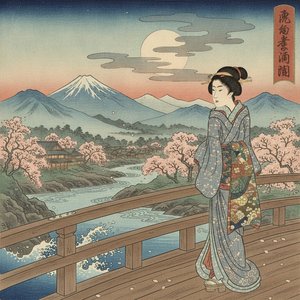
Ukiyo-e's Greatest Hits: 10 Masterpieces That Shaped a Movement | ArtsDot
Journey into Japan's 'Floating World'! Explore 10 Ukiyo-e masterpieces by Hokusai, Hiroshige & more. Discover the stories behind these iconic woodblock prints and bring timeless Japanese art to your home with ArtsDot.com. Explore the full collection online.

Ukiyo-e: Exploring Japan's Floating World & Enduring Artistic Legacy
Explore the captivating world of Ukiyo-e – Japan's iconic woodblock prints! Discover masters like Hokusai & Hiroshige, learn about Edo period culture, and find expert art collecting guidance at ArtsDot.
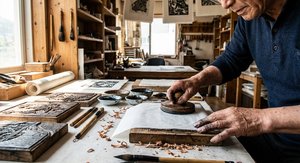
The Enduring Legacy of Woodblock Printmaking: Technique, History & Artistic Expression
Explore the rich history of woodblock printmaking – from ancient techniques to Ukiyo-e masterpieces. Discover expert insights on collecting, preserving & appreciating this enduring art form.
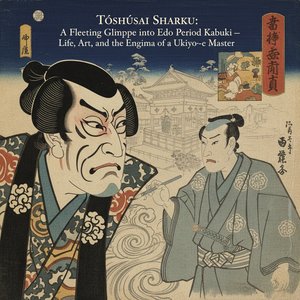
Tōshūsai Sharaku: A Fleeting Glimpse into Edo Period Kabuki – Life, Art, and the Enigma of a Ukiyo-e Master
Explore the captivating world of Tōshūsai Sharaku, the enigmatic Edo period ukiyo-e master. Discover his iconic Kabuki actor portraits and unravel the mystery behind this fleeting artistic genius. Learn about his unique style & lasting legacy.