The World of Kabuki: A Stage for Sharaku's Brilliance
 Wikipedia: Ukiyo-e
Ukiyo-e (浮世絵) is a genre of Japanese art that flourished from the 17th through 19th centuries. Its artists produced woodblock prints and paintings of such subjects as female beauties; kabuki actors and sumo wrestlers; scenes from history and folk tal...
To understand Tōshūsai Sharaku, one must first immerse oneself in the vibrant and often tumultuous world of Edo period Kabuki theater. Flourishing from the 17th through the 19th centuries, Kabuki wasn’t merely entertainment; it was a cultural phenomenon, a spectacle that captivated all levels of Japanese society. The bustling city of Edo (modern-day Tokyo) served as its epicenter, and within its theaters, a unique class dynamic played out. While the samurai held societal prominence, the chōnin – merchants, craftsmen, and workers – formed the enthusiastic core audience. Kabuki offered them an escape, a reflection of their own lives interwoven with tales of heroism, romance, and intrigue. The actors themselves became celebrities, idolized figures whose faces adorned everything from fans to woodblock prints. It was this fervent fandom that created the fertile ground for Sharaku’s extraordinary, albeit brief, career.
Kabuki performances were known for their elaborate costumes, dramatic makeup (kumadori), and stylized movements. Plays often featured historical narratives, domestic dramas, or dance sequences, each demanding a specific skillset from its performers. The theaters weren't simply venues; they were social hubs where audiences actively engaged with the performance – cheering, jeering, and even throwing gifts to their favorite actors. This lively atmosphere is crucial to understanding Sharaku’s work, as his portraits don’t merely depict actors but capture a specific moment of theatrical energy, a distillation of the Kabuki experience.
A Mysterious Persona: Unraveling the Life of Tōshūsai Sharaku
The enigma surrounding Tōshūsai Sharaku is perhaps as compelling as his art. Unlike many artists who left behind detailed biographical records, Sharaku remains shrouded in mystery. Active for a mere ten months – from 1794 to 1795 – he burst onto the scene with an unprecedented series of actor portraits and then vanished without a trace. Theories abound regarding his true identity. Some scholars suggest he was a former Noh actor, a more refined and restrained theatrical form, lending credence to his keen understanding of performance nuances. Others propose he may have been a disgruntled painter from a rival school, seeking to make his mark through bold innovation.
What *is* known is that Sharaku worked with the publisher Tsutaya Jūzaburō, a shrewd businessman who recognized the potential in capturing the popularity of Kabuki actors. The lack of information about Sharaku’s life fuels speculation and adds to his allure. Was he a seasoned artist adopting a pseudonym? A newcomer challenging established conventions? Or perhaps someone with a unique perspective on the world of theater? This ambiguity allows viewers to project their own interpretations onto his work, enhancing its enduring appeal.
Sharaku’s Distinctive Style: Realism, Exaggeration, and Bold Lines
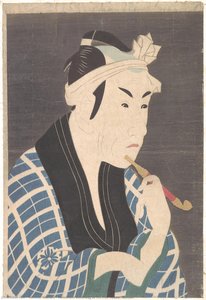
Sharaku's artistic style was revolutionary for its time. Departing from the idealized depictions common in earlier ukiyo-e portraits, he embraced a startling realism. His actors weren’t presented as flawless heroes but as individuals with distinct personalities, flaws, and vulnerabilities. He masterfully captured their expressions – the intensity of a gaze, the subtle curve of a lip, the furrow of a brow – conveying a sense of psychological depth rarely seen in previous works.
However, Sharaku’s realism wasn't simply about accurate representation; it was infused with deliberate exaggeration. He often emphasized facial features and contorted poses, creating portraits that were both captivating and slightly unsettling. This boldness, combined with his use of striking color palettes and dynamic compositions, set him apart from his contemporaries. The application of mica powder to the backgrounds added a shimmering quality, further enhancing the dramatic effect. His prints weren’t flattering; they were *revealing*, capturing the essence of the actor's character rather than simply their physical appearance.
Iconic Portraits: Examining Key Works and Their Impact
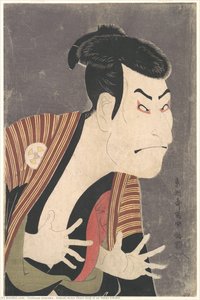
 Kabuki Actor Ichikawa Ebizō I as Ranmyaku No Kichi
Experience the raw realism of Sharaku’s iconic Kabuki actor portraits! This 1795 masterpiece showcases a legendary artist's unique style. Own a piece of ukiyo-e history.
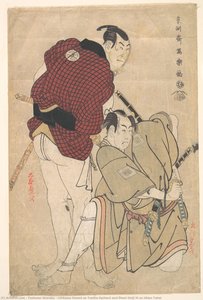
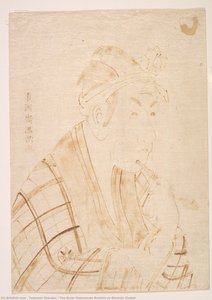
Several portraits stand out as exemplars of Sharaku’s genius. Kabuki Actor Ichikawa Ebizō I as Ranmyaku No Kichi, created in 1795, showcases his ability to capture a moment of intense emotion. The actor's piercing gaze and determined expression convey the character’s inner turmoil with remarkable clarity. Similarly, Kabuki Actor Ōtani Tokuji as Monogusa Tarō (1794) reveals a quiet dignity rarely seen in Kabuki portraits, highlighting Sharaku’s versatility. The subtle nuances of the actor's expression and the delicate rendering of his features demonstrate his mastery of ink painting techniques.
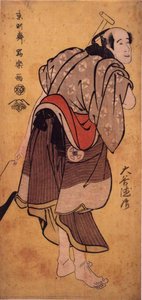
Kabuki Actor Nakayama Tomisaburō I as Ohisa, depicting a woman in rain, is particularly striking for its bold lines and rich colors. The composition draws the viewer’s eye to the actor's face, conveying a sense of vulnerability and resilience. These portraits weren’t merely likenesses; they were psychological studies, capturing the essence of each character and performer. They became instant sensations, prized by Kabuki fans as mementos of their favorite actors.
The Brief but Generative Career: A Sudden Rise and Disappearance
Despite producing over 140 prints in just ten months, Sharaku’s career abruptly ended in the spring of 1795. The reasons for his sudden departure remain a mystery. Some speculate that his style proved too unconventional for sustained popularity, while others suggest he may have faced opposition from rival artists or publishers. It's also possible that economic factors played a role; the Kansei reforms had created an unstable environment for Kabuki theater, and Sharaku’s prints may have become less marketable.
Whatever the reason, his disappearance left behind a remarkable body of work that would later be rediscovered and celebrated. For centuries, his prints were relatively unknown, but in the 20th century, they gained recognition as masterpieces of ukiyo-e art. Today, Sharaku’s portraits are highly sought after by collectors and museums worldwide.
Legacy of an Enigma: Sharaku's Enduring Influence on Ukiyo-e and Beyond
Tōshūsai Sharaku’s impact on ukiyo-e art is undeniable. His bold realism, dynamic compositions, and psychological depth challenged established conventions and paved the way for future generations of artists. While his career was brief, his work continues to inspire and captivate audiences today. He demonstrated a willingness to break from tradition, capturing the raw energy and emotion of Kabuki theater in a way that had never been seen before.
His influence extends beyond the realm of Japanese art. His portraits have influenced artists working in various mediums, including painting, photography, and even contemporary anime and manga. The dramatic expressions and stylized poses found in his work resonate with modern audiences, solidifying his place as a true artistic innovator. At ArtsDot.com, we are proud to offer high-quality reproductions of Sharaku’s iconic portraits, allowing you to experience the brilliance of this enigmatic master firsthand and bring a piece of Edo period history into your home.