The Essence of Ukiyo-e: Capturing the Ephemeral Beauty of the Floating World
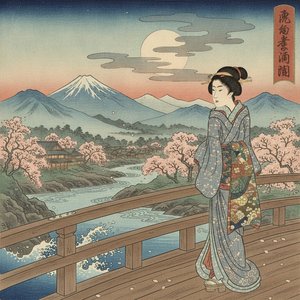
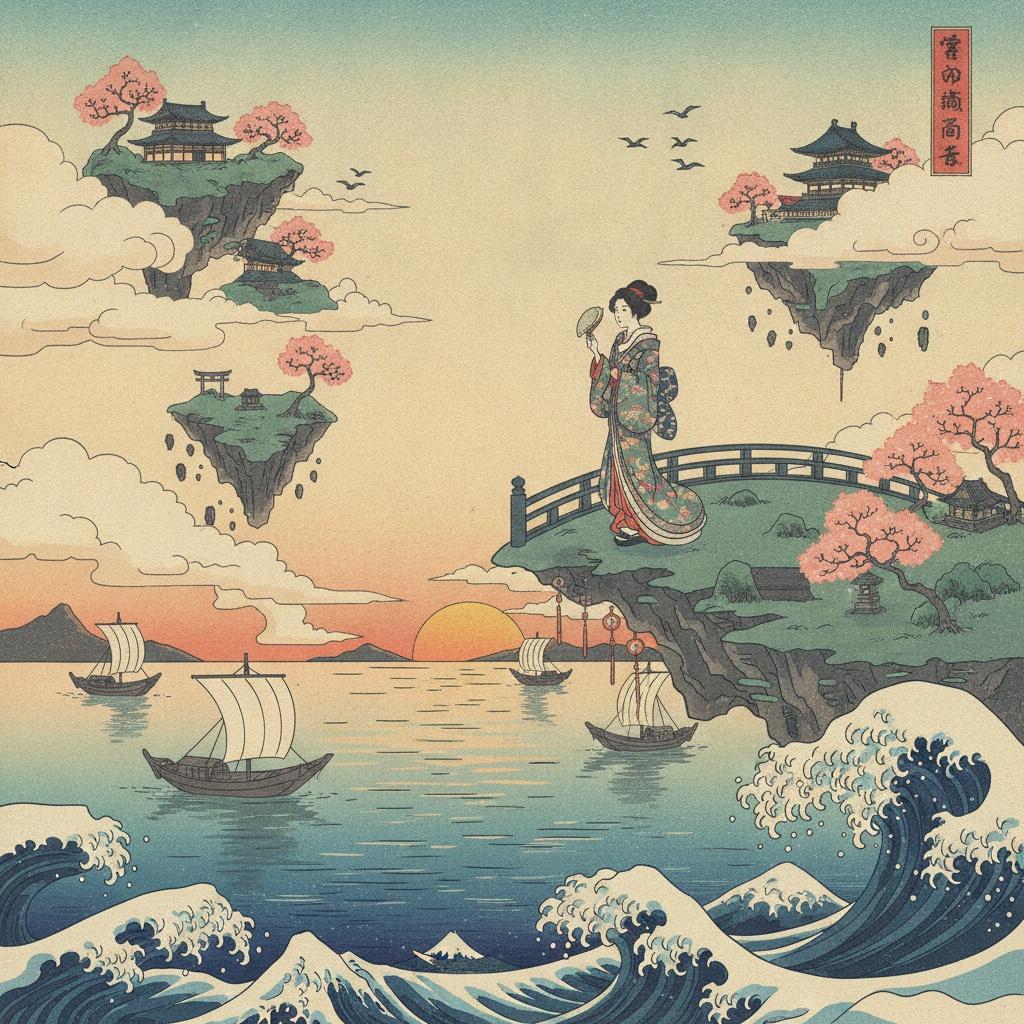
To understand the heart of Ukiyo-e, one must first surrender to the concept of the ukiyo—the floating world. While the term originally carried a somber, Buddhist connotation regarding the transient and sorrowful nature of human existence, during the vibrant Edo period, it underwent a profound metamorphosis. It became an invitation to embrace the ephemeral, to find joy in the fleeting moment, and to celebrate the sensory delights of life as they drifted past us like cherry blossoms on a spring breeze. This was not merely an art movement; it was a philosophy of presence.
For those of us who have spent decades finding solace in the soft light of an Impressionist landscape, there is a kindred spirit to be found here. Ukiyo- e captures that same delicate tension between permanence and disappearance. These prints were the heartbeat of a rising merchant class, documenting a world of pleasure, fashion, and theater. Through delicate linework and a masterful use of negative space, these artists taught us that beauty does not need to last forever to be profound; it only needs to be witnessed with intention.
Masters of the Woodblock: From Hokusai’s Landscapes to Sharaku’s Enigmatic Portraits
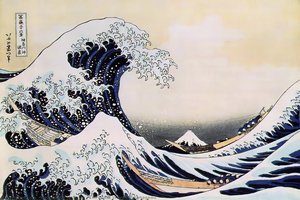
The history of Ukiyo-e is a tapestry woven by hands of incomparable skill. We look first to the legendary Katsushika Hokusai, whose name remains synonymous with the sublime power of nature. His ability to render the formidable strength of Mount Fuji alongside the delicate spray of a wave creates a dialogue between the eternal and the momentary. In his work, we see a precursor to the atmospheric depth we adore in Monet, a way of capturing the very breath of the landscape.
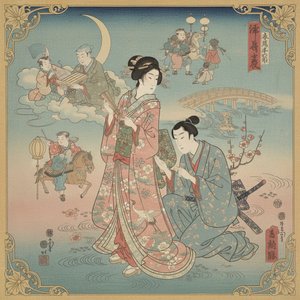
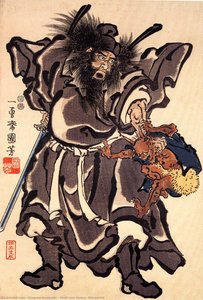
Yet, the genre offers much more than serene vistas. The enigmatic Tōshūsai Sharaku provides a startling contrast, offering portraits of Kabuki actors that are almost haunting in their psychological intensity. Unlike the idealized beauties found in other works, Sharaku’s subjects possess a raw, theatrical energy that captures the soul behind the mask. We also find the lyrical grace of Suzuki Harunobu, whose nishiki-e or polychrome prints introduced a dreamlike, muted palette that feels as soft and luminous as a Renoir portrait. Each master brought a unique lens to the floating world, ensuring that no two glimpses were ever quite the same.
A Window into Edo: Social Life, Kabuki Theatre, and the Vibrancy of Urban Culture
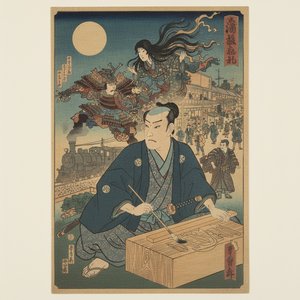
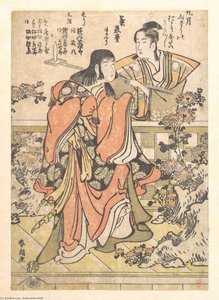
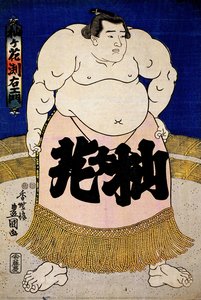
Stepping into an Ukiyo-e print is akin to walking through the bustling streets of old Edo. The art served as both a mirror and a medium for the culture of the time, celebrating the celebrities of the day—the legendary Sumo wrestlers, the captivating Kabuki actors, and the elegant courtesans of the pleasure districts. There is a palpable sense of movement in these works; one can almost hear the rhythmic clatter of geta sandals on wooden boardwalks and the distant roar of an enthusiastic theater crowd.
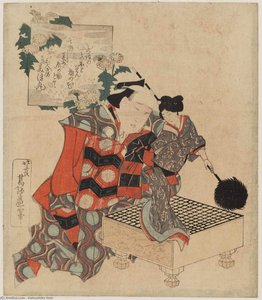
This era was defined by a burgeoning urbanity, where fashion and lifestyle were documented with meticulous detail. The intricate patterns of a kimono or the specific arrangement of hair ornaments were not merely decorative; they were symbols of status, identity, and the evolving tastes of the chōnin class. To study these prints is to engage in a form of visual anthropology, uncovering the social textures of a period that valued the artistry of everyday life. It is a celebration of human connection and the shared rituals of a society finding its voice through color and form.
The Art of the Print: Technical Brilliance and the Evolution of Polychrome Nishiki-e
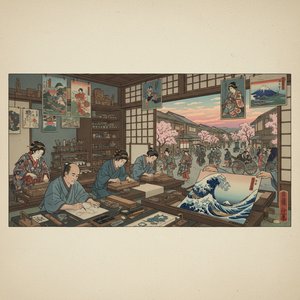
The technical journey of Ukiyo-e is one of remarkable innovation. In the early days, woodblock printing was primarily a tool for reproducing text, often limited to monochrome or hand-colored simplicity. However, the mid-18th century brought a revolution with the advent of nishiki-e, or "brocade pictures." This technological leap allowed for multiple color applications through a complex system of precisely carved registration marks, enabling artists to layer hues with unprecedented sophistication.
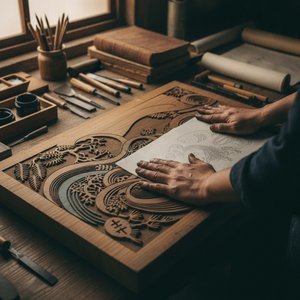
The process was a collaborative dance between the artist, the carver, and the printer. Each color required its own separate block, demanding absolute precision to ensure that the pigments aligned perfectly. This meticulous layering created a depth of tone and a vibrancy that could rival any painting. When we observe the subtle gradients in a sunset or the delicate translucency of a silk robe within these prints, we are witnessing the culmination of immense technical discipline. It is this marriage of rigorous craftsmanship and creative vision that allows the beauty of the floating world to remain so strikingly vivid centuries later.
Legacy and Influence: How Ukiyo-e Resonates Far Beyond the Shores of Japan
The influence of Ukiyo-e is a bridge that connects East to West, fundamentally altering the course of art history. As these prints reached the shores of Europe, they acted as a catalyst for the Impressionist revolution. The bold compositions, the flattened perspectives, and the unconventional cropping found in the works of masters like Hokusai and Hiroshige provided a new vocabulary for artists such as Van Gogh and Degas. They learned from the Japanese masters how to see the world not just as a collection of objects, but as a series of light-drenched moments and rhythmic patterns.
Today, the legacy of the floating world lives on in our modern aesthetic sensibilities. We see its echoes in graphic design, in the way we frame photography, and in our enduring fascination with the beauty of the transient. Ukiyo-e reminds us that art is a living, breathing entity that transcends borders and eras. It invites us to pause, to look closely, and to find the extraordinary within the ordinary—a lesson that remains as vital today as it was in the heart of Edo.
At ArtsDot.com, we share this profound reverence for the masters of the past. Whether you are drawn to the textured impasto of an Impressionist masterpiece or the delicate precision of a Japanese woodblock print, our mission is to bring the soul of art history into your home. We specialize in creating exquisite, hand-painted oil reproductions that honor the original's brushwork and emotional depth. From custom portraits that transform your personal memories into timeless treasures to large-scale murals that redefine your space, we invite you to explore a world where every canvas tells a story. Discover our collection of fine art reproductions and let us help you find the piece that speaks to your heart.