The Whispering Grain: Understanding the Intricate Craft of Woodblock Carving
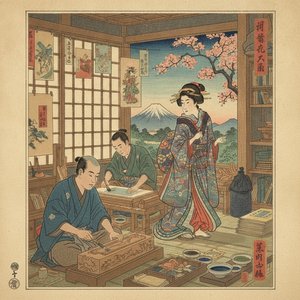
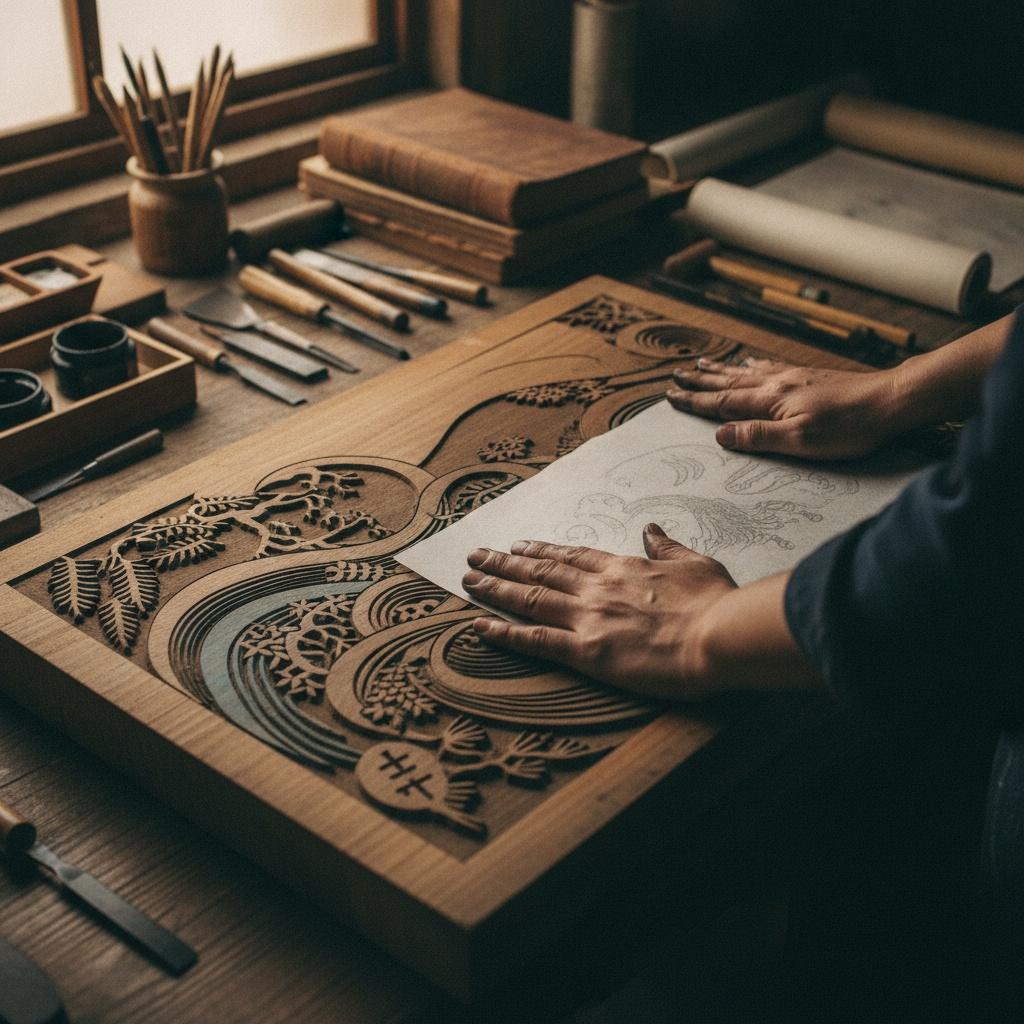
To hold a woodblock print is to touch the very pulse of the artisan’s hand, a tactile connection to a moment where wood, steel, and pigment converged in perfect harmony. Unlike the fluid, spontaneous brushstrokes of an Impressionist oil painting, the beauty of a woodblock print resides in the deliberate, disciplined resistance of the grain. Every line we admire—the delicate curve of a petal or the sharp edge of a wave—is the result of a profound dialogue between the carver and the cherrywood block. There is a quiet tension in this process; the artist must envision not just the image, and the ink, but the physical removal of material to create space for light.
The magic lies in the depth of the carved relief. As the knife bites into the wood, it leaves behind a topography of ridges and valleys that hold the pigment with varying intensity. This technique allows for a precision that is almost architectural, yet it retains an organic warmth. When the paper is pressed against the inked surface, the subtle texture of the wood grain often emerges, a ghostly reminder of the forest from which the medium was born. It is a dance of subtraction, where what is taken away is just as vital to the final composition as what remains.
Ukiyo-e and the Floating World: A Journey Through Edo Period Narratives
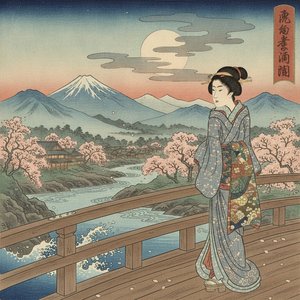
To understand these prints, one must wander through the ephemeral streets of the Edo period, a time when the concept of Ukiyo—the "Floating World"—captured the collective imagination. This was an era defined by a celebration of the transient: the fleeting beauty of a cherry blossom, the dramatic tension of a Kabuki performance, and the hedonistic allure of the pleasure districts. The woodblock print became the medium through which these ephemeral moments were captured and shared, turning the transient into something enduring.
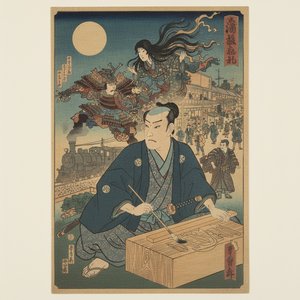
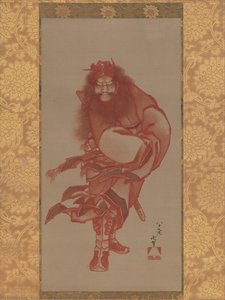
These prints served as both high art and popular media, weaving narratives that touched upon the sacred and the profane. We see in them the poignant drama of justice and tragedy, such as the intense scenes depicted in works like Hokusai’s Smoker and Kappa Monster, or the melancholic remembrance of departed actors in Toyohara Kunichika’s commemorative prints. The "Floating World" was not merely a subject; it was a philosophy of presence, an invitation to find profound meaning in the passing shadows of daily life, much like the way we seek the light in a Monet landscape.
Masters of the Line: From Hokusai’s Drama to Obata’s Serenity
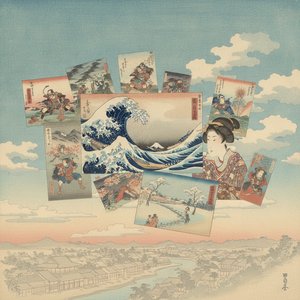
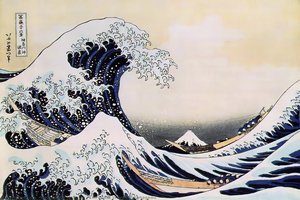
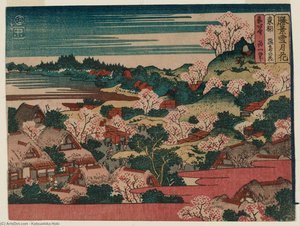
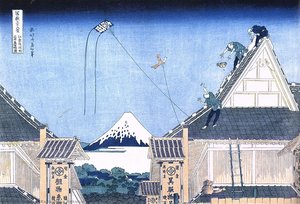
The history of the woodblock is written by masters who commanded the line with unparalleled authority. Katsushika Hokusai remains perhaps the most luminous figure, a titan whose ability to oscillate between the monumental and the minute continues to awe. In his hands, the line can be as turbulent as a storm-tossed sea or as gentle as a woman washing her face in the quietude of a rural morning. His work possesses a rhythmic vitality, a structural strength that anchors the viewer even amidst the most chaotic compositions.
Yet, the spectrum of this art form extends far beyond Hokusai's dynamism. We find a different kind of soul in the works of Chiura Obata, where the intricate detail of peacock designs offers a serene, almost meditative beauty. Where Hokusai might capture the movement of the world, artists like Obata or the tranquil landscapes of Chunagon Iemochi invite us into a state of stillness. This duality—the ability to express both the thunderous and the hussered—is what gives the woodblock medium its immense emotional range, allowing it to speak to the soul across centuries.
The Language of Color: Exploring Pigments, Textures, and Visual Poetics
Color in woodblock printing is never merely decorative; it is a structural element that directs the eye and evokes emotion. The palette of the traditional printmaker was often dictated by the natural pigments available—earthy ochres, deep indigo, and soft vegetable dyes. These colors possess a translucent quality, layering upon one another to create a sense of atmospheric depth that feels both ancient and fresh. In the hands of a master, a single wash of color can suggest the mist rising off a mountain or the warmth of a setting sun.
The interplay of texture and pigment creates a visual poetry that is unique to this medium. There is a deliberate use of negative space, where the unprinted paper acts as a source of light, balancing the saturated hues of the inked areas. This balance between presence and absence, color and void, creates a tension that keeps the viewer engaged. It is a sophisticated language of visual cues, where the weight of a line or the softness of a gradient tells a story of texture, temperature, and time.
From Tradition to Modernity: The Enduring Legacy of the Creative Print Movement
As the centuries progressed, the woodblock print underwent a profound evolution, moving from the mass-produced narratives of Ukiyo-e toward the more individualistic expression of the Sōsaku-hanga or "creative print" movement. This era saw artists like Fujimori Shizuo embracing the raw, emotional power of Expressionism, using the woodblock to explore the psychological complexities of modern urban life in Tokyo. The focus shifted from a collaborative production process to a singular vision where the artist was both the designer and the carver.
This lineage continues through contemporary artists like Issei Nomura, who seamlessly blends traditional Japanese motifs with modern influences, breathing new life into the iconic imagery of birds and flora. This evolution demonstrates that the woodblock is not a static relic of the past, but a living, breathing medium capable of absorbing the anxieties and beauties of the modern age. The carved line remains a potent tool for self-expression, bridging the gap between historical reverence and contemporary innovation.
Preserving the Impression: Collecting and Cherishing Woodblock Art in the Modern Home
For the discerning collector, acquiring a woodblock print is an act of cultural stewardship. To bring such a piece into one's home is to invite a fragment of history to reside within your personal sanctuary. Whether it is a dramatic Hokusai or a delicate Obata, these works demand a space of respect—a place where their subtle textures and profound narratives can be contemplated in the quietude of daily life.
When integrating these masterpieces into a modern interior, consider the importance of preservation and presentation. Much like the care we afford to an Impressionist oil painting, woodblock prints benefit from controlled environments, away from the harshness of direct sunlight, to ensure their pigments remain as vibrant as the day they were pressed. When framed with archival materials, these prints become more than mere decor; they become windows into a "Floating World," offering a timeless sense of grace and a profound connection to the enduring human spirit.
At ArtsDot.com, we celebrate this intersection of history and artistry. We are dedicated to making the beauty of the masters accessible to all, providing museum-quality reproductions and expert consultation for those looking to enrich their lives with the soul of fine art.