Early Life and Apprenticeship: The Foundations of a Master
Japanese art consists of a wide range of art styles and media that includes ancient pottery, sculpture, ink painting and calligraphy on silk and paper, ukiyo-e paintings and woodblock prints, ceramics, origami, bonsai, and more recently manga and an...
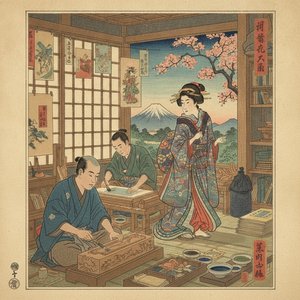
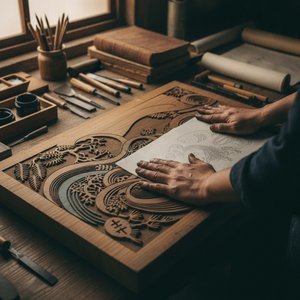
Katsushika Hokusai, born sometime around October 31st, 1760 – the exact date remains shrouded in the mists of Edo-period record-keeping – entered a world brimming with artistic possibility. His origins were humble, the son of a mirror polisher, Nakajima Ise, though accounts suggest his mother was a concubine, leaving young Tokitarō (as he was initially known) somewhat outside traditional familial structures. This early detachment may have fostered an independent spirit crucial to his later revolutionary approach to art. From a tender age, Hokusai displayed a prodigious talent for drawing, reportedly sketching incessantly and absorbing the visual world around him with remarkable acuity. His father, recognizing this inclination, though perhaps not intending a full artistic career, initially apprenticed him to a bookshop – a surprisingly formative experience. Surrounded by woodblock prints and the burgeoning literary culture of Edo, Hokusai absorbed the aesthetics and techniques that would later define his own work.
At fourteen, he transitioned to formal training under Katsukawa Shunshō, head of the prominent Katsukawa school of ukiyo-e. This marked a pivotal moment. The world of ukiyo-e at this time centered largely on portraits – depictions of beautiful women (bijin-ga) and celebrated kabuki actors (yakusha-e). Hokusai, adopting the name Shunrō, diligently mastered these established forms, honing his skills in line work, composition, and color. However, even during these early years, a restless energy and an inclination towards experimentation hinted at a desire to transcend conventional boundaries. His initial prints, while competent and respectful of tradition, already possessed a unique vitality – a nascent individuality that would soon blossom into something truly extraordinary.
Ukiyo-e Revolutionized: Hokusai's Distinctive Style and Subject Matter
 Wikipedia: Ukiyo-e
Ukiyo-e (浮世絵) is a genre of Japanese art that flourished from the 17th through 19th centuries. Its artists produced woodblock prints and paintings of such subjects as female beauties; kabuki actors and sumo wrestlers; scenes from history and folk tal...
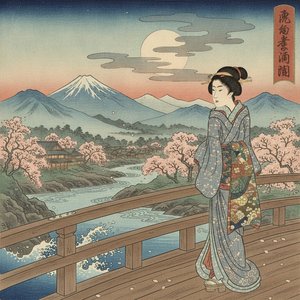
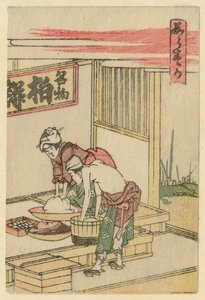
The death of Shunshō in 1793 proved to be a catalyst for profound change. Freed from the constraints of formal schooling, Hokusai embarked on a period of relentless self-discovery, adopting a succession of pseudonyms – a practice common among Japanese artists but taken to an unprecedented extent by Hokusai himself. Each name shift often coincided with a new artistic direction or stylistic exploration. He delved into various genres, absorbing influences from European prints that were beginning to circulate in Japan, and experimenting with different techniques. What truly set Hokusai apart was his broadening of the ukiyo-e subject matter. While he initially worked within established conventions, he gradually moved away from the exclusive focus on courtesans and actors, turning his attention towards landscapes, flora, fauna, and scenes of everyday life.
This shift wasn’t merely a change in subject; it was a fundamental re-evaluation of what ukiyo-e could be. Hokusai imbued his work with a dynamic energy rarely seen before. His compositions were bold, often employing dramatic perspectives and unconventional cropping. He possessed an unparalleled ability to capture movement – the crashing waves, swirling winds, or bustling crowds – imbuing even static prints with a sense of life and immediacy. His meticulous attention to detail, combined with his masterful use of color and line, created images that were both visually stunning and deeply evocative.
Thirty-Six Views of Mount Fuji: A Landmark Series and 'The Great Wave'
 Wikipedia: Hokusai
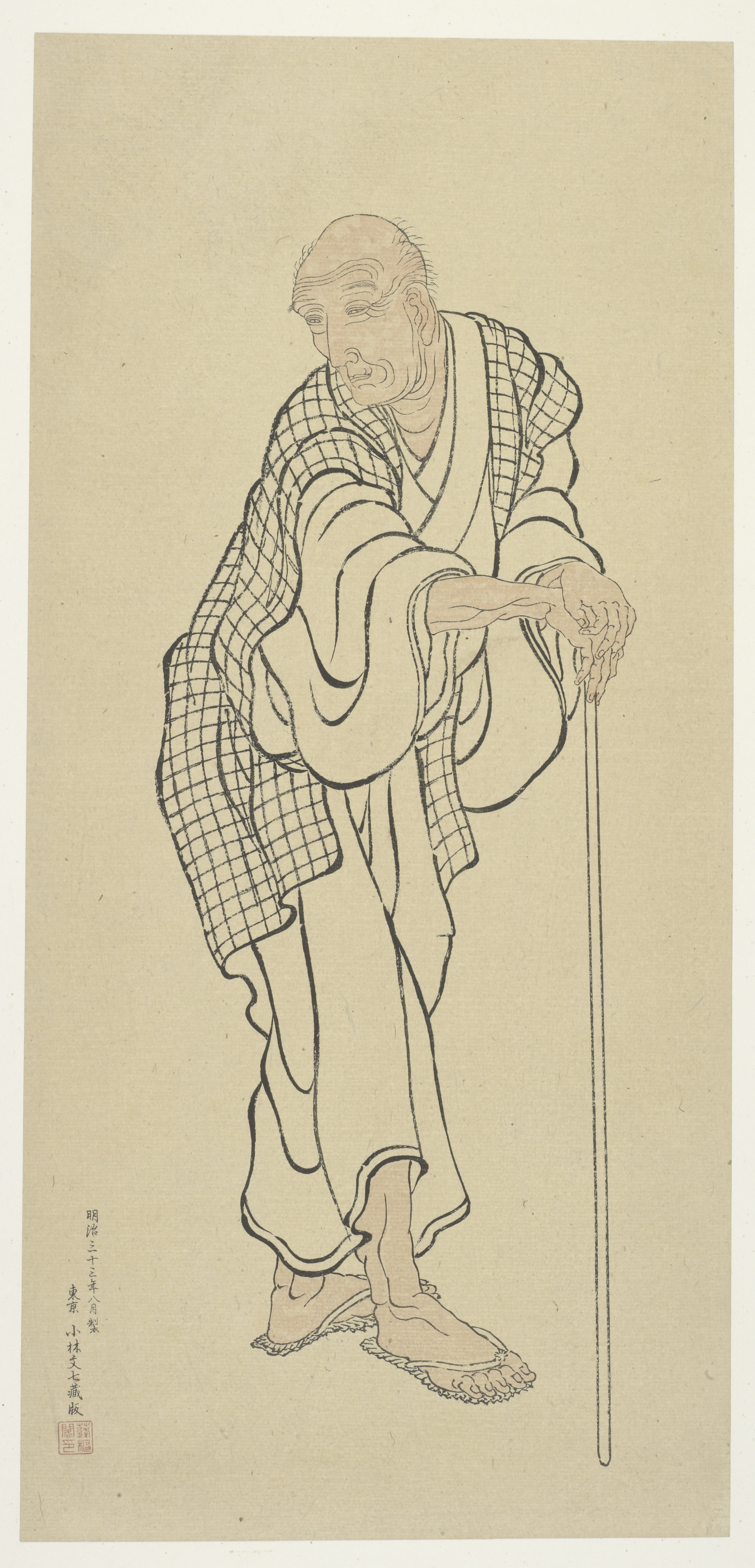
Katsushika Hokusai (葛飾 北斎; c. 31 October 1760 – 10 May 1849), known mononymously as Hokusai, was a Japanese ukiyo-e artist of the Edo period, active as a painter and printmaker. His woodblock print series Thirty-Six Views of Mount Fuji includes the i...
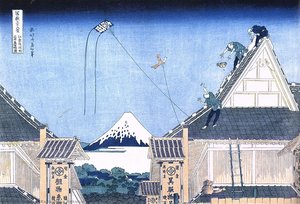
Perhaps no single work embodies Hokusai’s genius more powerfully than the series *Thirty-Six Views of Mount Fuji*, begun in 1830. This monumental undertaking was born from a confluence of factors – a domestic travel boom that opened up new vistas for artists and a deeply personal fascination with the iconic mountain itself. Mount Fuji, sacred and symbolic, became Hokusai’s obsession, appearing in countless variations across the series. Each print offered a unique perspective, showcasing the mountain from different angles, seasons, and times of day.
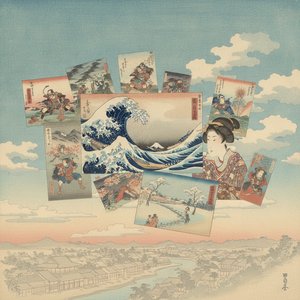
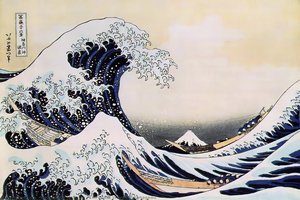
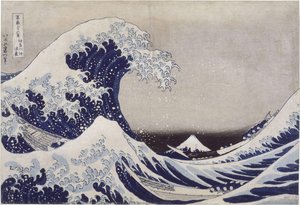
Within this series lies *Under the Wave off Kanagawa* – more commonly known as “The Great Wave.” This image has become arguably the most recognizable work of Japanese art in the world. The towering wave, poised to engulf three fishing boats, is a breathtaking display of power and dynamism. The composition is masterful: the curve of the wave echoes the shape of Mount Fuji in the background, creating a visual harmony that belies the scene’s inherent drama. The small figures struggling against the onslaught of nature emphasize humanity's vulnerability in the face of overwhelming forces. “The Great Wave” isn’t simply a depiction of a natural phenomenon; it is a meditation on the power of nature, the fragility of life, and the enduring spirit of resilience.
Beyond Landscapes: Exploring the Breadth of Hokusai’s Artistic Output
While *Thirty-Six Views of Mount Fuji* cemented his reputation, to define Hokusai solely by this series would be a profound disservice. Throughout his long career – he lived to the remarkable age of 89 – he produced an astonishing volume of work, estimated at over 30,000 paintings, sketches, and woodblock prints. He explored a vast range of subjects beyond landscapes, including historical scenes, mythological narratives, portraits (though less frequently than his early work), and even erotic art known as *shunga*. His series *One Hundred Ghost Stories* showcases his talent for depicting the supernatural with chilling detail and dramatic flair.
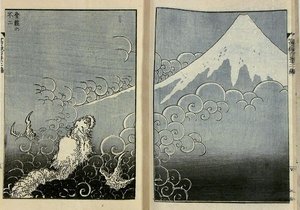
Furthermore, Hokusai was a pioneer in the field of manga – not the contemporary comic books we know today, but rather sketchbooks filled with studies of people, animals, and everyday objects. These “manga” were intended as resources for artists, providing inspiration and models for their own work. They reveal his keen observational skills and his fascination with capturing the essence of human form and movement. His dedication to continuous learning and experimentation is perhaps his most enduring legacy – a relentless pursuit of artistic perfection that spanned decades.
Hokusai’s Influence on Western Art: Japonisme and Lasting Legacy
The impact of Hokusai's work extended far beyond the borders of Japan. In the mid-19th century, Japanese art began to exert a profound influence on European artists – a phenomenon known as *Japonisme*. Prints like “The Great Wave” arrived in Europe and captivated audiences with their bold compositions, vibrant colors, and unconventional perspectives. Artists such as Vincent van Gogh and Claude Monet were particularly enthralled by Hokusai’s work, incorporating elements of his style into their own paintings.
Van Gogh, for example, openly admired Hokusai's use of color and line, even going so far as to copy some of his prints. Monet, similarly, drew inspiration from Hokusai’s landscapes, particularly his depictions of water and light. The influence wasn’t limited to Impressionism; artists across various movements – Post-Impressionism, Art Nouveau, and even modern art – were captivated by the freshness and originality of Japanese aesthetics. Hokusai's legacy continues to resonate today, inspiring artists and captivating audiences worldwide. His work serves as a testament to the power of observation, the importance of experimentation, and the enduring beauty of the natural world. Explore the timeless masterpieces of Hokusai at ArtsDot.com, where his iconic prints are brought to life with exceptional quality and craftsmanship.