The Essence of Ukiyo-e: Understanding the Floating World
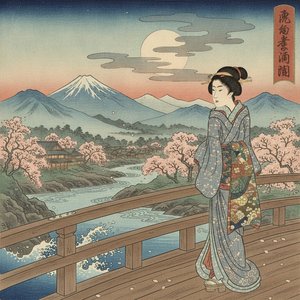
To understand Ukiyo-e, one must first grasp the profound philosophical shift that occurred during Japan's Edo period. The term itself, often translated as "pictures of the floating world," carries a bittersweet resonance. Originally rooted in Buddhist thought to describe the transient, sorrowful nature of human existence, the concept was reimagined by the urban classes of Edo as a celebration of the ephemeral. It became an invitation to dwell within the moment—to find beauty in the fleeting bloom of a cherry blossom, the sudden ripple on a river, or the vibrant energy of a theater performance.
This art form did not merely document reality; it curated a dreamscape of pleasure and transient delights. The "floating world" was a realm of sensory indulgence, where the boundaries between high culture and popular entertainment blurred. Through woodblock prints, the joys of the tea houses, the elegance of the courtesans, and the grandeur of nature were captured in a way that allowed the common person to possess a piece of this transient splendor. It was an art of the present tense, a visual heartbeat of a society finding joy amidst the inevitable passage of time.
Masters of the Woodblock: From Hokusai's Landscapes to Utagawa's Portraits
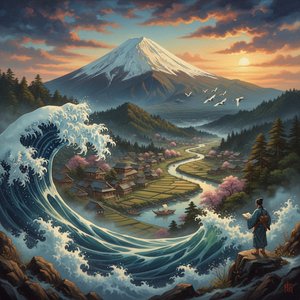
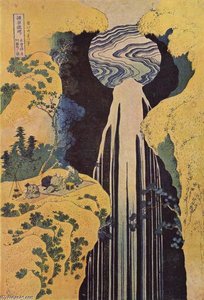
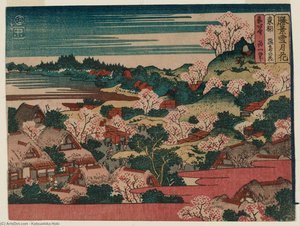
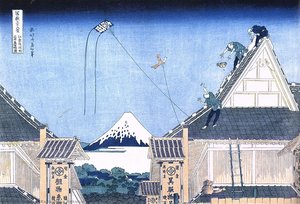
The history of Ukiyo-e is written through the hands of visionaries who transformed simple woodblocks into windows of infinite depth. No name resonates more powerfully than Katsushika Hokusai, a titan whose work bridged the gap between mere illustration and high art. His ability to imbue landscapes with a sense of spiritual scale—most notably in his series featuring Mount Fuji—redefined how we perceive the relationship between humanity and the natural world. In works such as The Weaving Factory, one glimpses his unparalleled ability to find the extraordinary within the mundane rhythms of labor and life.
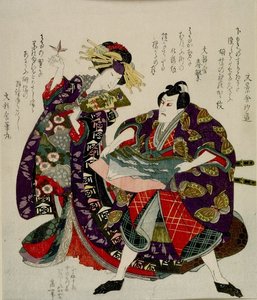
While Hokusai looked toward the horizon, other masters turned their gaze toward the human drama. The prolific Utagawa Sadahide became a vital chronicler of the changing face of Tokyo, using his mastery of portraiture to document both the legendary kabuki actors and the evolving urban landscapes. His work provides a textured, historical layer to the Edo period, capturing the movement and fashion of an era. Similarly, artists like Okumura Toshinobu brought a different intimacy to the medium, utilizing beni-e and urushi-e techniques to depict scenes of romance and the delicate nuances of everyday life. These masters did not just paint; they composed the visual identity of an entire civilization.
Technique and Texture: The Intricate Craft of Color and Line
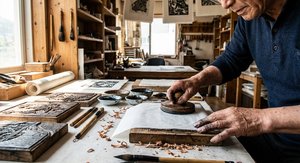
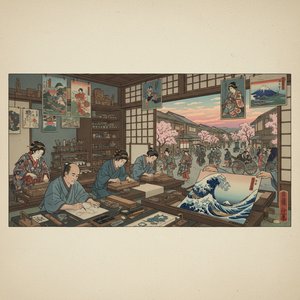
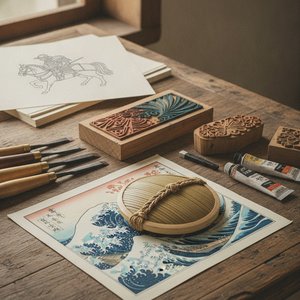
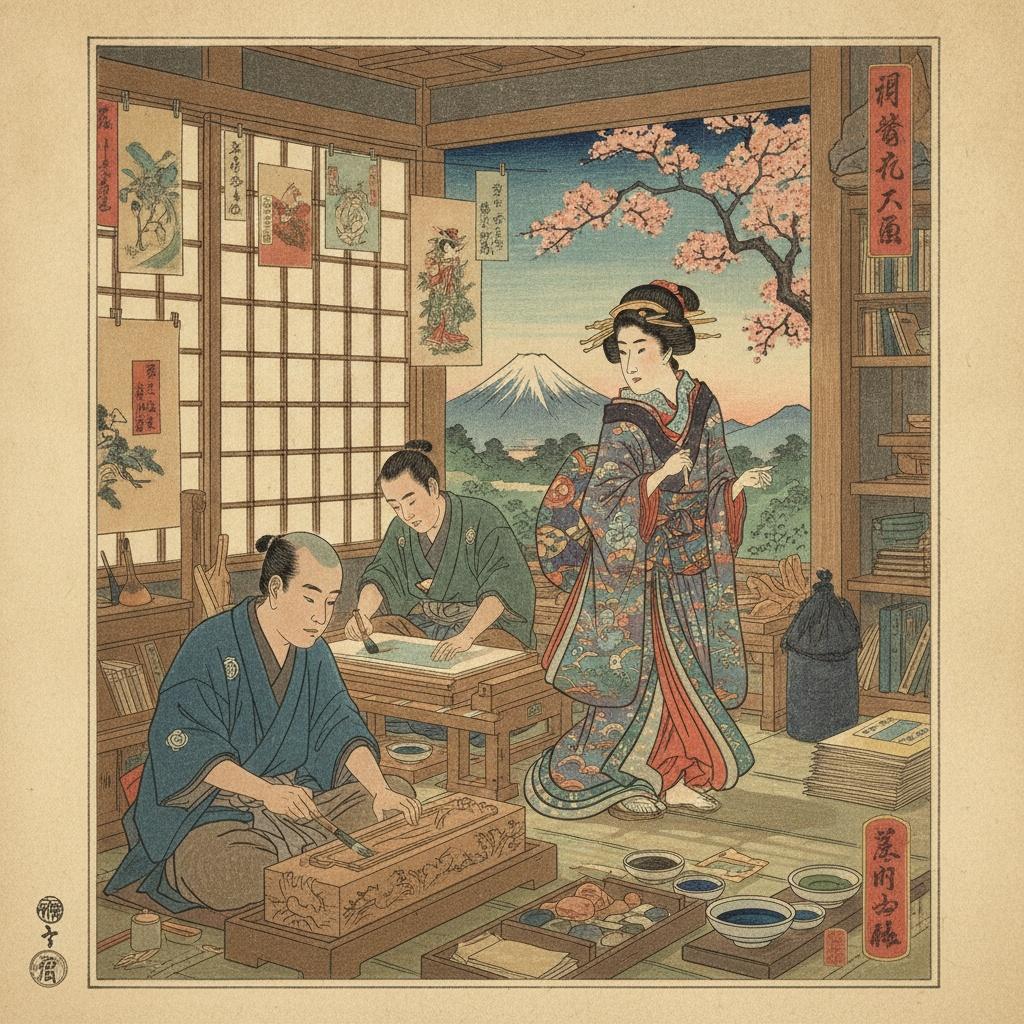
The allure of Ukiyo-e lies as much in its technical execution as in its subject matter. Unlike the heavy, impasto layers of Western oil traditions, Ukiyo-e relies on the precision of the line and the strategic application of color. The process was a collaborative symphony involving the artist, the carver, and the printer. Each print began with a master drawing, which was then meticulously transferred to cherry wood blocks. The carver’s skill determined the delicacy of the hair in a portrait or the crest of a wave, requiring a steady hand capable of translating fluid brushstrokes into rigid wood.
Color application brought the "floating world" to life. Techniques such as those attributed to Yoshinari Shakutsuru Ittosai showcased a breathtaking command over bird and flower prints, where vibrant pigments and subtle gradations created a sense of organic vitality. The use of bokashi—a hand-applied gradation technique—allowed printers to simulate the soft transition of a sunset or the misty atmosphere of a mountain morning. This interplay of sharp, decisive outlines and soft, bleeding colors created a visual tension that is both modern and timeless, offering a depth that transcends the flat surface of the paper.
Cultural Reflections: Capturing the Pulse of Edo Period Life
Ukiyo-e served as the mass media of its time, acting as both a mirror and a megaphone for the cultural shifts occurring in Japan. It was an art form deeply embedded in the social fabric, reflecting the tastes, fashions, and even the scandals of the era. Through prints of bijin-ga (beautiful women) and yakusha-e (actor prints), the public could keep pace with the icons of their day. These works functioned much like modern fashion photography or celebrity posters, disseminating trends in kimono patterns and hairstyles across the provinces.
Beyond the glamorous, Ukiyo-e captured the pulse of the streets. It documented the seasonal festivals, the bustling marketplaces, and the quiet dignity of rural landscapes. There was a profound sense of social documentation within these prints; they recorded the architecture, the tools of trade, and the very atmosphere of a society in transition. To look at a collection of Ukiyo-e is to walk through the streets of old Edo, feeling the energy of a world that, while long vanished, remains vibrantly preserved through the ink and paper of its most dedicated observers.
The Global Impression: Ukiyo-e's Enduring Influence on Western Art
When Japan opened its borders in the mid-19th century, the influx of Ukiyo-e prints into Europe triggered a revolution known as Japonisme. This movement fundamentally altered the trajectory of Western art history. Impressionist and Post-Impressionist masters—including Monet, Degas, and Van Gogh—found in these Japanese prints a new way of seeing. The unconventional compositions, the radical cropping of subjects, and the emphasis on flat areas of color offered an escape from the rigid academic traditions of the West.
The influence was profound and structural. The way a landscape could be framed by a foreground element or how shadows could be omitted entirely in favor of bold color shapes became hallmarks of modernism. Ukiyo-e taught Western artists that the subject matter was secondary to the arrangement of form and color on the canvas. This cross-cultural dialogue created a bridge between East and West, proving that the visual language of the "floating world" possessed a universal power capable of reshaping the very foundations of global aesthetics.
Preserving the Ephemeral: Collecting and Celebrating Japanese Printmaking
Today, the legacy of Ukiyo-e lives on not just in museums, but in the hearts of collectors who find solace in its transient beauty. Collecting these prints is an act of preservation—a way to hold onto the fleeting moments that the artists so carefully captured. Whether it is a rare, early impression of a Hokusai wave or a delicate floral study by a lesser-known master, each piece offers a connection to a lost era of exquisite craftsmanship.
As we navigate a modern world characterized by digital permanence and rapid consumption, the philosophy of Ukiyo-e remains more relevant than ever. It reminds us to appreciate the beauty in the temporary, the grace in the changing, and the profound art found in the everyday. By celebrating these works, we ensure that the "floating world" never truly sinks into the depths of history, but continues to float alongside our contemporary consciousness, ever vibrant and ever inspiring.
About ArtsDot.com
ArtsDot.com is a premier global destination for art enthusiasts, offering everything from authentic hand-painted reproductions to professional art consultations. Since 2004, we have been dedicated to making fine art accessible to all, connecting collectors with master artists who specialize in recreating the textures and souls of history's greatest masterpieces.