The Philosophy of the Floating World: Understanding Ukiyo-e
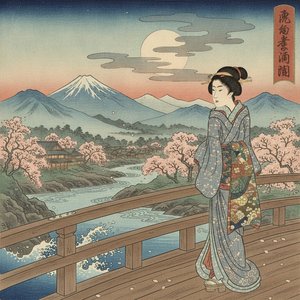
To understand Ukiyo-e is to grasp the very essence of a transient existence. The term itself, translating to "pictures of the floating world," carries a profound, bittersweet weight. Originally rooted in Buddhist concepts regarding the ephemeral and often sorrowful nature of human life, the meaning underwent a radical, hedonistic transformation during Japan's Edo period. As urban centers flourished, the focus shifted from the impermanence of suffering to the celebration of fleeting pleasures—the theater, the tea houses, and the seasonal beauty of a world that exists only in the moment. This philosophy birthed an art form that sought to capture the pulse of contemporary life. It was not an art of the eternal or the divine, but rather an art of the now. Every line drawn on a woodblock was an attempt to freeze a passing glance, a sudden movement, or the delicate fall of a cherry blossom. For the connoisseur, Ukiyo-e offers more than mere decoration; it provides a window into a cultural mindset that found profound meaning in the transient, teaching us that beauty is most potent precisely because it cannot last.Masters of the Woodblock: The Visionary Artists of the Edo Period
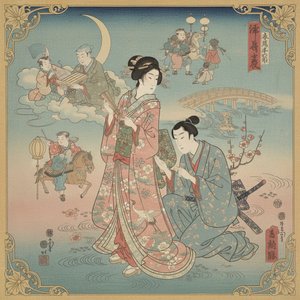
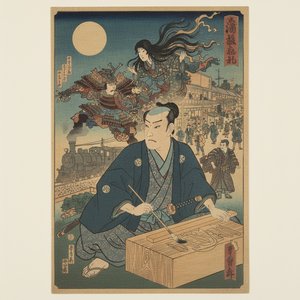
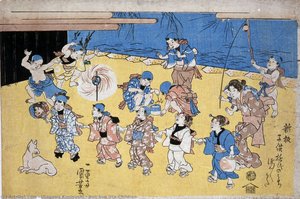
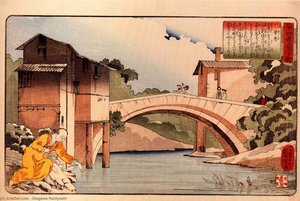
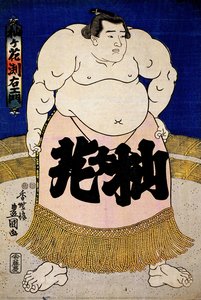
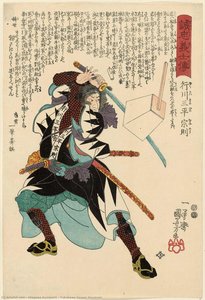
The history of Ukiyo-e is written through the hands of masters who possessed an uncanny ability to translate human emotion into graphic precision. We look to figures such as Torii Kiyonaga, whose work captures a sense of serene grace. His woodblock prints often depict elegant women within the architectural splendor of the Edo period, utilizing layered compositions and muted, sophisticated color palettes that evoke a quiet, dignified beauty. In contrast, the legendary Utagawa Kuniyoshi brought a different kind of energy to the medium. His 1848 masterpiece, depicting the warrior Hara Gôemon Mototoki, showcases a dynamic, muscular action filled with symbolism and dramatic tension, proving that the woodblock could be as powerful as any canvas painting. Beyond these giants, the era was populated by prolific creators like Utagawa Sadahide, whose detailed landscapes and actor portraits served as a visual chronicle of the changing face of Tokyo. Even in more delicate genres, such as the bird and flower prints attributed to artists like Yoshinari Shakutsuru Ittosai, one finds an obsession with intricate detail and vibrant color. These artists were not merely printers; they were storytellers, architects of light and shadow, each contributing a unique thread to the vast, colorful tapestry of Japanese visual identity.Technique and Texture: The Intricate Artistry of Carving and Printing
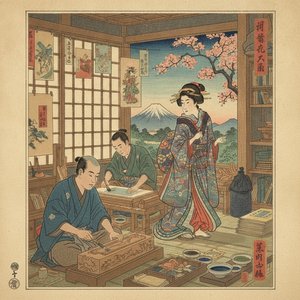
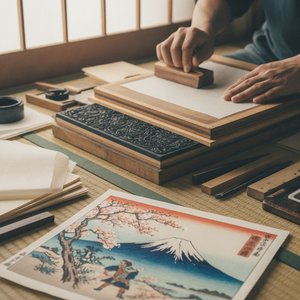
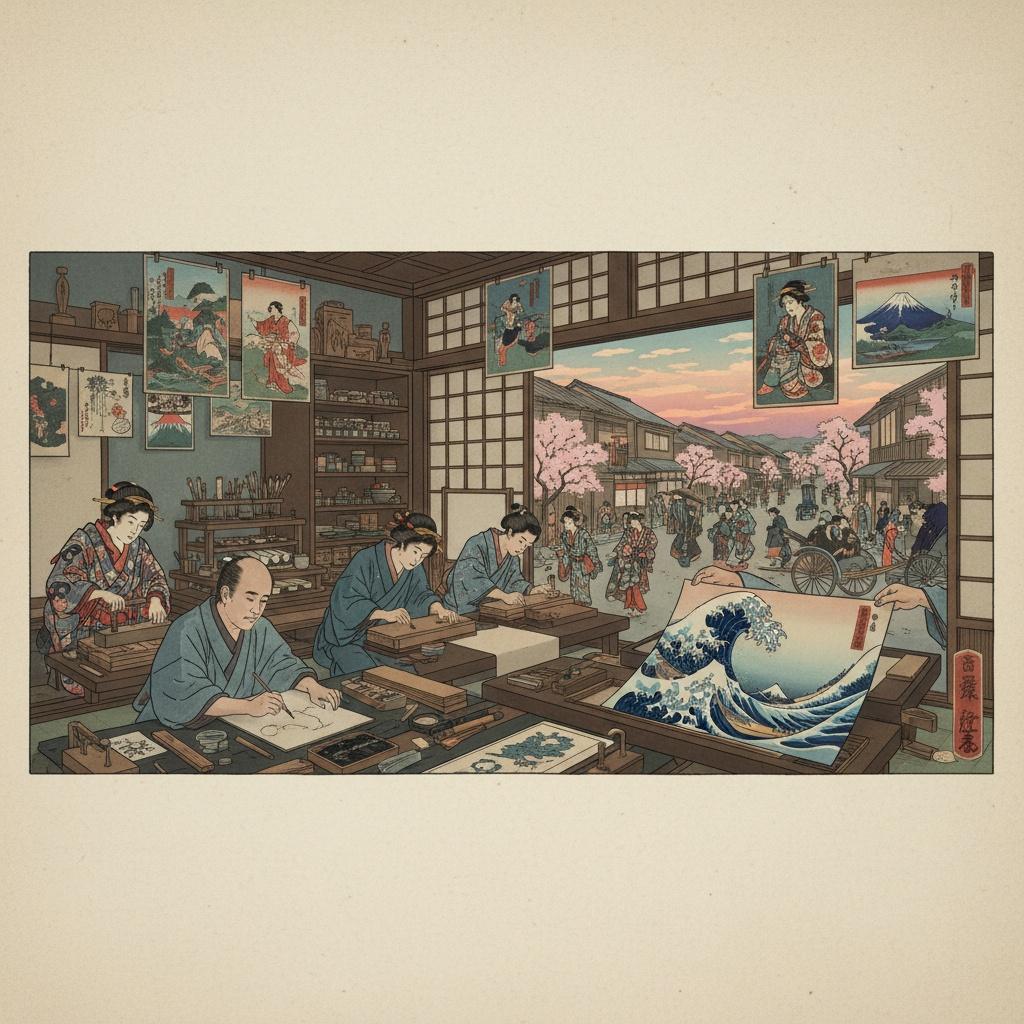
The creation of a Ukiyo-e print was a collaborative symphony of skill, involving the artist, the carver, and the printer. It began with the gaki, or the master drawing, which was then pasted face-down onto a block of wild cherry wood. With surgical precision, the carver would remove the negative space, leaving behind raised lines that defined the composition. This process required an extraordinary level of discipline; a single slip of the chisel could ruin weeks of preparation. The texture of the wood itself often imparted a subtle, organic character to the final print, a tactile reminder of its terrestrial origins. The printing phase introduced the magic of color through bokashi—the technique of hand-applying gradations of pigment to the block to create soft, atmospheric transitions. This allowed for the depiction of misty horizons or the glowing warmth of a sunset. The use of water-based inks meant that colors possessed a translucent, luminous quality quite different from the heavy oils of the Western tradition. When layered correctly, these pigments created a depth of field that felt both flat and infinitely deep, a paradox that continues to fascinize art historians and collectors alike.From Landscapes to Legends: Iconic Themes in Japanese Printmaking
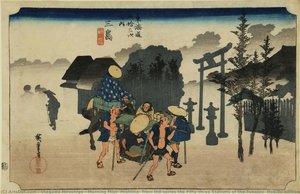
The subject matter of Ukiyo-e acted as a mirror to the vibrant Edo society. One might find oneself wandering through the bustling streets of a crowded post-station or gazing upon the quiet dignity of a mountain pass. Landscapes were never merely topographical; they were emotional landscapes, imbued with seasonal symbolism. The arrival of spring brought themes of rebirth and fragility, while the starkness of winter evoked solitude and resilience. Yet, the "floating world" also embraced the legendary and the theatrical. Prints often depicted famous Kabuki actors in mid-performance, their faces contorted in mie—a powerful, frozen pose designed to convey intense emotion. Warriors and folk heroes from Japanese mythology were rendered with a sense of epic scale, their battles captured in compositions that felt both chaotic and meticulously ordered. This duality—the celebration of the mundane alongside the exaltation of the mythic—is what gives Ukiyo-e its enduring, captivating magic.The Global Echo: How Ukiyo-e Transformed Western Modernism
When Japanese ports opened to the world in the mid-19th century, Ukiyo-e prints flooded into Europe, acting as a profound catalyst for the birth of modern art. This phenomenon, known as Japonisme, fundamentally altered the trajectory of Western aesthetics. Impressionist and Post-Impressionist masters were mesmerized by the "unconventional" perspectives found in Japanese prints: the radical cropping of subjects, the lack of traditional linear perspective, and the bold use of flat areas of color. Artists like Van Gogh and Monet found in Ukiyo-e a liberation from the constraints of academic realism. The way an artist like Hokusai or Hiroshige could define space through silhouette rather than shadow offered a new vocabulary for capturing light and movement. This cross-cultural dialogue did more than just introduce new motifs; it introduced a new way of seeing, breaking down the boundaries between the subject and the frame, and paving the way for the abstraction that would define the 20th century.Preserving the Ephemeral: Bringing Ukiyo-e into the Modern Collector's Home
In our contemporary era, the desire to surround ourselves with the beauty of the past remains as strong as ever. While original Edo-period prints are rare and precious museum artifacts, the spirit of Ukiyo-e can be brought into modern interiors through high-quality reproductions and Giclée prints. These modern iterations utilize advanced pigment-based inks and museum-grade papers to ensure that the vibrant colors and delicate linework of the masters remain vivid for generations. For those seeking a more tactile experience, hand-painted oil reproductions offer a way to honor the "soul" of the original. By applying thick, impasto brushstrokes to a classical composition, an artist can recreate the physical presence and three-dimensional texture that a flat print lacks. Whether through a large-scale mural that transforms a room or a carefully curated multi-panel set, integrating the aesthetics of the floating world allows us to maintain a continuous connection to this timeless legacy of beauty, movement, and the profound celebration of the fleeting moment.Discover more exquisite art explorations and professional reproductions at ArtsDot.com.