A Glimpse into Flemish Grandeur: The Portrait of a Man
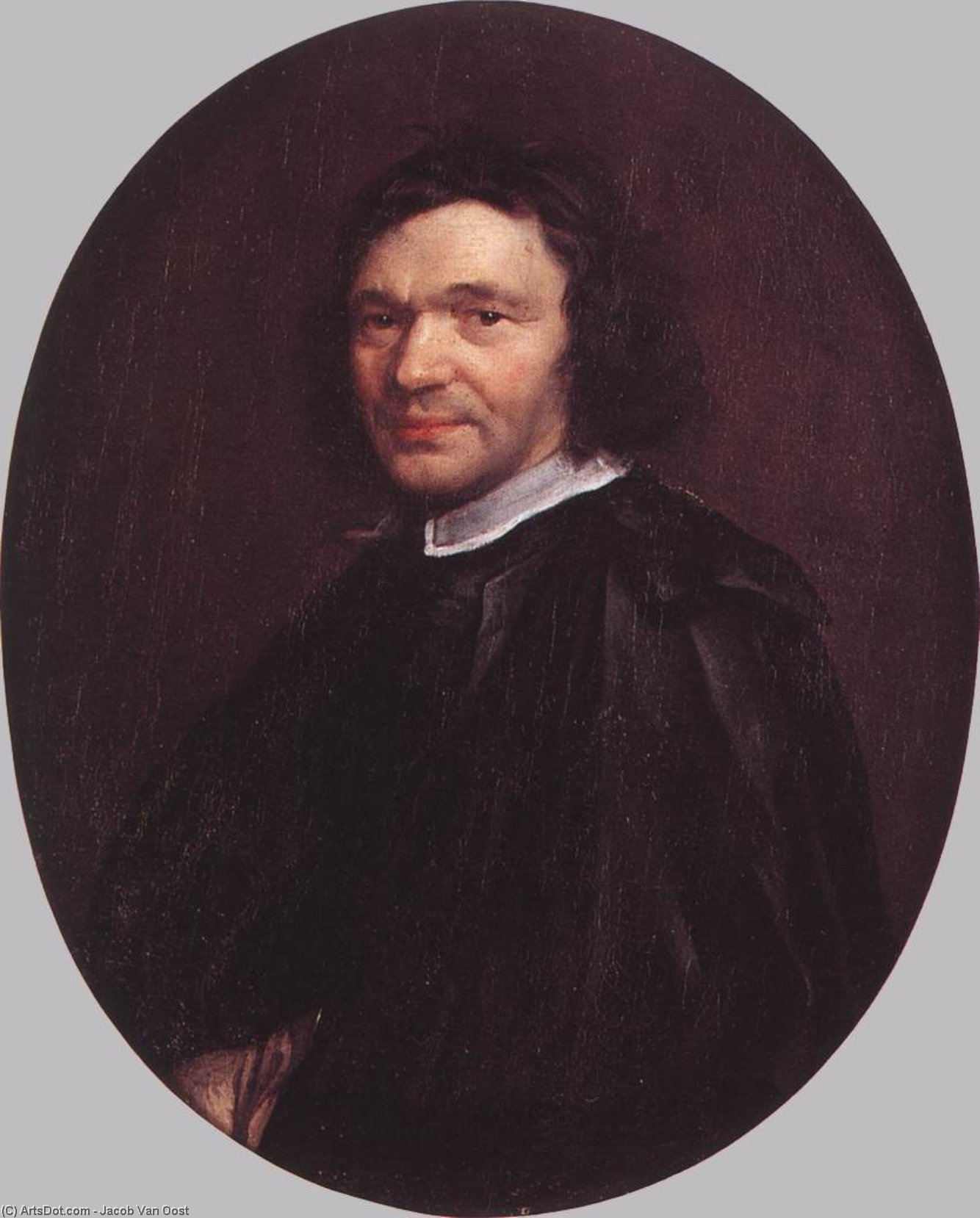
To stand before Jacob Van Oost's Portrait of a Man is to step directly into the opulent, yet intimately observed world of late 17th-century Flanders. This oil on canvas, dating from 1697, transcends a mere likeness; it is a meticulously crafted window into the culture, fashion, and quiet confidence of an era defined by burgeoning bourgeois wealth. The subject, captured within a circular composition that lends it the timeless quality of a medallion portrait, gazes out with an expression that balances seriousness with a subtle, knowing contentment. His very presence suggests a man of standing, a figure whose life was woven into the rich tapestry of Bruges society.
Mastery in Shadow and Light: Technical Brilliance
Van Oost’s technical prowess is immediately apparent upon viewing this work. He employed the dramatic interplay of light and shadow—a hallmark of the Baroque period—to sculpt the sitter's form, giving the portrait an astonishing three-dimensionality. Observe how the artist has treated the crisp white collar and the delicate lace cravat; these areas catch the light with almost luminous intensity, drawing the eye immediately to the face. Conversely, the deep tones of his dark coat recede into shadow, providing a perfect foil that allows the illuminated planes of skin and hair to emerge with breathtaking clarity. The rendering of the shoulder-length, curly hair and beard is executed with such painstaking detail that one can almost feel the texture of the strands.
The Echoes of History: Context and Costume
More than just a portrait, this painting functions as an invaluable historical document. The subject’s attire—the high collar, the cut of the coat, and the overall formality—speaks volumes about the social codes and fashion sensibilities prevalent in 17th-century Europe, particularly within the vibrant mercantile culture of Flanders. Jacob Van Oost himself was a pivotal figure in Bruges art, known for capturing the likenesses of local dignitaries. Owning or displaying a reproduction of this piece allows one to connect with that tangible history, bringing the refined elegance of a bygone age into a contemporary setting.
Emotional Resonance and Decorative Impact
The emotional impact of Portrait of a Man lies in its captivating restraint. There is no overt drama, only a profound sense of self-possession. For collectors or those designing an interior space with historical gravitas, this piece offers unparalleled depth. Its balanced composition, focused solely on the subject against a dark, receding background, ensures that it serves as a powerful focal point. It whispers tales of patronage, status, and enduring human character, making it not just art to be viewed, but an atmosphere to be absorbed.