 Preview
 Send
Send Share
Share
 Details

 Download
 Similars
 X-Ray
X-Ray Diaporama
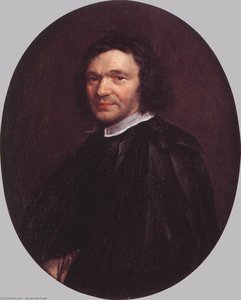
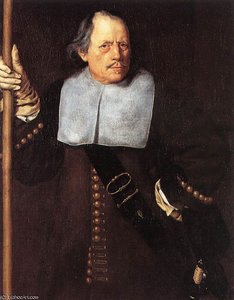
Portrait of a Man
 Oil On Canvas
- WallArt
- Baroque
 1697
1697- Early Modern
 73.0 x 59.0 cm
 Groeninge Museum
 Read More
Hand Made Oil Reproduction
Hand-painted oil on canvas in your size and frame, made to order by our artists. ( Buy Print Buy Image)




P118B $10

P118H $10

P118W $10

P438Z $10

P508JH $12

P508YH $12

P805H $10

P805Z $10

P919BZ $10

P919G $10

P919XJ $10

P959ZH $10

P968JZ $12

W106C $8

W218G $10

W218JH $8

W218Y $10

W307PJ $10

W316G $10

W316PJ $8

W316Y $10

W398PJ $8

W4111J $10

W500HY $15

W500JH $15

W692G $12

W849H $8

W940BG $15

W953PJ $8




Pick from our preset sizes that match the artwork's original proportions.

You may enter your own dimensions to fit a specific frame or space. If your selected size does not match the original image's proportions, we will either crop the artwork or extend the painting with additional hand-painted elements. A digital mockup will be sent for your approval before production begins.
Please note that the on-screen preview does not reflect the actual cropping or extension. Only the mockup will accurately show the final composition.
While custom sizes are available, we recommend selecting a dimension from the predefined list to preserve the original proportions.
After order, ArtsDot.com team will email client for instructions and provide a mockup preview
Worldwide Delivery () in 3/4 weeks instead of standard 5 weeks. (17 August). No compromise on quality.

Free Worldwide Express Shipping

High-Quality Linen Canvas

Full Shipping Insurance

Customs Tax Refund Guarantee

True Color Matching Guarantee

60-Day Return Policy (Defects Only)

100% Money-Back Guarantee

Bulk Discount Offer
 Glass option is only available in size under 110 CM

Portrait of a Man
Reproduction Medium
Reproduction Size
-


Total Price
$ 263
Artwork Description
A Glimpse into Flemish Grandeur: The Portrait of a Man
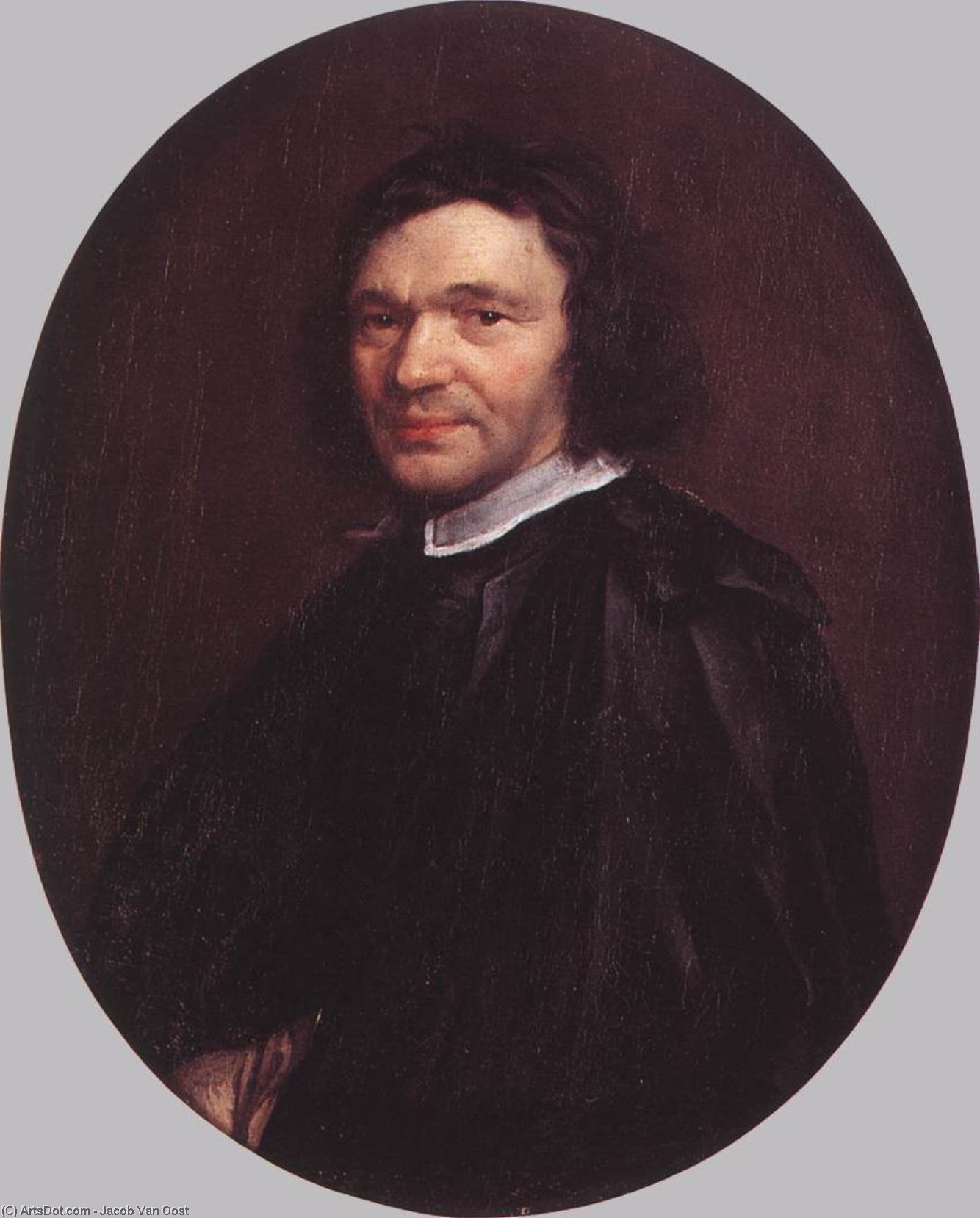
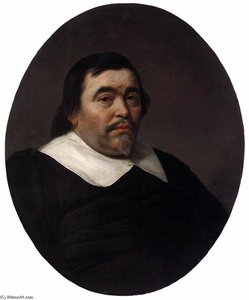
To stand before Jacob Van Oost's Portrait of a Man is to step directly into the opulent, yet intimately observed world of late 17th-century Flanders. This oil on canvas, dating from 1697, transcends a mere likeness; it is a meticulously crafted window into the culture, fashion, and quiet confidence of an era defined by burgeoning bourgeois wealth. The subject, captured within a circular composition that lends it the timeless quality of a medallion portrait, gazes out with an expression that balances seriousness with a subtle, knowing contentment. His very presence suggests a man of standing, a figure whose life was woven into the rich tapestry of Bruges society.
Mastery in Shadow and Light: Technical Brilliance
Van Oost’s technical prowess is immediately apparent upon viewing this work. He employed the dramatic interplay of light and shadow—a hallmark of the Baroque period—to sculpt the sitter's form, giving the portrait an astonishing three-dimensionality. Observe how the artist has treated the crisp white collar and the delicate lace cravat; these areas catch the light with almost luminous intensity, drawing the eye immediately to the face. Conversely, the deep tones of his dark coat recede into shadow, providing a perfect foil that allows the illuminated planes of skin and hair to emerge with breathtaking clarity. The rendering of the shoulder-length, curly hair and beard is executed with such painstaking detail that one can almost feel the texture of the strands.
The Echoes of History: Context and Costume
More than just a portrait, this painting functions as an invaluable historical document. The subject’s attire—the high collar, the cut of the coat, and the overall formality—speaks volumes about the social codes and fashion sensibilities prevalent in 17th-century Europe, particularly within the vibrant mercantile culture of Flanders. Jacob Van Oost himself was a pivotal figure in Bruges art, known for capturing the likenesses of local dignitaries. Owning or displaying a reproduction of this piece allows one to connect with that tangible history, bringing the refined elegance of a bygone age into a contemporary setting.
Emotional Resonance and Decorative Impact
The emotional impact of Portrait of a Man lies in its captivating restraint. There is no overt drama, only a profound sense of self-possession. For collectors or those designing an interior space with historical gravitas, this piece offers unparalleled depth. Its balanced composition, focused solely on the subject against a dark, receding background, ensures that it serves as a powerful focal point. It whispers tales of patronage, status, and enduring human character, making it not just art to be viewed, but an atmosphere to be absorbed.
Related Artworks
Artist Biography
The Master of Bruges: The Life and Legacy of Jacob van Oost
In the heart of seventeenth-century Flanders, amidst the winding canals and storied churches of Bruges, one name commanded the artistic landscape: Jacob van Oost. Known to history as Jacob van Oost the Elder, this Flemish master was not merely a painter but the very soul of the Baroque era in his beloved city. Born into a well-to-do family in Bruges, the son of Johannes van Oost and Gheeraerdyne Weyts, Jacob was destined for a life steeped in the rich traditions of his heritage. While the exact identity of his mentor remains shrouded in the mists of time, it is widely believed that he honed his early skills under the guidance of his brother, Frans van Oost. This foundation of technical discipline would later allow him to ascend to the highest echelons of the local artistic community, eventually becoming a master of the Bruges Guild of St. Luke.
The trajectory of Van Oost’s career was profoundly shaped by his transformative journey to Italy. In 1621, seeking the grander horizons of the Mediterranean, he traveled to Rome, a pilgrimage that would forever alter his aesthetic sensibilities. Though much of his Italian output remains unidentified, the echoes of the Roman masters are unmistakable in his later works. It is whispered among art historians that he may have studied under the great Annibale Carracci, absorbing the dramatic light and classical poise that defined the era. This period of intense exposure to the Italian Baroque provided him with a visual vocabulary that blended the robust realism of Caravaggio with the elegant, flowing grace of Van Dyck, creating a style that was uniquely his own.
A Tapestry of Devotion and Nobility
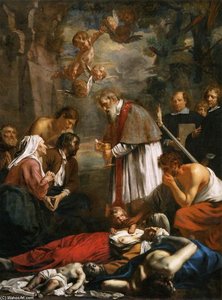
Upon his return to Bruges in 1628, Van Oost did not merely rejoin his community; he rose to lead it. His ascent within the Guild of St. Luke was meteoric, serving as a director and later holding various prestigious positions, including the role of official city painter. His artistic output became the visual heartbeat of the Counter-Reformation in Flanders. Through massive, emotive altarpieces, he breathed life into the spiritual aspirations of local convents and churches. One of his most significant early triumphs was the delicate task of restoring Jan van Eyck’s legendary Virgin and Child with Canon van der Paele, a feat that demonstrated both his reverence for the Flemish masters of old and his supreme technical command.
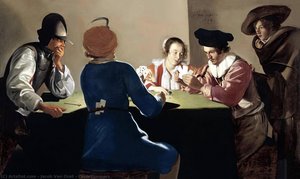
Beyond the sacred halls of worship, Van Oost became the preeminent portraitist for the local bourgeoisie. He possessed an uncanny ability to capture not just the physical likeness of the Bruges nobility, but their very essence—their status, their piety, and their quiet dignity. His portraits are masterclasses in texture and light, where the sheen of silk and the weight of velvet are rendered with breathtaking precision. Yet, he was equally adept at capturing the more spirited side of life. For the open market, he produced captivating genre paintings featuring musicians and card players, works that pulsed with a dynamic energy and a sense of theatrical drama.
A Lasting Artistic Dynasty
The legacy of Jacob van Oost extends far beyond his own brushstrokes, reaching into the very fabric of Flemish art history through his family. His life was one of both personal tragedy and profound continuity; after the loss of his first wife, Jaquemyne Van Overdille, he found companionship again with Maria van Tollenaere, with whom he raised six children. In a remarkable testament to his influence, his sons, Jacob the Younger and Willem, emerged as notable painters in their own right, ensuring that the Van Oost name remained synonymous with excellence for generations. Even his grandson, Dominique Joseph van Oost, would carry the mantle of portraiture into Lille.
As we look back upon the career of this prolific master, we see a painter who bridged the gap between the meticulous traditions of the Northern Renaissance and the dramatic exuberance of the Baroque. His work remains a vital window into the seventeenth century—a time of religious fervor, social shifting, and artistic revolution. Through his ability to marry the provincial serenity of Bruges with the grander movements of Europe, Jacob van Oost ensured that his vision would endure, long after the lights of the Flemish Golden Age had dimmed.
jacob van oost
1637 - 1713 , Belgium
Quick Facts
- Artistic Movement Or Style: Baroque painting
- Artists Or Movements Influenced By This Artist: ['Jacob van Oost the Younger']
- Artists Who Influenced This Artist:
- Caravaggio
- Annibale Carracci
- Van Dyck
- Date Of Birth: 1603
- Date Of Death: 1671
- Full Name: Jacob van Oost the Elder
- Nationality: Flemish
- Notable Artworks:
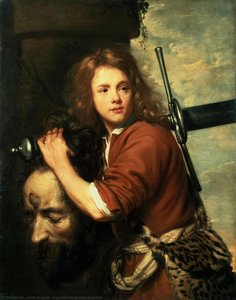
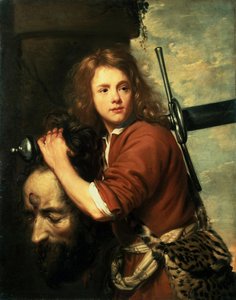
- David Bearing the Head of Goliath
- Card-Sharpers
- Portrait of a Man
- Holy Family
- Place Of Birth: Bruges, Belgium
Related Articles
Van Gogh's Masterpieces: Explore 25 Iconic Paintings & Art for Your Home
Journey through Vincent van Gogh's 25 most iconic paintings! Explore 'Starry Night', 'Sunflowers,' and more—discover the stories, techniques & emotions behind these Post-Impressionist masterpieces. Find museum-quality art reproductions for your home at ArtsDot.com.
Sir Anthony van Dyck: Courtly Portraiture & the Shaping of Baroque Identity
Explore the life & legacy of Sir Anthony van Dyck, the leading court painter of his era. Discover his innovative portraiture, Baroque masterpieces, and investment potential for discerning collectors. Learn more at ArtsDot.
The Grandeur of Baroque Portraiture: Power, Emotion & Artistic Innovation
Explore the grandeur of Baroque portraiture! Discover Rubens, Van Dyck & the masters of 17th-century art. Uncover symbolism, techniques & lasting influence. Expert insights for collectors and enthusiasts.

Rembrandt's Masterpieces: Explore 25 Iconic Paintings & Prints | ArtsDot
Journey through Rembrandt van Rijn's 25 most iconic paintings & etchings. Explore Dutch Golden Age masterpieces, dramatic chiaroscuro, and timeless portraits. Find museum-quality art reproductions to elevate your home decor on ArtsDot.com.
Charles-André van Loo: A Study in Rococo Portraiture & the French Court's Artistic Dynamics
Explore the elegant world of Charles-André van Loo, a master of Rococo portraiture at the French court. Discover his life, techniques, and enduring influence on 18th-century art. Hand-painted reproductions available.