 Preview
 Send
Send Share
Share
 Details

 Download
 Similars
 X-Ray
X-Ray Diaporama
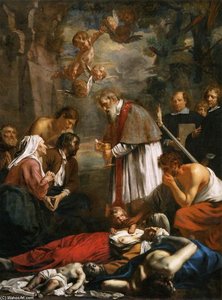
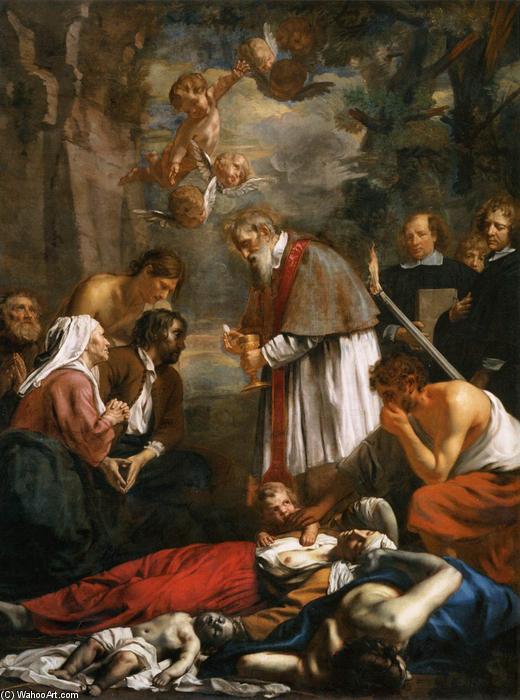
St Macarius of Ghent Giving Aid to the Plague Victims
 Oil On Canvas
- WallArt
- Baroque
 1673
1673- Early Modern
 350.0 x 257.0 cm
 The Louvre
 Read More
Hand Made Oil Reproduction
Hand-painted oil on canvas in your size and frame, made to order by our artists. ( Buy Print Buy Image)




P118B $10

P118H $10

P118W $10

P438Z $10

P508JH $12

P508YH $12

P805H $10

P805Z $10

P919BZ $10

P919G $10

P919XJ $10

P959ZH $10

P968JZ $12

W106C $8

W218G $10

W218JH $8

W218Y $10

W307PJ $10

W316G $10

W316PJ $8

W316Y $10

W398PJ $8

W4111J $10

W500HY $15

W500JH $15

W692G $12

W849H $8

W940BG $15

W953PJ $8




Pick from our preset sizes that match the artwork's original proportions.

You may enter your own dimensions to fit a specific frame or space. If your selected size does not match the original image's proportions, we will either crop the artwork or extend the painting with additional hand-painted elements. A digital mockup will be sent for your approval before production begins.
Please note that the on-screen preview does not reflect the actual cropping or extension. Only the mockup will accurately show the final composition.
While custom sizes are available, we recommend selecting a dimension from the predefined list to preserve the original proportions.
After order, ArtsDot.com team will email client for instructions and provide a mockup preview
Worldwide Delivery () in 3/4 weeks instead of standard 5 weeks. (16 August). No compromise on quality.

Free Worldwide Express Shipping

High-Quality Linen Canvas

Full Shipping Insurance

Customs Tax Refund Guarantee

True Color Matching Guarantee

60-Day Return Policy (Defects Only)

100% Money-Back Guarantee

Bulk Discount Offer
 Glass option is only available in size under 110 CM

St Macarius of Ghent Giving Aid to the Plague Victims
Reproduction Medium
Reproduction Size
-


Total Price
$ 463
Artwork Description
A Baroque Testament to Compassion: St Macarius of Ghent
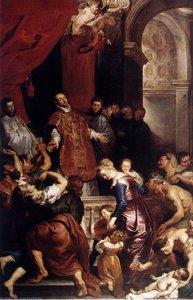
To stand before this monumental canvas is to be enveloped by the dramatic fervor of the Counter-Reformation era. Jacob van Oost’s depiction, St Macarius of Ghent Giving Aid to the Plague Victims, is not merely a painting; it is an immersive experience in devotion and human suffering. The sheer scale—a breathtaking 350 x 257 cm—commands attention, drawing the viewer into its rich narrative tapestry. One feels immediately transported to a moment of profound crisis, where divine grace intersects with earthly agony. The composition pulses with life, guiding the eye through clusters of figures engaged in acts ranging from desperate prayer to tender physical assistance.
Mastery of Light and Shadow: Technical Brilliance
Technically, this work is a dazzling display of 17th-century oil painting prowess. Van Oost employs chiaroscuro with breathtaking mastery; the luminous light seems to emanate from an unseen celestial source, carving out the forms of the central figures against deeper shadows. This dramatic contrast heightens the emotional stakes, ensuring that every gesture—every outstretched hand, every bowed head—is illuminated for maximum impact. Observe the handling of the paint: the visible brushstrokes speak to a painter deeply connected to his medium. The rich textures achieved through glazing and scumbling give the drapery an almost palpable weight, while the musculature beneath the robes is rendered with anatomical precision characteristic of the Flemish school.
Symbolism and Spiritual Weight
The subject matter itself is steeped in potent symbolism. At the heart lies the theme of compassion confronting plague—a visceral reflection of 17th-century anxieties. The presence of angels hovering above serves as a constant reminder of divine oversight, elevating the suffering below into a realm of spiritual significance. St Macarius himself embodies active charity; his aid is both physical and spiritual. The warm earth tones—the deep reds, ochres, and browns—ground the scene in human reality, while the cooler blues and whites reserved for the heavens suggest transcendence. It is a visual sermon on faith, sacrifice, and the enduring power of communal care.
A Legacy for the Modern Collector
For those who appreciate the grandeur of Baroque art, this piece offers an unparalleled opportunity to connect with the emotional intensity of the period. Whether adorning a grand hall or serving as a focal point in a richly decorated interior, its dramatic scope and narrative depth provide instant gravitas. Owning a reproduction of St Macarius of Ghent Giving Aid to the Plague Victims is acquiring more than just art; it is commissioning a piece of history that speaks eloquently of enduring human virtue. It invites contemplation on suffering, resilience, and the unwavering light of faith.
Related Artworks
Artist Biography
The Master of Bruges: The Life and Legacy of Jacob van Oost
In the heart of seventeenth-century Flanders, amidst the winding canals and storied churches of Bruges, one name commanded the artistic landscape: Jacob van Oost. Known to history as Jacob van Oost the Elder, this Flemish master was not merely a painter but the very soul of the Baroque era in his beloved city. Born into a well-to-do family in Bruges, the son of Johannes van Oost and Gheeraerdyne Weyts, Jacob was destined for a life steeped in the rich traditions of his heritage. While the exact identity of his mentor remains shrouded in the mists of time, it is widely believed that he honed his early skills under the guidance of his brother, Frans van Oost. This foundation of technical discipline would later allow him to ascend to the highest echelons of the local artistic community, eventually becoming a master of the Bruges Guild of St. Luke.
The trajectory of Van Oost’s career was profoundly shaped by his transformative journey to Italy. In 1621, seeking the grander horizons of the Mediterranean, he traveled to Rome, a pilgrimage that would forever alter his aesthetic sensibilities. Though much of his Italian output remains unidentified, the echoes of the Roman masters are unmistakable in his later works. It is whispered among art historians that he may have studied under the great Annibale Carracci, absorbing the dramatic light and classical poise that defined the era. This period of intense exposure to the Italian Baroque provided him with a visual vocabulary that blended the robust realism of Caravaggio with the elegant, flowing grace of Van Dyck, creating a style that was uniquely his own.
A Tapestry of Devotion and Nobility
Upon his return to Bruges in 1628, Van Oost did not merely rejoin his community; he rose to lead it. His ascent within the Guild of St. Luke was meteoric, serving as a director and later holding various prestigious positions, including the role of official city painter. His artistic output became the visual heartbeat of the Counter-Reformation in Flanders. Through massive, emotive altarpieces, he breathed life into the spiritual aspirations of local convents and churches. One of his most significant early triumphs was the delicate task of restoring Jan van Eyck’s legendary Virgin and Child with Canon van der Paele, a feat that demonstrated both his reverence for the Flemish masters of old and his supreme technical command.
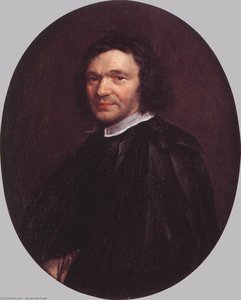
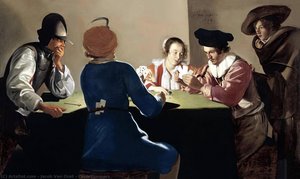
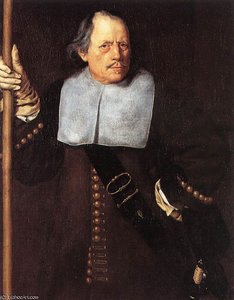
Beyond the sacred halls of worship, Van Oost became the preeminent portraitist for the local bourgeoisie. He possessed an uncanny ability to capture not just the physical likeness of the Bruges nobility, but their very essence—their status, their piety, and their quiet dignity. His portraits are masterclasses in texture and light, where the sheen of silk and the weight of velvet are rendered with breathtaking precision. Yet, he was equally adept at capturing the more spirited side of life. For the open market, he produced captivating genre paintings featuring musicians and card players, works that pulsed with a dynamic energy and a sense of theatrical drama.
A Lasting Artistic Dynasty
The legacy of Jacob van Oost extends far beyond his own brushstrokes, reaching into the very fabric of Flemish art history through his family. His life was one of both personal tragedy and profound continuity; after the loss of his first wife, Jaquemyne Van Overdille, he found companionship again with Maria van Tollenaere, with whom he raised six children. In a remarkable testament to his influence, his sons, Jacob the Younger and Willem, emerged as notable painters in their own right, ensuring that the Van Oost name remained synonymous with excellence for generations. Even his grandson, Dominique Joseph van Oost, would carry the mantle of portraiture into Lille.
As we look back upon the career of this prolific master, we see a painter who bridged the gap between the meticulous traditions of the Northern Renaissance and the dramatic exuberance of the Baroque. His work remains a vital window into the seventeenth century—a time of religious fervor, social shifting, and artistic revolution. Through his ability to marry the provincial serenity of Bruges with the grander movements of Europe, Jacob van Oost ensured that his vision would endure, long after the lights of the Flemish Golden Age had dimmed.
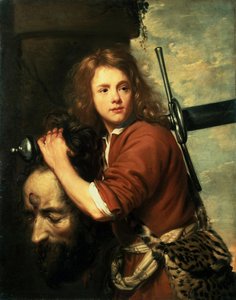
jacob van oost
1637 - 1713 , Belgium
Quick Facts
- Artistic Movement Or Style: Baroque painting
- Artists Or Movements Influenced By This Artist: ['Jacob van Oost the Younger']
- Artists Who Influenced This Artist:
- Caravaggio
- Annibale Carracci
- Van Dyck
- Date Of Birth: 1603
- Date Of Death: 1671
- Full Name: Jacob van Oost the Elder
- Nationality: Flemish
- Notable Artworks:
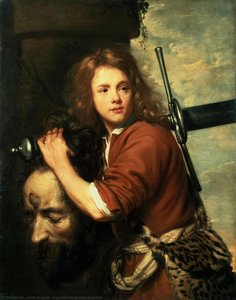
- David Bearing the Head of Goliath
- Card-Sharpers
- Portrait of a Man
- Holy Family
- Place Of Birth: Bruges, Belgium
Related Articles
Van Gogh's Masterpieces: Explore 25 Iconic Paintings & Art for Your Home
Journey through Vincent van Gogh's 25 most iconic paintings! Explore 'Starry Night', 'Sunflowers,' and more—discover the stories, techniques & emotions behind these Post-Impressionist masterpieces. Find museum-quality art reproductions for your home at ArtsDot.com.

Rembrandt's Masterpieces: Explore 25 Iconic Paintings & Prints | ArtsDot
Journey through Rembrandt van Rijn's 25 most iconic paintings & etchings. Explore Dutch Golden Age masterpieces, dramatic chiaroscuro, and timeless portraits. Find museum-quality art reproductions to elevate your home decor on ArtsDot.com.
Masterpieces of the 17th Century: Art, History & Decor Inspiration | ArtsDot
Journey through 17th century art with masterpieces by Rembrandt, Vermeer & Caravaggio. Explore Baroque paintings, Dutch Golden Age techniques & timeless beauty. Find museum-quality reproductions and elevate your home decor on ArtsDot.com.
Decoding Baroque Grandeur: A Guide to the Drama and Emotion of 17th-Century Art
Explore the breathtaking drama of 17th-century Baroque art. Our expert guide decodes the use of chiaroscuro, emotional intensity, and historical grandeur to help you appreciate and curate timeless masterpieces for your collection.

Baroque Masterpieces: 10 Paintings That Defined an Era |
Journey through the drama & grandeur of Baroque art! Explore 10 masterpieces by Caravaggio, Rembrandt, Rubens & more. Discover stunning oil paintings, rich colors & timeless stories. Find museum-quality reproductions at .