The Van Loo Dynasty: A Legacy of Artistic Excellence
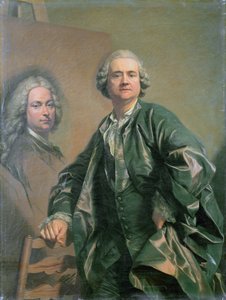 Louis Michel van Loo
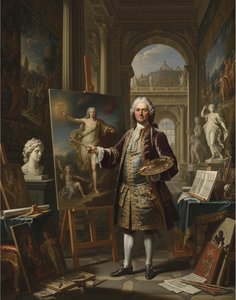
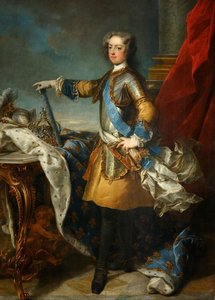
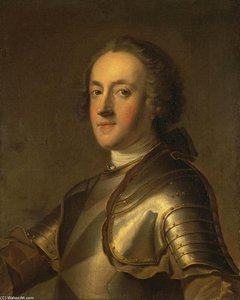
Louis-Michel van Loo (1707-1771): French Rococo master & court painter to Spain and France. Celebrated for elegant portraits of royalty like Louis XV & Philip V.
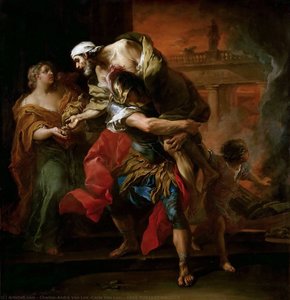
The name Van Loo resonates with a particular brilliance within the annals of 18th-century French art, representing not merely an individual talent but a flourishing dynasty that spanned generations. Originating from Flemish roots, the family’s artistic lineage began with Jacob van Loo and culminated in the celebrated works of his grandson, Charles-André—often referred to as Carle van Loo. This familial dedication to painting wasn't simply a profession; it was an inheritance, a cultivated expertise passed down through meticulous training and shared aesthetic sensibilities. While Jacob established the foundation, it was Louis-Michel van Loo who first achieved significant renown, serving as court painter to both Spain and France. However, Charles-André would arguably become the most celebrated member, embodying the Rococo spirit with an unparalleled grace and sophistication that captivated European aristocracy.
The Van Loos understood the power of patronage, skillfully navigating the complex social landscape of their time. Their success wasn’t solely based on artistic merit—though that was undeniably present—but also on a keen ability to anticipate and fulfill the desires of their clientele. They weren't simply documenting reality; they were crafting idealized representations, projecting an image of power, wealth, and refined taste. This understanding would prove crucial for Charles-André as he ascended to become *the* premier painter to Louis XV.
Early Influences & Roman Training: Shaping a Rococo Style
 Wikipedia: Charles-André van Loo
Carle or Charles-André van Loo (French pronunciation: [ʃaʁl ɑ̃dʁe vɑ̃ lo]; 15 February 1705 – 15 July 1765) was a French painter, son of the painter Louis-Abraham van Loo, a younger brother of Jean-Baptiste van Loo and grandson of Jacob van Loo. He w...
Born in Nice in 1705, Charles-André’s artistic journey began under the watchful eye of his father, Louis-Abraham van Loo. However, it was his elder brother, Jean-Baptiste, who truly guided his early development, instilling within him a rigorous foundation in drawing and composition. The pivotal moment arrived with a move to Rome in 1712, where Charles-André immersed himself in the classical tradition. Studying under masters like Benedetto Luti and Pierre Le Gros, he absorbed the principles of Italian Renaissance art—principles that would later inform his own distinctive style.
Rome wasn’t merely a place of technical training; it was an awakening. The city's grandeur, its sculptures, and its vibrant artistic community ignited within Charles-André a passion for elegance and refinement. He won the *Prix de Rome* in 1724, though he didn’t immediately pursue the associated scholarship, choosing instead to hone his skills further within Parisian ateliers. This period was crucial in shaping his Rococo sensibility—a departure from the more imposing Baroque style towards lighter colors, delicate brushwork, and a focus on intimate scenes of aristocratic life.
Portraiture at the Court of Louis XV: Capturing Aristocratic Life
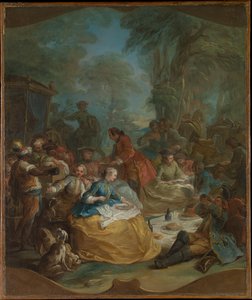
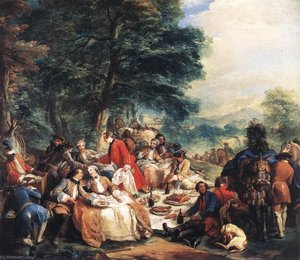 Halt During the Hunt
Admire Charles-André van Loo’s "Halt During the Hunt" (1737). A stunning Rococo oil painting showcasing aristocratic leisure in a lush forest setting. Explore classical beauty & dramatic lighting.
Charles-André van Loo’s ascent to prominence was inextricably linked to his ability to capture the essence of the French court under Louis XV. His portraits weren't simply likenesses; they were carefully constructed narratives, designed to convey status, wealth, and social standing. He possessed a remarkable talent for portraying not just *what* his subjects looked like, but also *who* they aspired to be.
His work during this period often featured aristocratic figures engaged in leisurely pursuits—hunting expeditions, elegant gatherings, or intimate moments within their opulent residences. “Halt During the Hunt” (1737) exemplifies this perfectly, showcasing a scene of refined relaxation amidst a lush forest setting. The classical beauty and dramatic lighting are hallmarks of his style, creating an atmosphere of idyllic grace. He understood that portraiture wasn’t just about capturing physical appearance; it was about constructing an image—a carefully curated representation of power and privilege.
Madame de Pompadour, Louis XV's influential mistress, became a significant patron, commissioning works for her château at Bellevue. This patronage solidified van Loo’s position as the leading portraitist of the era, granting him access to the highest echelons of French society and allowing him to further refine his artistic vision.
Beyond Portraits: Religious and Mythological Masterpieces
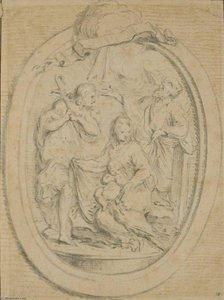 Holy family
Admire 'Holy Family,' a stunning Rococo painting by Charles-André van Loo (Carle van Loo). Explore this exquisite 18th-century masterpiece & its historical context. Hand-painted reproductions available.
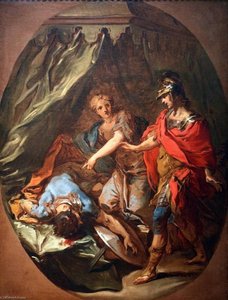
While celebrated for his portraits, Charles-André van Loo's talent extended far beyond capturing aristocratic likenesses. He demonstrated a remarkable versatility, tackling religious and mythological subjects with equal skill and finesse. “Holy Family,” for example, showcases his ability to imbue traditional themes with the Rococo aesthetic—delicate colors, graceful compositions, and an emphasis on emotional expression.
These works weren’t merely exercises in technical proficiency; they were statements of artistic ambition. Van Loo sought to elevate himself beyond the realm of mere portraiture, demonstrating his mastery of composition, color theory, and narrative storytelling. His religious paintings, while adhering to traditional iconography, often possessed a lightness and elegance that distinguished them from earlier Baroque interpretations.
Van Loo's Technique & Composition: Defining Rococo Aesthetics
Charles-André van Loo’s technique was characterized by its precision, detail, and fluidity. He employed multiple layers of oil paint to achieve depth and richness in color, meticulously blending hues to create a sense of luminosity. His brushwork was both delicate and confident, allowing for detailed rendering of textures—from the shimmering silk of aristocratic garments to the soft flesh tones of his subjects.
Compositionally, van Loo favored balanced arrangements, often employing classical motifs and symmetrical designs. However, he wasn’t afraid to introduce subtle asymmetries, adding a touch of dynamism and visual interest. His use of light and shadow—*chiaroscuro*—was masterful, creating a sense of volume and depth that drew the viewer's eye to key elements within the composition.
His style was not necessarily original, as some critics noted, but it was undeniably refined and influential. He synthesized various artistic influences—Baroque grandeur, Italian Renaissance principles, and the emerging Rococo aesthetic—into a cohesive and compelling visual language that defined an era.
The Artist’s Enduring Influence & Modern Appreciation
Despite facing criticism in later centuries for perceived superficiality, Charles-André van Loo's impact on 18th-century art remains undeniable. His portraits continue to captivate viewers with their elegance, sophistication, and meticulous detail. He wasn’t merely a painter; he was a chronicler of an era—a visual historian who captured the essence of French aristocratic life.
Today, collectors recognize van Loo's work for its artistic merit and historical significance. Hand-painted reproductions allow art enthusiasts to experience the beauty and grace of his masterpieces firsthand. At ArtsDot.com, we are proud to offer a curated selection of Charles-André van Loo’s most celebrated works, meticulously recreated by skilled artists using traditional techniques. Explore our collection and discover the enduring legacy of this Rococo master—a testament to the power of art to transcend time and capture the spirit of an age.
- Free Art Consultation – Personalized guidance from art experts
- Custom Paintings from Photos – Handmade oil paintings or digital reproductions from any famous works