 Preview
 Send
Send Share
Share
 Details

 Download
 Similars
 X-Ray
X-Ray Diaporama
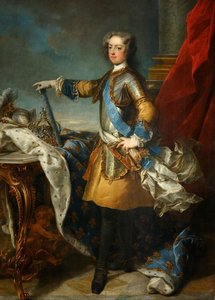
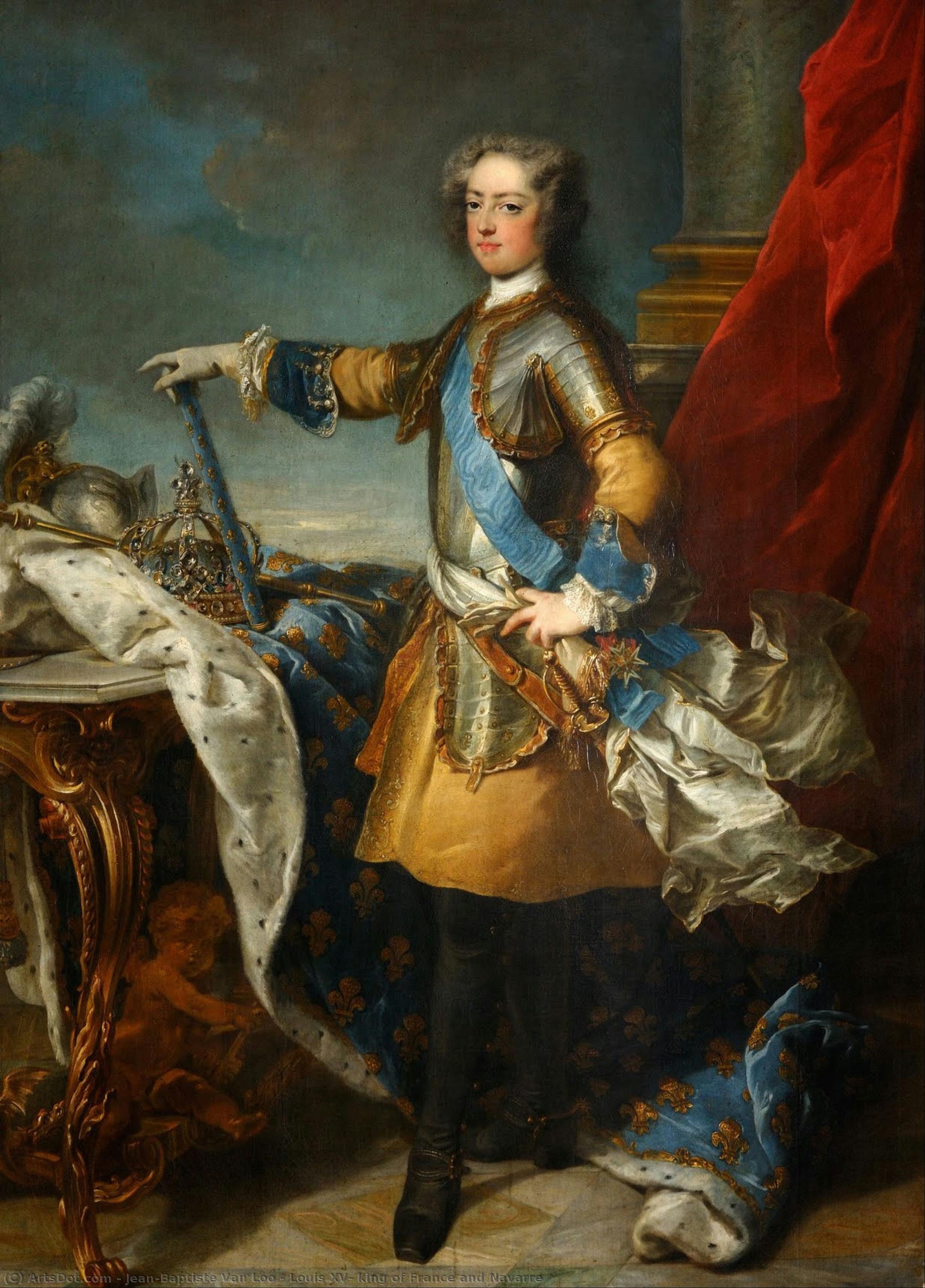
Louis XV, king of France and Navarre
 Oil On Canvas
- WallArt
- Rococo
 1723
1723 171.0 x 205.0 cm
 Château de Versailles
 Read More
Hand Made Oil Reproduction
Hand-painted oil on canvas in your size and frame, made to order by our artists. ( Buy Print Buy Image)




P118B $10

P118H $10

P118W $10

P438Z $10

P508JH $12

P508YH $12

P805H $10

P805Z $10

P919BZ $10

P919G $10

P919XJ $10

P959ZH $10

P968JZ $12

W106C $8

W218G $10

W218JH $8

W218Y $10

W307PJ $10

W316G $10

W316PJ $8

W316Y $10

W398PJ $8

W4111J $10

W500HY $15

W500JH $15

W692G $12

W849H $8

W940BG $15

W953PJ $8




Pick from our preset sizes that match the artwork's original proportions.

You may enter your own dimensions to fit a specific frame or space. If your selected size does not match the original image's proportions, we will either crop the artwork or extend the painting with additional hand-painted elements. A digital mockup will be sent for your approval before production begins.
Please note that the on-screen preview does not reflect the actual cropping or extension. Only the mockup will accurately show the final composition.
While custom sizes are available, we recommend selecting a dimension from the predefined list to preserve the original proportions.
After order, ArtsDot.com team will email client for instructions and provide a mockup preview
Worldwide Delivery () in 3/4 weeks instead of standard 5 weeks. (16 August). No compromise on quality.

Free Worldwide Express Shipping

High-Quality Linen Canvas

Full Shipping Insurance

Customs Tax Refund Guarantee

True Color Matching Guarantee

60-Day Return Policy (Defects Only)

100% Money-Back Guarantee

Bulk Discount Offer
 Glass option is only available in size under 110 CM

Louis XV, king of France and Navarre
Reproduction Medium
Reproduction Size
-


Total Price
$ 263
Artwork Description
The Regal Presence: Jean-Baptiste van Loo’s Masterpiece
Jean-Baptiste van Loo's 1723 portrait of Louis XV, King of France and Navarre, is more than just a likeness; it’s a carefully constructed tableau of power, diplomacy, and the burgeoning grandeur of the French court. The painting immediately commands attention with its scale – a commanding 171 x 205 cm – inviting viewers to lose themselves in the details of this pivotal moment in royal history. Van Loo, a master of his craft who spent much of his career in Paris and England, expertly blends classical formality with a subtle dynamism that captures the essence of Louis XV’s reign.
The subject himself is presented in three-quarter pose, seated against a richly textured backdrop suggesting the opulence of Versailles. He wears the elaborate attire characteristic of the era: a breastplate over a deep blue coat adorned with intricate embroidery, a fur-lined mantle echoing the royal colors, and a sash bearing the emblem of the Order of the Holy Spirit – a potent symbol of his authority and status. The careful placement of the baton resting on his right hand further emphasizes this command, while the subtle turn of his head and gaze imbue the portrait with an air of quiet confidence.
A Window into the Age of Louis XV
To truly appreciate this painting, one must understand the context in which it was created. Louis XV ascended to the throne at the tender age of five, inheriting a kingdom grappling with debt and political instability following the reign of his flamboyant predecessor, Louis XIV. His early years were marked by regency, but he quickly asserted himself as a shrewd and ambitious ruler, skillfully navigating the complex web of European alliances and initiating significant reforms within France. This portrait, painted in 1723 during this formative period, reflects both the weight of his position and the promise of his reign – a time of lavish court life, artistic flourishing, and ultimately, growing tensions that would contribute to the French Revolution.
The painting’s creation coincided with a shift in European art towards a more restrained and idealized style. Van Loo, influenced by Italian masters like Guido Reni and Andrea Sacchi, employed a meticulous technique characterized by smooth brushstrokes, precise detailing, and a masterful use of light and shadow. The composition is carefully balanced, drawing the eye to Louis XV while subtly incorporating elements that speak to his role as king – the fleur-de-lis embroidered on his mantle, the symbols of royal authority, and the grandeur of the setting.
Symbolism and Emotional Resonance
Beyond its technical brilliance, the portrait is rich in symbolism. The elaborate clothing and regalia are not merely decorative; they represent Louis XV’s power, wealth, and connection to tradition. The careful attention to detail – from the embroidery on his garments to the placement of his hands – speaks volumes about the importance placed on appearances and protocol within the French court. Yet, despite this formality, there's a subtle warmth in the king’s expression, suggesting intelligence and perhaps even a hint of vulnerability.
Van Loo’s portraits were often commissioned by European royalty and nobility, serving as both diplomatic tools and personal statements. This particular portrait likely served to reinforce Louis XV’s image as a capable and benevolent ruler – a man dedicated to the prosperity and well-being of his kingdom. The painting's enduring appeal lies in its ability to capture not just a physical likeness but also the spirit and ambition of a king at the height of his power, offering a captivating glimpse into a bygone era.
A Legacy of Likeness: Jean-Baptiste van Loo
Jean-Baptiste van Loo (1684–1745) was a prominent figure in 18th-century French art. Born in Aix-en-Provence, he honed his skills under his father, Louis-Abraham van Loo, and later studied in Rome with Benedetto Luti. He became a member of the Académie royale de peinture et de sculpture in Paris, where he produced numerous portraits for European royalty and nobility. His style is characterized by its elegance, precision, and ability to capture the likenesses of his subjects with remarkable accuracy. His legacy extends through his family – his brothers, Louis-Michel and Charles-Amédée-Philippe, also became accomplished painters, continuing the tradition of portraiture that began with their father.
Related Artworks
Artist Biography
A Legacy of Likeness: The Life and Art of Jean-Baptiste van Loo
Jean-Baptiste van Loo, born in Aix-en-Provence in 1684, emerged from a distinguished lineage of artists, a heritage that profoundly shaped his artistic journey. His father, Louis-Abraham van Loo, himself the son of Jacob van Loo, instilled in him not only technical skill but also an appreciation for the power and prestige associated with portraiture. This familial foundation proved crucial as young Jean-Baptiste embarked on a career destined to capture the likenesses of Europe’s elite. Early training laid the groundwork for his future success, fostering a meticulous attention to detail and a developing understanding of composition that would become hallmarks of his style. The initial artistic explorations within Aix and Toulon were abruptly interrupted by the siege of 1707, an event that propelled him toward new opportunities and further refinement of his craft.From Roman Churches to Parisian Salons
A pivotal moment arrived with the patronage of Prince Emmanuel Philibert of Carignano, who recognized van Loo’s burgeoning talent and sponsored his journey to Rome. This sojourn proved transformative. Under the tutelage of Benedetto Luti, van Loo immersed himself in the vibrant artistic milieu of the Italian capital, honing his skills while contributing significantly to the city's religious landscape. His “Scourging of Christ” for the church of Santa Maria in Monticelli garnered considerable acclaim, demonstrating a mastery of dramatic composition and emotional intensity. This early success established him as a painter capable of both technical brilliance and profound spiritual expression. Following Rome, van Loo’s artistic path led him to Turin, where he painted portraits of Charles Emmanuel II, Duke of Savoy, and members of his court, further solidifying his reputation among European nobility. The culmination of this period saw his election into the prestigious Académie Royale de Peinture et de Sculpture in Paris, marking a significant milestone in his career and opening doors to commissions from the highest echelons of French society. He also undertook restoration work at Fontainebleau, demonstrating versatility beyond portraiture.Capturing an Era: Portraiture and Aristocratic Patronage
Van Loo’s true mastery lay in the art of portraiture. He possessed a remarkable ability to capture not merely physical resemblance but also the essence of his sitters – their status, personality, and even subtle nuances of character. His portraits were sought after by aristocrats across Europe, including a young William Murray (later the 1st Lord Mansfield) during his time in Paris, and later Sir Robert Walpole in England. The portrait of Walpole, now residing in the National Portrait Gallery, London, exemplifies van Loo’s style: a dignified depiction emphasizing power and authority through meticulous detail in attire and pose. While celebrated for his technical skill, it's worth noting that van Loo’s portraits were often described as unflattering, prioritizing faithful representation over idealization. This commitment to realism, while perhaps not always appreciated by his subjects, contributed to the historical value of his work, offering invaluable insights into the appearance and demeanor of prominent figures of the 18th century. His ability to convey social standing through artistic choices made him a favored artist among those seeking to project an image of power and refinement.A Brief English Interlude and Enduring Influence
In 1737, van Loo ventured to England, where he quickly gained recognition for his portraits of Colley Cibber and Owen McSwiny. However, his time in Britain was cut short by declining health, forcing him to return to France in 1742 and eventually settle back in Aix-en-Provence, where he passed away in 1745. Despite the brevity of his English sojourn, it left a lasting impression on the artistic landscape of the period. His work influenced subsequent generations of portrait painters, who admired his technical precision and commitment to realism. The legacy of Jean-Baptiste van Loo extends beyond individual masterpieces; he represents a pivotal figure in the development of 18th-century portraiture, bridging the gap between the Baroque and Rococo styles. Today, his paintings continue to captivate audiences with their historical significance and artistic merit, offering a glimpse into a bygone era of elegance, power, and refined artistry. His works can be found in prominent collections such as the National Portrait Gallery in London, ensuring that his contribution to art history remains accessible for generations to come.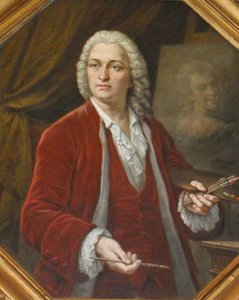
Jean-Baptiste van Loo
1684 - 1745 , France
Quick Facts
- Artistic Movement Or Style: Baroque, Rococo
- Artists Who Influenced This Artist: ['Benedetto Luti']
- Date Of Birth: 1684
- Date Of Death: 1745
- Full Name: Jean-Baptiste van Loo
- Nationality: French
- Notable Artworks:
- Scourging of Christ
- Portrait of Walpole
- King Louis XV portrait
- Place Of Birth: Aix-en-Provence, France
Related Articles
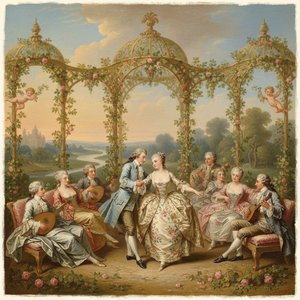
Jean-Baptiste Pater: Rococo Charm & Ephemeral Beauty of 18th-Century France
Explore the captivating world of Jean-Baptiste Pater, a master of Rococo painting. Discover his elegant *fête galante* scenes and shimmering portraits – a glimpse into 18th-century French aristocracy. Learn about his legacy & find high-quality reproductions.
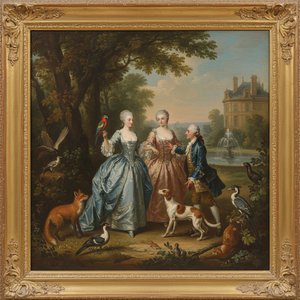
Jean-Baptiste Oudry: Rococo Painter of Aristocratic Life & Naturalistic Detail
Explore the exquisite Rococo paintings of Jean-Baptiste Oudry (1686-1755). Discover his mastery of animal depictions, royal commissions, and tapestry designs. A deep dive into 18th-century French artistry.
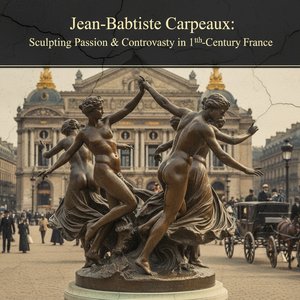
Jean-Baptiste Carpeaux: Sculpting Passion & Controversy in 19th-Century France
Explore the passionate life & controversial works of Jean-Baptiste Carpeaux, a leading French sculptor of the Second Empire. Discover his realism, iconic sculptures like 'Ugolino,' and lasting legacy as a precursor to Rodin.
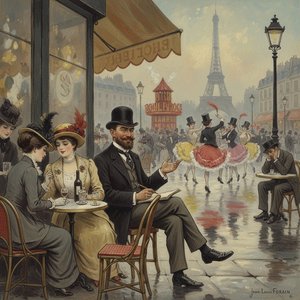
Jean-Louis Forain: Capturing Parisian Life with Wit & Realism
Explore the captivating world of Jean-Louis Forain, a master Impressionist chronicler of Belle Époque Paris. Discover his satirical paintings, realistic scenes & lasting legacy. Learn about collecting Forain's art today!
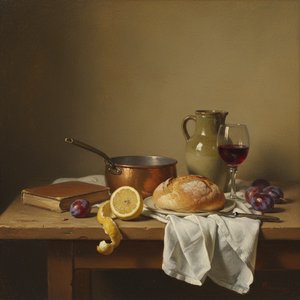
Jean-Baptiste-Siméon Chardin: Master of Still Life & Everyday Elegance
Explore the serene world of Jean-Baptiste-Siméon Chardin, master of still life & genre painting. Discover his revolutionary techniques, enduring legacy, and timeless depictions of everyday elegance. Learn more at ArtsDot.