Early Life & Training: From Portraiture to Animalier
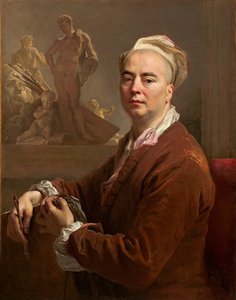 Nicolas de Largillière
Nicolas de Largillière (1656-1746): Discover the elegant portraits of Parisian society by this celebrated French Baroque master, known for capturing wealth & status.
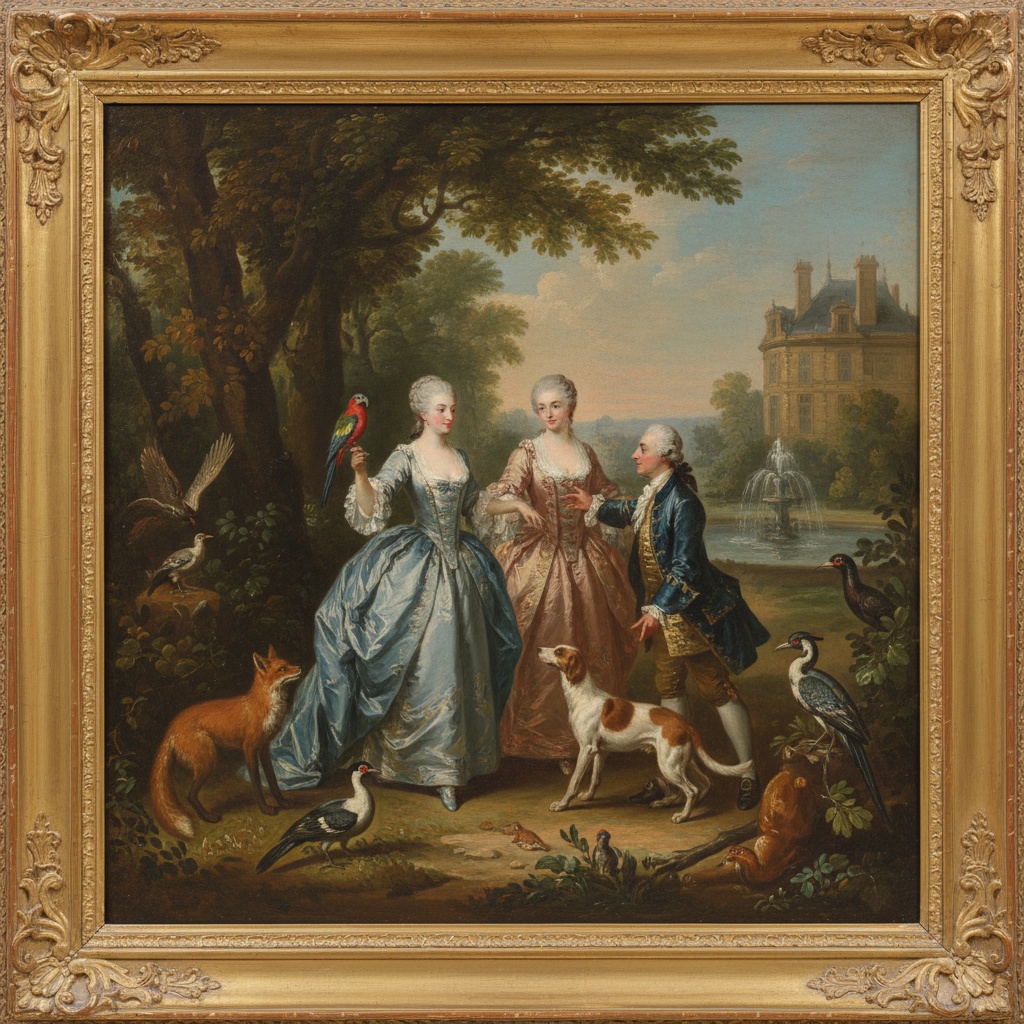
Jean-Baptiste Oudry’s artistic journey began within the established Parisian art world of the late 17th and early 18th centuries, a period transitioning from the grandeur of the Baroque to the delicate sensibilities of the Rococo. Born in 1686 into a family deeply connected to painting – his father, Jacques Oudry, was both an artist and dealer – young Jean-Baptiste received his initial training within this familial sphere before formally entering the Académie de Saint-Luc. However, it was his apprenticeship with Nicolas de Largillière, a celebrated portraitist of Parisian society, that proved pivotal. Largillière’s influence instilled in Oudry not only technical proficiency but also an understanding of aristocratic patronage and the importance of capturing social status through refined representation. Initially, Oudry followed in his mentor's footsteps, producing portraits characterized by their arcadian settings and a gentle sentimentality that foreshadowed the Rococo aesthetic. Yet, even in these early works, a keen observational skill – particularly regarding texture and detail – hinted at a burgeoning talent for naturalistic depiction. This nascent ability would soon lead him down a path distinct from traditional portraiture, towards his celebrated status as an *animalier*—a painter of animals.
Oudry and the Aristocracy: Painting Louis XV’s World
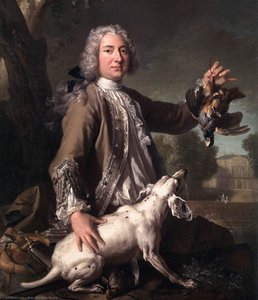
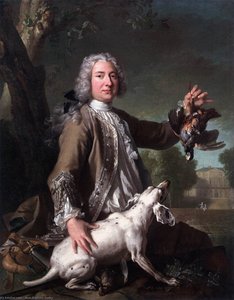 Henri Camille, Chevalier de Beringhen
Admire Jean-Baptiste Oudry’s 1722 portrait of Chevalier de Beringhen! This Baroque masterpiece showcases aristocratic leisure & hunting, rendered in rich browns & golds on canvas.
The true ascent of Oudry's career coincided with the reign of Louis XV, a monarch whose tastes favored elegance, leisure, and a celebration of courtly life. It was through connections forged during his portrait work that Oudry gained access to this exclusive world, most notably via Marquis de Beringhen, hereditary master of the royal stables. The commissions that followed were not merely depictions of hunting scenes; they were visual embodiments of aristocratic power and privilege. His 1722 portrait of Chevalier de Beringhen, for example, is a masterful study in leisure, showcasing the nobleman amidst the trappings of his favored pastime. Rich browns and golds dominate the canvas, reflecting both the opulence of the setting and the subject’s elevated social standing. But Oudry wasn't simply documenting; he was elevating these moments into idealized representations of noble life. This ability to capture not just likeness but also *atmosphere*—the thrill of the chase, the camaraderie of the hunt—made him immensely popular with the King himself. In 1730, his painting of Louis XV hunting a deer in the Forest of Saint-Germain cemented his position as Painter-in-Ordinary of the Royal Hunt, a role that afforded him unprecedented access to the court and its favored pursuits.
Master of Tapestry Design: Beauvais and Royal Commissions
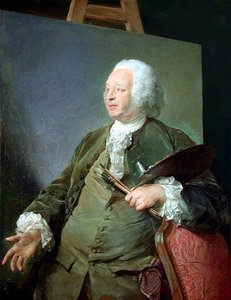 Jean-Baptiste Oudry
Explore Jean-Baptiste Oudry's exquisite Rococo paintings & tapestries! Renowned for naturalistic animal depictions, royal hunt scenes & French artistry.
While renowned for his paintings, Oudry’s influence extended significantly into the realm of tapestry design. In 1734, he was appointed head of the Royal Beauvais Tapestry Manufactory, a position that allowed him to translate his artistic vision onto a grander scale. The tapestries produced under his direction were not merely decorative; they were statements of royal taste and symbols of national prestige. The Les Amusements Champêtres series (The Pastoral Amusements) exemplifies this ambition, depicting idyllic scenes of rural life infused with aristocratic charm. However, it was the Fables de La Fontaine series that truly showcased Oudry’s versatility and narrative skill. These tapestries, based on Jean de La Fontaine's beloved fables, were a triumph of design and craftsmanship, blending moral lessons with exquisite animal depictions and vibrant color palettes. The success at Beauvais led to further appointments as inspector at the Gobelins manufactory in 1736, where his designs continued to shape French decorative arts for decades. Oudry’s tapestries weren't simply copies of paintings; they were carefully considered compositions designed to enhance architectural spaces and reflect the refined sensibilities of the Rococo era.
Naturalism and Detail: Oudry's Artistic Technique
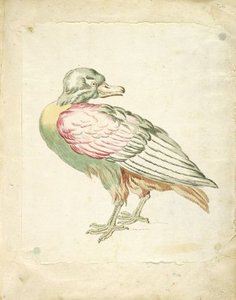 Bird Looking Backwards
Admire Jean-Baptiste Oudry’s ‘Bird Looking Backwards,’ a stunning Rococo masterpiece! Discover exquisite animal art & royal commissions by this 18th-century French painter.
What truly distinguished Oudry from his contemporaries was his unwavering commitment to naturalistic representation. Unlike many artists who relied on stylized forms, Oudry meticulously studied animals directly, capturing their anatomy, movement, and individual characteristics with remarkable precision. This dedication extended beyond the animal kingdom; even in his landscapes and still lifes, a keen eye for detail is evident. His brushwork, though often delicate, reveals a mastery of texture – the sheen of fur, the smoothness of porcelain, the ripeness of fruit. Consider his Bird Looking Backwards, a seemingly simple depiction that nonetheless showcases an astonishing level of realism. The feathers are rendered with painstaking accuracy, and the bird’s gaze possesses a lifelike quality that draws the viewer in. This pursuit of naturalism wasn't merely about technical skill; it reflected a broader Rococo fascination with observation and a desire to capture the beauty of the everyday world. Oudry often worked *from life*, setting him apart from artists who relied on secondhand sources, and his commitment to authenticity resonated deeply with his patrons.
Beyond Frivolity: Exploring Imperial Themes in Oudry’s Work
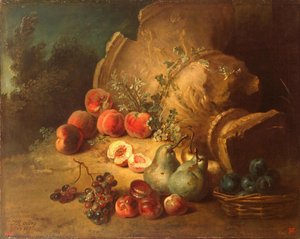
While often celebrated for their elegance and charm, Oudry's works also offer subtle glimpses into the broader context of 18th-century France—a period marked by expanding trade routes and growing imperial ambitions. His still lifes, seemingly innocuous depictions of fruits and flowers, frequently incorporate exotic objects like porcelain bowls from East Asia, hinting at the influx of luxury goods flowing into Europe. The inclusion of these items wasn’t merely decorative; it reflected a burgeoning consumer culture and France's increasing dominance in global trade networks. His Still Life with Monkey, Fruits, and Celery, for instance, showcases a porcelain bowl that was part of Oudry’s personal collection, acquired at considerable expense. The very act of depicting these objects—and the artist’s own investment in them—suggests a fascination with foreign cultures and a desire to incorporate them into the French aesthetic. Furthermore, his commissions from royal families across Europe demonstrate France's cultural influence and its role as a center for artistic innovation. By examining Oudry’s work through this lens, we can move beyond the perception of mere “frivolity” and appreciate the subtle ways in which he captured the complexities of 18th-century life—a world shaped by both aristocratic indulgence and imperial expansion.
Discover more exquisite Rococo paintings and explore the legacy of French artistry at ArtsDot.com.