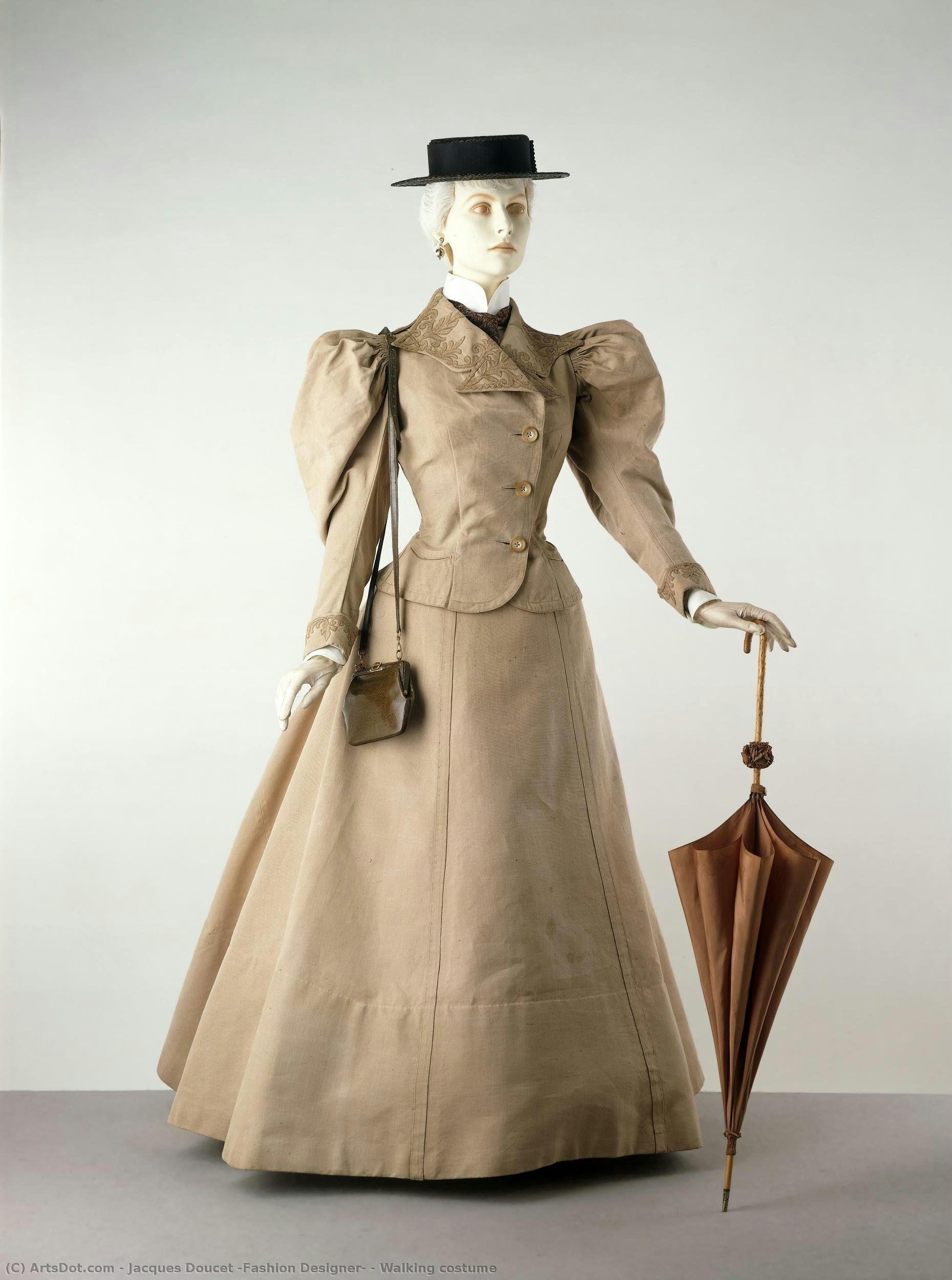
Admire Jacques Doucet's 'Walking Costume,' a captivating Victorian-era painting showcasing a woman in elegant attire, reflecting Parisian fashion of 1895. A timeless piece from the V&A Museum.
A Moment Frozen in Parisian Elegance
In the delicate brushstrokes of Jacques Doucet’s Walking Costume, we are transported to the sun-drenched streets of 1895 Paris, a period where fashion was not merely clothing but a profound language of social grace and personal identity. The painting captures a woman poised in mid-stride, an embodiment of late Victorian sophistication. Clad in a meticulously rendered ensemble, she carries the quiet confidence of the Belle Époque. Every element, from the tilt of her hat to the graceful grip on her umbrella, suggests a narrative of a life lived with intention and aesthetic awareness. For the discerning collector, this piece offers more than just a visual delight; it serves as a window into a vanished world of refinement, making it an exquisite focal point for any curated interior.
The artistry of Doucet, often celebrated as the "Poet of Pastel Elegance," shines through in the way he handles light and texture. Though primarily known as a master of couture, his eye for the tactile nature of fabric is nothing short of extraordinary. In this work, one can almost feel the lightweight breathability of the linen—a fabric chosen for its practicality during travel yet elevated here by the artist's luminous touch. The interplay of soft shadows and bright highlights creates a sense of movement, as if the viewer has just happened upon this lady during a leisurely afternoon stroll. This mastery of light lends the painting an Impressionistic soul, where the atmosphere is just as vital as the subject herself.
Historical Resonance and Interior Inspiration
Beyond its surface beauty, Walking Costume carries the weight of historical significance. As a piece that reflects the transition of women's roles in the late 19th century—moving toward more functional yet still highly decorative attire for travel and public life—it captures a pivotal moment in fashion history. The presence of reddish-brown dust noted in its conservation history adds a layer of romantic realism, reminding us of the actual journeys this garment might have undertaken across distant lands. This connection to real-world movement and exploration provides a deep emotional resonance, inviting the viewer to contemplate their own journeys and the legacies we leave behind.
For interior designers and art enthusiasts looking to elevate a space, a high-quality reproduction of this masterpiece brings an air of timeless prestige. The soft palette and classical subject matter harmonize beautifully with both traditional period rooms and contemporary minimalist settings, where it can act as a sophisticated anchor. Placing such a work in a study, a grand hallway, or a refined living area evokes a sense of cultured tranquility. It is a piece that does not shout for attention but rather commands respect through its subtle elegance, offering a continuous source of inspiration for those who appreciate the intersection of fine art and the history of human adornment.