 Preview
 Send
Send Share
Share
 Details

 Download
 Similars
 X-Ray
X-Ray Diaporama
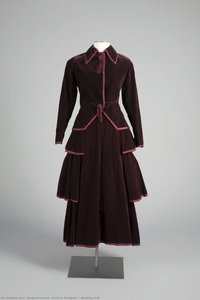
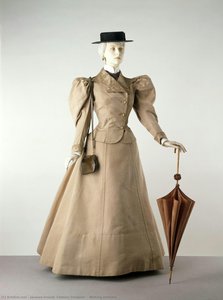
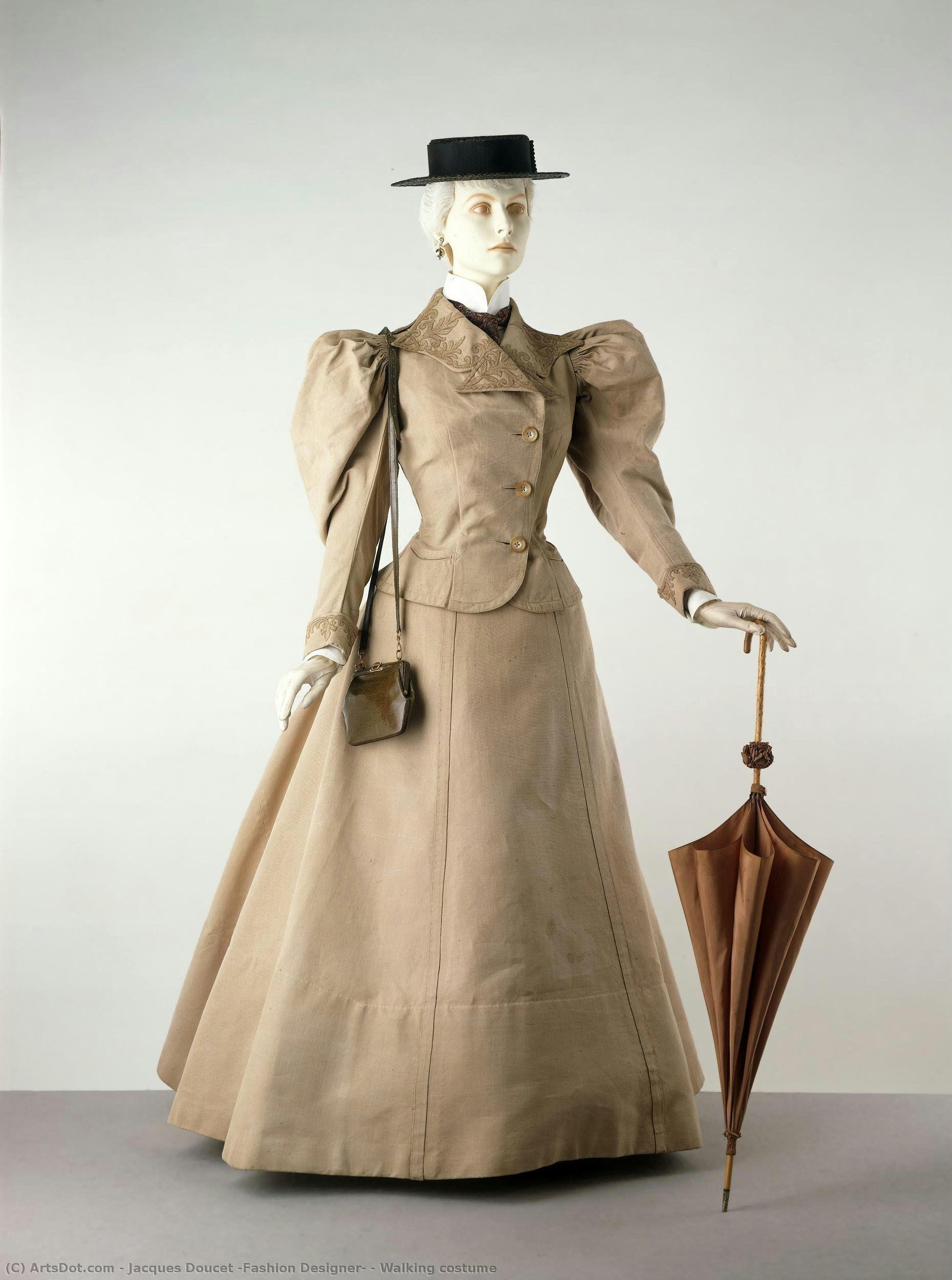
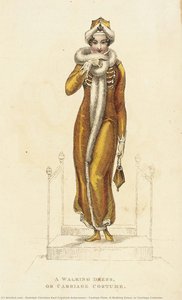
Walking costume


 Read More
Hand Made Oil Reproduction
Hand-painted oil on canvas in your size and frame, made to order by our artists. ( Buy Print Buy Image)




P118B $10

P118H $10

P118W $10

P438Z $10

P508JH $12

P508YH $12

P805H $10

P805Z $10

P919BZ $10

P919G $10

P919XJ $10

P959ZH $10

P968JZ $12

W106C $8

W218G $10

W218JH $8

W218Y $10

W307PJ $10

W316G $10

W316PJ $8

W316Y $10

W398PJ $8

W4111J $10

W500HY $15

W500JH $15

W692G $12

W849H $8

W940BG $15

W953PJ $8




Pick from our preset sizes that match the artwork's original proportions.

You may enter your own dimensions to fit a specific frame or space. If your selected size does not match the original image's proportions, we will either crop the artwork or extend the painting with additional hand-painted elements. A digital mockup will be sent for your approval before production begins.
Please note that the on-screen preview does not reflect the actual cropping or extension. Only the mockup will accurately show the final composition.
While custom sizes are available, we recommend selecting a dimension from the predefined list to preserve the original proportions.
After order, ArtsDot.com team will email client for instructions and provide a mockup preview
Worldwide Delivery () in 3/4 weeks instead of standard 5 weeks. (17 August). No compromise on quality.

Free Worldwide Express Shipping

High-Quality Linen Canvas

Full Shipping Insurance

Customs Tax Refund Guarantee

True Color Matching Guarantee

60-Day Return Policy (Defects Only)

100% Money-Back Guarantee

Bulk Discount Offer
 Glass option is only available in size under 110 CM

Walking costume
Reproduction Medium
Reproduction Size
-


Total Price
$ 263
Artwork Description
A Moment Frozen in Parisian Elegance
In the delicate brushstrokes of Jacques Doucet’s Walking Costume, we are transported to the sun-drenched streets of 1895 Paris, a period where fashion was not merely clothing but a profound language of social grace and personal identity. The painting captures a woman poised in mid-stride, an embodiment of late Victorian sophistication. Clad in a meticulously rendered ensemble, she carries the quiet confidence of the Belle Époque. Every element, from the tilt of her hat to the graceful grip on her umbrella, suggests a narrative of a life lived with intention and aesthetic awareness. For the discerning collector, this piece offers more than just a visual delight; it serves as a window into a vanished world of refinement, making it an exquisite focal point for any curated interior.
The artistry of Doucet, often celebrated as the "Poet of Pastel Elegance," shines through in the way he handles light and texture. Though primarily known as a master of couture, his eye for the tactile nature of fabric is nothing short of extraordinary. In this work, one can almost feel the lightweight breathability of the linen—a fabric chosen for its practicality during travel yet elevated here by the artist's luminous touch. The interplay of soft shadows and bright highlights creates a sense of movement, as if the viewer has just happened upon this lady during a leisurely afternoon stroll. This mastery of light lends the painting an Impressionistic soul, where the atmosphere is just as vital as the subject herself.
Historical Resonance and Interior Inspiration
Beyond its surface beauty, Walking Costume carries the weight of historical significance. As a piece that reflects the transition of women's roles in the late 19th century—moving toward more functional yet still highly decorative attire for travel and public life—it captures a pivotal moment in fashion history. The presence of reddish-brown dust noted in its conservation history adds a layer of romantic realism, reminding us of the actual journeys this garment might have undertaken across distant lands. This connection to real-world movement and exploration provides a deep emotional resonance, inviting the viewer to contemplate their own journeys and the legacies we leave behind.
For interior designers and art enthusiasts looking to elevate a space, a high-quality reproduction of this masterpiece brings an air of timeless prestige. The soft palette and classical subject matter harmonize beautifully with both traditional period rooms and contemporary minimalist settings, where it can act as a sophisticated anchor. Placing such a work in a study, a grand hallway, or a refined living area evokes a sense of cultured tranquility. It is a piece that does not shout for attention but rather commands respect through its subtle elegance, offering a continuous source of inspiration for those who appreciate the intersection of fine art and the history of human adornment.
Related Artworks
Artist Biography
The Poet of Pastel Elegance: The Life and Legacy of Jacques Doucet
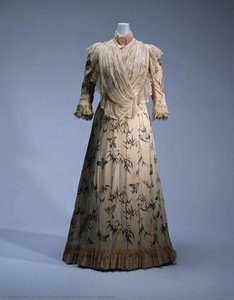
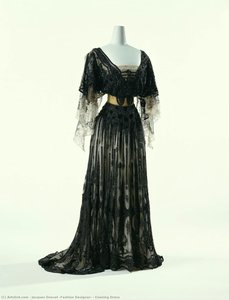
Jacques Doucet (1853–1929) stands as a singular figure in the annals of Parisian couture, remembered less for grand pronouncements and more for an almost ethereal aesthetic—a preoccupation with delicate fabrics and luminous pastel hues that captured the very spirit of the Art Nouveau era. Born into a family steeped in textile tradition, Doucet’s journey began not with formal academic training but with an innate, sensory understanding of color and texture. His lineage was deeply rooted in the prestigious Doucet Lingerie business, which had flourished on the Rue de la Paix since 1816. This familial connection to fine linens and silks undoubtedly instilled in him a profound appreciation for craftsmanship and material innovation, qualities he would later translate into dresses that defied convention and captivated the most discerning clientele of the Belle Époque. In 1871, Doucet transitioned from the family’s textile roots to open his own salon, selling ladies' apparel. As he took leadership of Maison Doucet, the house grew in scale and importance, becoming one of the most influential fashion houses of its time. His creative genius was not limited to mere garment construction; he viewed fashion as a medium for storytelling. Unlike many of his contemporaries who adhered rigidly to established, structured styles, Doucet possessed an inquisitive mind and actively sought inspiration from diverse global sources. The influence of Japonisme—the fascination with Japanese art and design that swept through Europe at the turn of the century—is palpable in his work. In pieces such as his 1890 Day Dress, one can observe how stylized bamboo shoots and delicate sparrow motifs intertwine with flowing silk drapery, creating a visual dialogue between Eastern aesthetics and Western luxury.A Symphony of Translucent Fabrics and Light
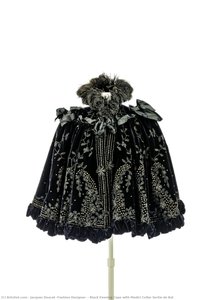
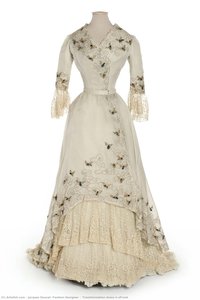
The true hallmark of Doucet’s artistry lay in his mastery of light and layering. His signature style revolved around the use of incredibly thin, translucent fabrics—primarily chiffon and crepe satin—layered upon one another to achieve breathtaking effects of color and luminosity. He eschewed the heavy, dark silhouettes common in earlier Victorian eras in favor of subtle gradations of pastel shades: rose pinks, lavender blues, and peach yellows that seemed to shimmer with an inner radiance. This technique demanded meticulous attention to detail and a sophisticated understanding of how light interacts with moving fabric, resulting in gowns that possessed an unparalleled fluidity and grace. His ability to evoke emotion through color alone led critics to describe his creations as "poems woven in silk." Whether it was the intricate embroidery and lace of his 1905 Transformation Dress or the dramatic presence of a black evening cape with a Medici collar, Doucet’s work always maintained a sense of poetic movement. His designs were particularly celebrated among actresses and socialites, for whom he created original, avant-garde pieces that functioned as wearable art. This period of his career also saw him featured in the prestigious fashion magazine La Gazette du Bon Ton, alongside other legendary designers, cementing his status within the upper echelons of Parisian high society.The Collector’s Eye and Historical Significance
Beyond the atelier, Jacques Doucet was a monumental figure in the world of art patronage. His aesthetic sensibilities extended far beyond the realm of fashion into an exhaustive collection of fine and decorative arts. Initially, his collecting interests focused on the opulence of French eighteenth-century furniture, paintings, and sculptures. However, in a dramatic shift that mirrored the changing tides of modernism, he began to pivot toward Impressionist and Post-Impressionist art. This evolution reflected a broader cultural movement where the boundaries between the fine arts and applied arts began to dissolve—a philosophy Doucet championed by treating his gowns and his gallery pieces with equal reverence. The historical significance of Jacques Doucet lies in his role as both a creator and a bridge between eras. He did not merely follow trends; he mentored the next generation of fashion icons, including the legendary Paul Poiret and Madeleine Vionnet. By integrating the delicate textures of the past with the modern, fluid lines of the future, he helped define the visual language of early 20th-century elegance. Today, his legacy survives not only in the exquisite garments preserved in museums like the Victoria and Albert, but in the very concept of fashion as a sophisticated, multidisciplinary art form that breathes with light, color, and history.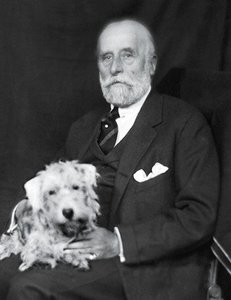
jacques doucet (fashion designer)
1853 - 1929 , France
Quick Facts
- Artistic Movement Or Style: Art Nouveau
- Artists Or Movements Influenced By This Artist: ['Paul Poiret']
- Artists Who Influenced This Artist: ['Impressionism']
- Date Of Birth: Paris, France (1853)
- Date Of Death: 1929
- Full Name: Jacques Doucet
- Nationality: French
- Notable Artworks:
- Black Evening Cape with Medici Collar Sortie de Bal
- Day Dress
- Evening Dress
- Place Of Birth: Paris
Related Articles
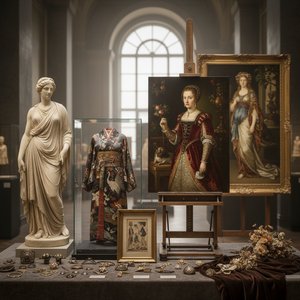
Draped Narratives: Fashion as Symbol & Subject in Historical Art
Explore the fascinating history of fashion as a symbol of power & status in art! Discover masterpieces from Gainsborough to Tissot and learn how clothing shaped societal narratives. Find museum-quality reproductions at ArtsDot.
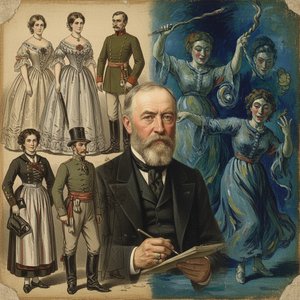
Albert Kretschmer: Capturing 19th-Century Costume & the Seeds of Expressionism
Explore the exquisite costume studies of Albert Kretschmer (1825-1891). Discover his detailed illustrations, influence on art history & connection to early Expressionism. Learn about collecting this remarkable artist's work.
Gianfranco Ferré: Deconstructing Haute Couture – A Legacy of Architectural Form
Explore the revolutionary world of Gianfranco Ferré, 'the architect of fashion.' Discover his architectural approach to haute couture, iconic Dior designs, and lasting influence on luxury style. A deep dive for collectors & enthusiasts.
The Refined Aesthetic of Victorian Illustration: A Study in Narrative & Technique
Explore the captivating world of Victorian illustration! Discover Pre-Raphaelite influences, key artists like Rossetti & Stephens, and the era's rich narrative detail. A deep dive for art enthusiasts.
William Powell Frith: Narratives of Victorian Society & the Rise of Realist Painting
Explore the life & works of William Powell Frith, the 'greatest British painter of social scenes.' Discover his iconic Victorian genre paintings and learn about his lasting impact on realist art. Hand-painted reproductions available.