A Moment of Divine Vulnerability
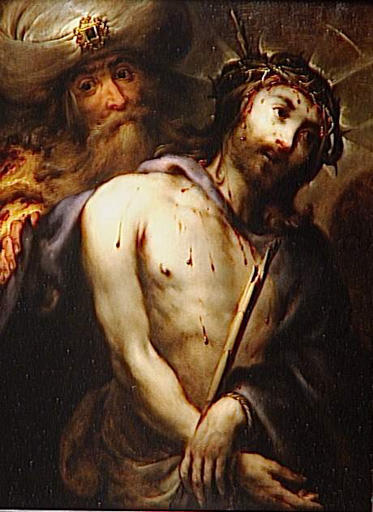
In the heart of the Antwerp Baroque movement, Jan Cossiers captured a moment of profound spiritual tension in his masterpiece, ECCE HOMO ou PILATE PRESENTANT LE CHRIST AU PEUPLE. Painted around 1620, this work serves as a breathtaking bridge between the dramatic, shadow-drenched world of Caravaggio and a more refined, introspective Flemish sensibility. The scene presents us with the biblical climax where Pontius Pilate, draped in the symbols of earthly authority, gestures toward Jesus Christ, who stands exposed and suffering. It is not merely a historical reenactment but an emotional confrontation that pulls the viewer into the very center of the trial.
The composition is masterfully orchestrated to direct the eye through a narrative of contrast. Cossiers utilizes a vertical orientation to lend the figures a monumental stature, instilling the scene with a sense of solemnity and weight. On the right, the torso of Christ is angled toward us, his pale skin acting as a beacon of light amidst the surrounding gloom. Opposite him, Pilate stands on the left, his emphatic gesture serving as the catalyst for the drama. Behind them, a blurred crowd suggests the chaotic energy of a public spectacle, yet the focus remains intensely intimate, centered on the silent dialogue between the accuser and the accused.
The Alchemy of Light and Shadow
To behold this painting is to witness the masterful application of chiaroscuro. Cossiers employs intense contrasts between deep, swallowing shadows and piercing highlights to sculpt the human form with startling realism. The palette is a somber, sophisticated arrangement of earthy browns, deep reds, and regal purples, which creates an atmosphere of heavy, palpable grief. This subdued color scheme ensures that when light does strike—specifically upon Christ’s face and wounded torso—it carries a transformative power, emphasizing his physical vulnerability and the divine nature of his sacrifice.
The technique reveals a painter deeply attuned to texture and the tactile reality of his subjects. Through visible yet controlled brushstrokes, Cossiers breathes life into the heavy folds of Pilate’s rich garments and the jagged, painful reality of the crown of thorns. This interplay of textures—the smoothness of skin against the roughness of wood and fabric—adds a layer of sensory depth that makes the biblical narrative feel immediate and visceral. For the collector or designer, such technical mastery offers a piece that possesses both physical presence and a profound ability to command the atmosphere of any room.
A Legacy for the Discerning Collector
Beyond its aesthetic brilliance, this artwork carries immense symbolic weight. The crown of thorns and the visible wounds are not merely anatomical details; they are profound emblems of martyrdom and the redemptive power of suffering. Cossiers captures a pivotal transition in art history, moving away from the raw violence of early Caravaggism toward a more nuanced, devotional style reminiscent of Titian. This makes the piece an essential study for those who appreciate the evolution of European Baroque art.
For interior designers and connoisseurs of fine art, a high-quality reproduction of this work offers more than just decoration; it provides a focal point of intellectual and emotional depth. Whether placed in a gallery-style study or as a dramatic centerpiece in a classically inspired living space, ECCE HOMO invites contemplation. It is a work that rewards repeated viewing, offering new insights into the interplay of power, faith, and the enduring human condition with every glance.