A Glimpse into the Elite’s World: Jan Weenix's Peacock and Hunting Trophies
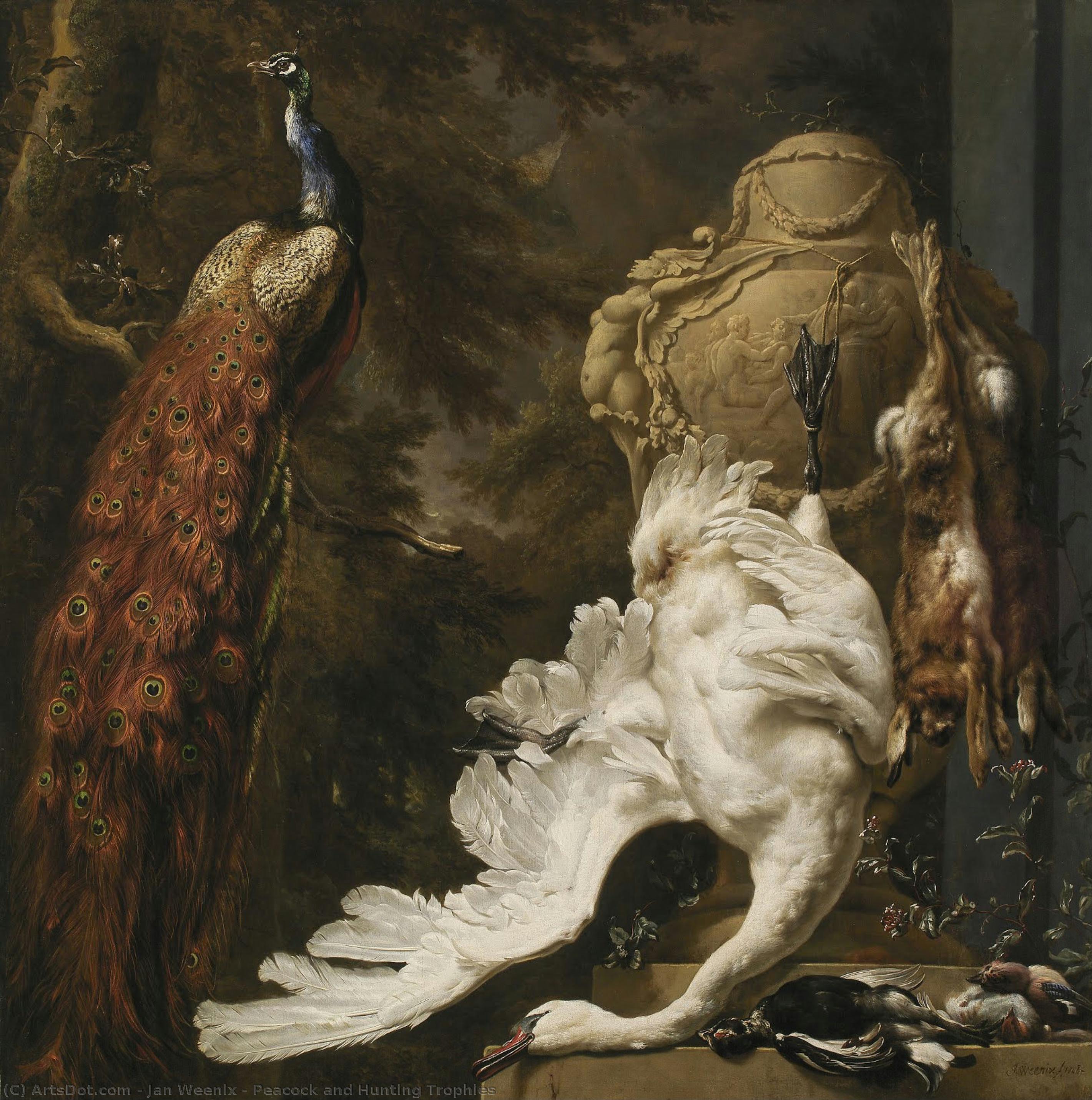
Jan Weenix’s “Peacock and Hunting Trophies,” painted in 1708, is more than just a still life; it’s a meticulously crafted window into the opulent world of the Dutch Golden Age. This large composition, measuring a substantial 200 x 195 cm, transports us to a scene of carefully curated abundance – a testament to the wealth and leisure enjoyed by the Palatine Elector Johann Wilhelm and his court at Bensberg Castle. The painting’s immediate impact is one of controlled drama; a peacock, resplendent in its iridescent plumage, dominates the foreground, while a collection of hunting trophies—pheasants, ducks, and other game birds—are displayed with an almost theatrical precision within a grand urn.
Weenix's skill lies not merely in his technical proficiency but in his ability to evoke a specific atmosphere. The positioning of the swan, rendered in a deliberately static pose – a common motif in works of this type – speaks to a tradition of representing idealized beauty and stillness within the context of hunting scenes. This deliberate choice contributes to the painting’s overall sense of formality and restraint, reflecting the aristocratic sensibilities of its patrons. The background landscape, subtly rendered, provides a vital counterpoint to the dense foreground, offering a sense of depth and suggesting the vastness of the natural world from which these trophies were sourced.
The Language of Dutch Still Life
Weenix’s work firmly establishes him as a key figure within the burgeoning tradition of Dutch still life painting. He inherited this legacy from his father, Jan Baptist Weenix, and skillfully built upon it, developing a distinctive style characterized by remarkable realism and an acute observation of detail. The artist's meticulous rendering of textures—the iridescent sheen of the peacock’s feathers, the delicate plumage of the birds, the smooth surface of the urn—is breathtaking. Notice particularly how he captures the light reflecting off the trophies, creating a sense of three-dimensionality that draws the viewer into the scene.
The composition itself is carefully balanced, employing principles of symmetry and proportion to create a harmonious visual experience. The peacock’s vibrant colors serve as a focal point, while the urn acts as a framing device, drawing attention to the collection of hunting trophies. This arrangement isn't haphazard; it reflects a deliberate effort to present a scene of controlled elegance and wealth – a carefully constructed narrative of aristocratic privilege.
Symbolism and the Pursuit of Status
Beyond its aesthetic qualities, “Peacock and Hunting Trophies” is rich in symbolic meaning. The peacock itself has long been associated with royalty, beauty, and pride—qualities highly valued by the European aristocracy. The hunting trophies represent not only the successful pursuit of game but also the status and power of the hunter. They are tangible symbols of wealth, skill, and access to the natural world – a carefully curated display designed to impress and demonstrate one’s position within society.
The urn, adorned with bas-reliefs, adds another layer of symbolism. It suggests an appreciation for classical art and culture, reflecting the influence of Italianate aesthetics prevalent during this period. It also serves as a container for these symbols of wealth and status, further emphasizing their importance.
A Legacy of Realism: Jan Weenix’s Enduring Appeal
“Peacock and Hunting Trophies” stands as a remarkable example of Dutch Golden Age artistry. Jan Weenix's ability to capture the essence of both still life and animal subjects, combined with his meticulous attention to detail and masterful use of light and color, ensures that this painting continues to captivate viewers centuries after its creation. Reproductions like those offered by ArtsDot.com allow us to appreciate the nuances of this masterpiece in a way that was previously impossible, bringing the world of the Dutch elite vividly to life.