 Preview
 Send
Send Share
Share
 Details

 Download
 Similars
 X-Ray
X-Ray Diaporama
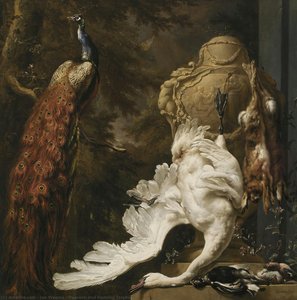
Peacock and Hunting Trophies
 Acrylic On Canvas
- WallArt
- Late Seventeenth Century Decorative
 1708
1708 200.0 x 195.0 cm
 Calouste Gulbenkian Foundation
 Read More
Hand Made Oil Reproduction
Hand-painted oil on canvas in your size and frame, made to order by our artists. ( Buy Print Buy Image)




P118B $10

P118H $10

P118W $10

P438Z $10

P508JH $12

P508YH $12

P805H $10

P805Z $10

P919BZ $10

P919G $10

P919XJ $10

P959ZH $10

P968JZ $12

W106C $8

W218G $10

W218JH $8

W218Y $10

W307PJ $10

W316G $10

W316PJ $8

W316Y $10

W398PJ $8

W4111J $10

W500HY $15

W500JH $15

W692G $12

W849H $8

W940BG $15

W953PJ $8




Pick from our preset sizes that match the artwork's original proportions.

You may enter your own dimensions to fit a specific frame or space. If your selected size does not match the original image's proportions, we will either crop the artwork or extend the painting with additional hand-painted elements. A digital mockup will be sent for your approval before production begins.
Please note that the on-screen preview does not reflect the actual cropping or extension. Only the mockup will accurately show the final composition.
While custom sizes are available, we recommend selecting a dimension from the predefined list to preserve the original proportions.
After order, ArtsDot.com team will email client for instructions and provide a mockup preview
Worldwide Delivery () in 3/4 weeks instead of standard 5 weeks. (16 August). No compromise on quality.

Free Worldwide Express Shipping

High-Quality Linen Canvas

Full Shipping Insurance

Customs Tax Refund Guarantee

True Color Matching Guarantee

60-Day Return Policy (Defects Only)

100% Money-Back Guarantee

Bulk Discount Offer
 Glass option is only available in size under 110 CM

Peacock and Hunting Trophies
Reproduction Medium
Reproduction Size
-


Total Price
$ 263
Artwork Description
A Glimpse into the Elite’s World: Jan Weenix's Peacock and Hunting Trophies
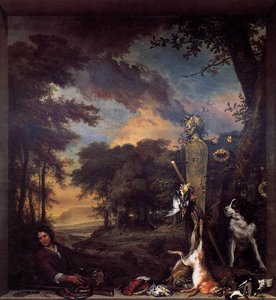
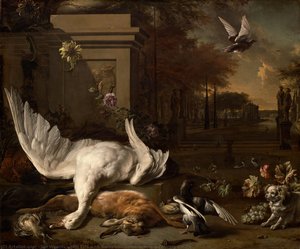
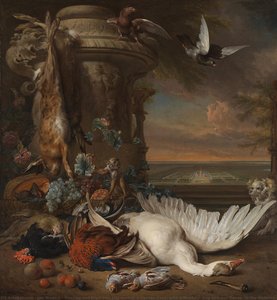
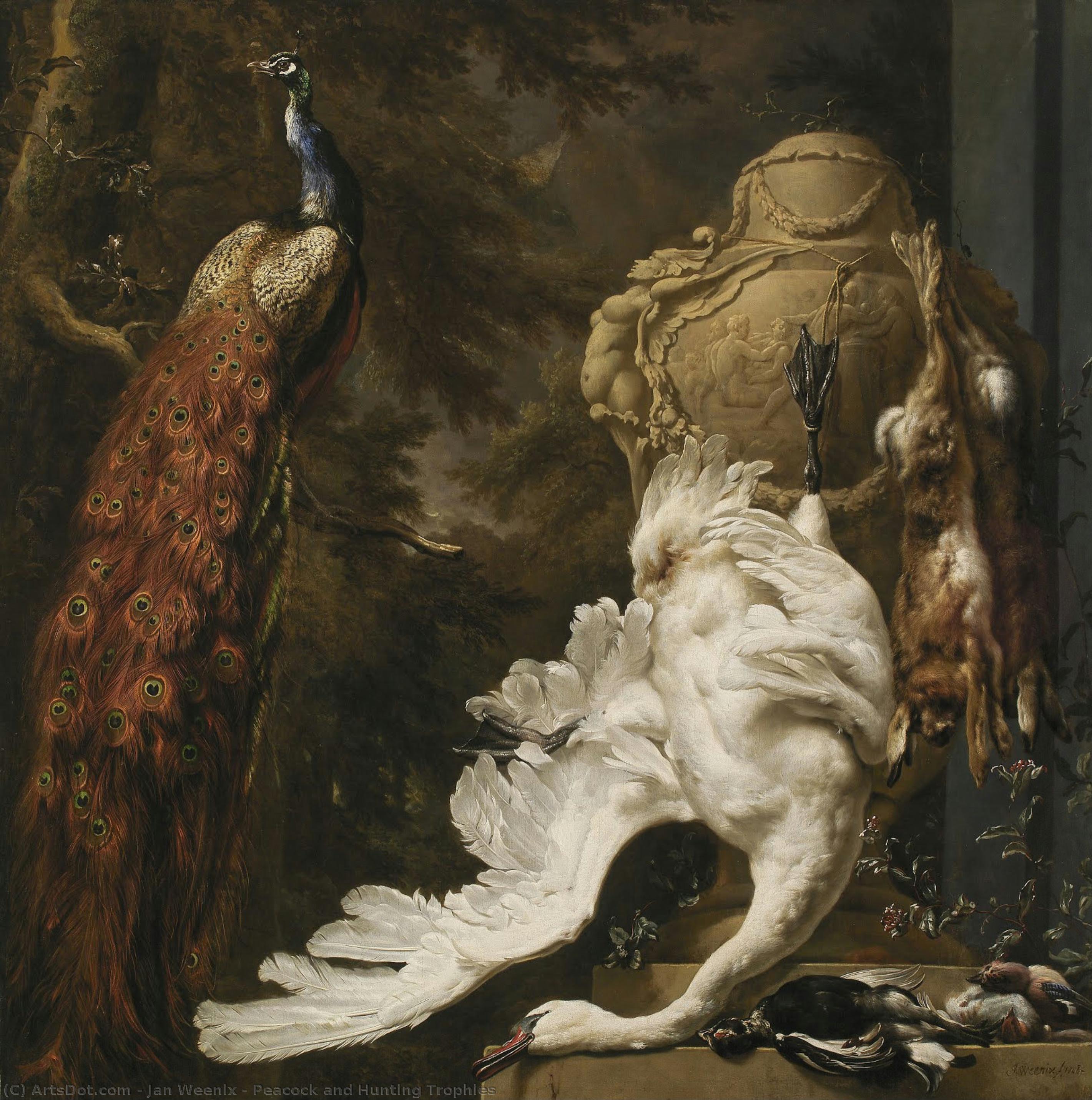
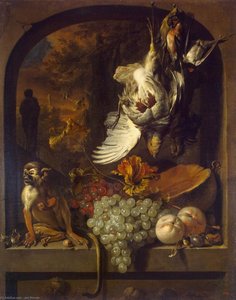
Jan Weenix’s “Peacock and Hunting Trophies,” painted in 1708, is more than just a still life; it’s a meticulously crafted window into the opulent world of the Dutch Golden Age. This large composition, measuring a substantial 200 x 195 cm, transports us to a scene of carefully curated abundance – a testament to the wealth and leisure enjoyed by the Palatine Elector Johann Wilhelm and his court at Bensberg Castle. The painting’s immediate impact is one of controlled drama; a peacock, resplendent in its iridescent plumage, dominates the foreground, while a collection of hunting trophies—pheasants, ducks, and other game birds—are displayed with an almost theatrical precision within a grand urn.
Weenix's skill lies not merely in his technical proficiency but in his ability to evoke a specific atmosphere. The positioning of the swan, rendered in a deliberately static pose – a common motif in works of this type – speaks to a tradition of representing idealized beauty and stillness within the context of hunting scenes. This deliberate choice contributes to the painting’s overall sense of formality and restraint, reflecting the aristocratic sensibilities of its patrons. The background landscape, subtly rendered, provides a vital counterpoint to the dense foreground, offering a sense of depth and suggesting the vastness of the natural world from which these trophies were sourced.
The Language of Dutch Still Life
Weenix’s work firmly establishes him as a key figure within the burgeoning tradition of Dutch still life painting. He inherited this legacy from his father, Jan Baptist Weenix, and skillfully built upon it, developing a distinctive style characterized by remarkable realism and an acute observation of detail. The artist's meticulous rendering of textures—the iridescent sheen of the peacock’s feathers, the delicate plumage of the birds, the smooth surface of the urn—is breathtaking. Notice particularly how he captures the light reflecting off the trophies, creating a sense of three-dimensionality that draws the viewer into the scene.
The composition itself is carefully balanced, employing principles of symmetry and proportion to create a harmonious visual experience. The peacock’s vibrant colors serve as a focal point, while the urn acts as a framing device, drawing attention to the collection of hunting trophies. This arrangement isn't haphazard; it reflects a deliberate effort to present a scene of controlled elegance and wealth – a carefully constructed narrative of aristocratic privilege.
Symbolism and the Pursuit of Status
Beyond its aesthetic qualities, “Peacock and Hunting Trophies” is rich in symbolic meaning. The peacock itself has long been associated with royalty, beauty, and pride—qualities highly valued by the European aristocracy. The hunting trophies represent not only the successful pursuit of game but also the status and power of the hunter. They are tangible symbols of wealth, skill, and access to the natural world – a carefully curated display designed to impress and demonstrate one’s position within society.
The urn, adorned with bas-reliefs, adds another layer of symbolism. It suggests an appreciation for classical art and culture, reflecting the influence of Italianate aesthetics prevalent during this period. It also serves as a container for these symbols of wealth and status, further emphasizing their importance.
A Legacy of Realism: Jan Weenix’s Enduring Appeal
“Peacock and Hunting Trophies” stands as a remarkable example of Dutch Golden Age artistry. Jan Weenix's ability to capture the essence of both still life and animal subjects, combined with his meticulous attention to detail and masterful use of light and color, ensures that this painting continues to captivate viewers centuries after its creation. Reproductions like those offered by ArtsDot.com allow us to appreciate the nuances of this masterpiece in a way that was previously impossible, bringing the world of the Dutch elite vividly to life.
Related Artworks
Artist Biography
A Legacy of Dutch Realism: The Life and Art of Jan Weenix
Jan Weenix, born in Amsterdam in 1641, emerged from a lineage steeped in artistic tradition, inheriting a passion for painting from his father, the esteemed Jan Baptist Weenix. While precise details surrounding his early years remain somewhat elusive, it’s clear that young Jan received foundational training within his father's workshop, absorbing techniques crucial to depicting both still life and animal subjects—a hallmark of Dutch Golden Age artistry. This familial influence wasn’t merely technical; it instilled a deep appreciation for the meticulous observation of nature and a commitment to rendering its beauty with striking realism. The elder Weenix’s own artistic journey, including sojourns in Italy that infused his work with an Italianate sensibility, undoubtedly shaped Jan's developing aesthetic as well. Though initially overshadowed by his father’s reputation, Jan quickly distinguished himself, forging a unique path within the vibrant landscape of 17th-century Dutch painting.The Flourishing of a Baroque Style
Weenix’s artistic style blossomed during the height of the Baroque period, and it reflects the era's penchant for drama, rich detail, and dynamic composition. He wasn’t working in isolation; influences from contemporaries like Hendrick Cornelisz Vroom, renowned for his marine paintings, and potentially other animalier specialists such as Melchior de Hondecoeter and Gillis Claesz d'Hondecoeter, subtly informed his approach. However, Weenix synthesized these inspirations into a style distinctly his own. His canvases are characterized by an almost photographic precision in the rendering of textures—the sheen of feathers, the softness of fur, the delicate translucence of fruit – all achieved through masterful brushwork and a keen understanding of light and shadow. Chiaroscuro, the dramatic interplay between light and dark, is employed to create depth and visual interest, drawing the viewer into the scene with compelling realism. A vibrant color palette further enlivens his subjects, imbuing them with a sense of immediacy and vitality. He possessed an exceptional skill in arranging elements within the frame, creating balanced and harmonious compositions that are both visually appealing and narratively engaging.Masterpieces and Patronage
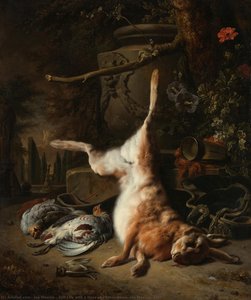
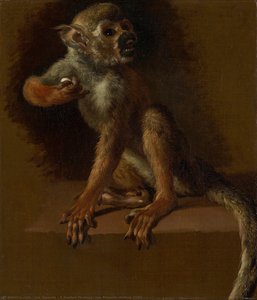
Throughout his career, Jan Weenix produced a substantial body of work celebrated for its technical brilliance and captivating subject matter. Paintings like Hunting and Fruit Still Life next to a Garden Vase (1714) exemplify his ability to seamlessly integrate diverse elements—game birds, luscious fruits, architectural details – into a complex and visually stunning arrangement. Still Life with a Hare and other Game (1697) showcases his mastery of animal anatomy and texture, capturing the lifelike quality of his subjects with remarkable accuracy. Even smaller works, such as A Seated Monkey (before 1685), reveal his talent for imbuing animals with personality and expressive character. This skill did not go unnoticed by prominent patrons. In 1702, Weenix received an invitation to the court of Johann Wilhelm, Elector Palatine, where he worked alongside other renowned artists, creating large-scale hunting scenes for Schloss Bensberg—a testament to his growing reputation and artistic prowess. These commissions provided him with both financial security and opportunities to further refine his skills.A Lasting Influence on Dutch Art
Jan Weenix played a pivotal role in popularizing hunting still lifes and game paintings during the Baroque period, elevating these genres beyond mere decoration. His works were highly sought after by collectors, contributing significantly to the development of Dutch artistic traditions. He didn’t simply replicate nature; he interpreted it through his unique lens, imbuing his paintings with a sense of realism, drama, and aesthetic beauty that resonated deeply with contemporary audiences. His legacy extends beyond his own creations; his daughter, Maria Weenix, continued the family tradition as a skilled flower painter, ensuring that the Weenix name remained synonymous with artistic excellence for generations to come. Today, Jan Weenix’s paintings are treasured in museums and private collections worldwide, continuing to inspire artists and captivate audiences with their masterful depictions of the natural world—a testament to his enduring contribution to the rich tapestry of Dutch art history.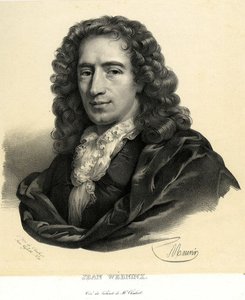
Jan Weenix
1641 - 1719 , Netherlands
Quick Facts
- Artistic Movement Or Style: Dutch Baroque
- Artists Or Movements Influenced By This Artist: ['Maria Weenix']
- Artists Who Influenced This Artist:
- Jan Baptist Weenix
- Hendrick Vroom
- Date Of Birth: 1641
- Date Of Death: 1719
- Full Name: Jan Weenix
- Nationality: Dutch
- Notable Artworks:
- Hunting and Fruit Still Life
- Still Life with a Hare
- A Seated Monkey
- The White Peacock
- Place Of Birth: Amsterdam, Netherlands
Related Articles

Dutch Baroque Masters: 10 Paintings That Shaped an Era | ArtsDot
Journey through the Golden Age with our guide to the Top 10 Dutch Baroque masterpieces! Explore iconic paintings by Rembrandt, Vermeer & Frans Hals. Find museum-quality art reproductions and elevate your home decor at ArtsDot.com.

Golden Age Reflections: Dutch Baroque Painting & Cultural Innovation
Explore the Dutch Golden Age of painting! Discover key artists like Vermeer & ter Borch, their innovative techniques, and the rich cultural context behind these Baroque masterpieces. Learn about collecting & appreciating this iconic art period.

Baroque Masterpieces: 10 Paintings That Defined an Era |
Journey through the drama & grandeur of Baroque art! Explore 10 masterpieces by Caravaggio, Rembrandt, Rubens & more. Discover stunning oil paintings, rich colors & timeless stories. Find museum-quality reproductions at .
Illuminating Realism: Exploring the Dutch Golden Age of Painting (1600-1700)
Explore the Dutch Golden Age of painting (1600-1700) with ArtsDot. Discover Rembrandt, Vermeer & other masters. Learn about techniques, history & find museum-quality reproductions.

The Dramatic Flourish: Exploring the Baroque Movement's Enduring Legacy in Art History
Explore the dramatic world of Baroque art! Discover iconic artists like Caravaggio & Rubens, defining techniques, and its lasting impact on art history. Expert insights for collectors & enthusiasts at ArtsDot.