Aretino and the Envoy of Charles V: A Masterful Commentary on Power and Artistic Independence
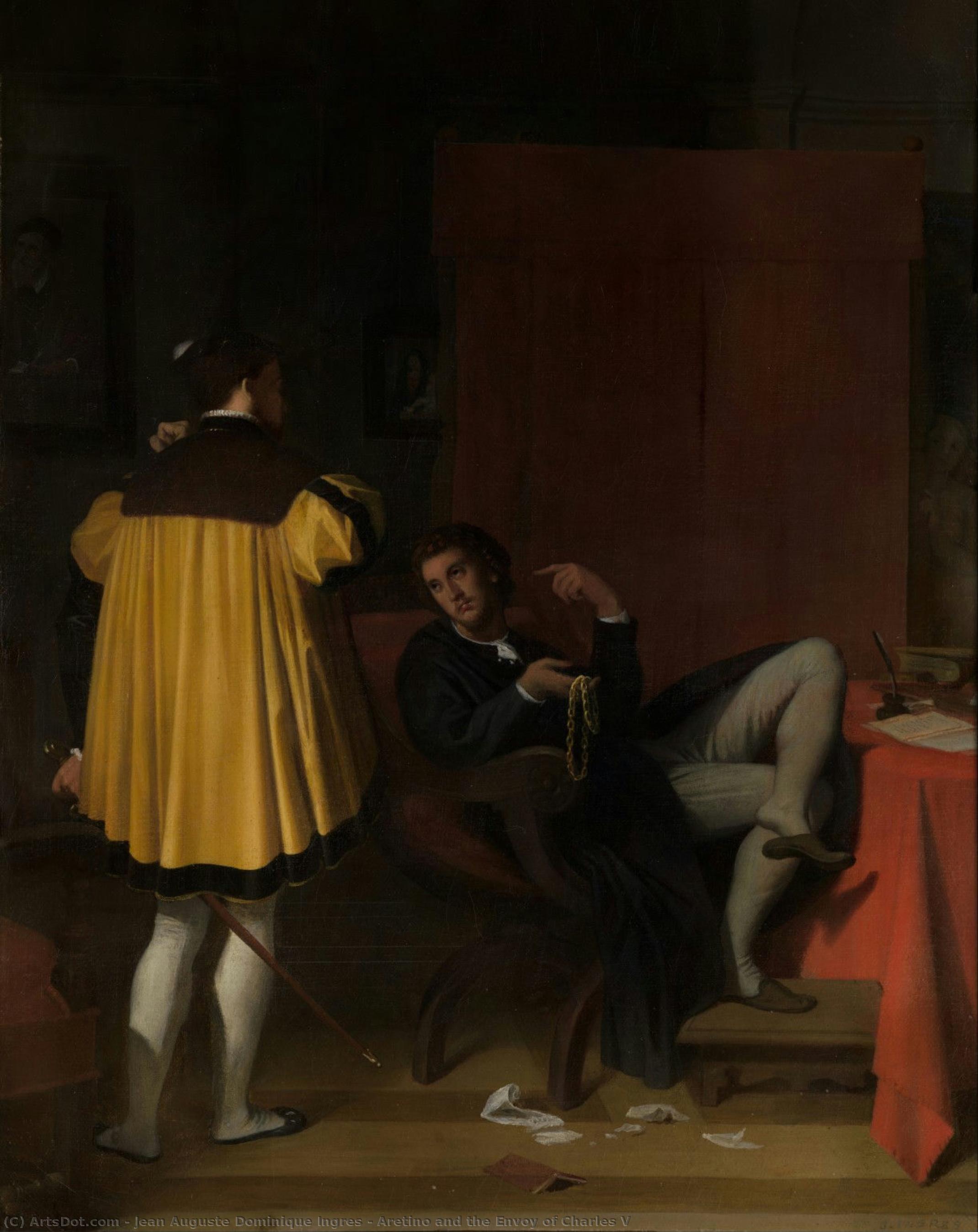
Jean-Auguste-Dominique Ingres’s “Aretino and the Envoy of Charles V,” painted in 1848, is more than a mere portrait; it's a meticulously crafted narrative brimming with historical resonance and profound artistic commentary. This small yet powerfully evocative work captures a legendary episode from the life of Pietro Aretino, the Venetian writer whose scandalous pamphlets famously challenged the authority of European monarchs. The scene unfolds with a deliberate irony, portraying Aretino’s audacious response to Emperor Charles V's attempted bribery – a gold chain offered as recompense for his military defeat – and Ingres brilliantly uses this anecdote to explore themes of artistic independence and the relationship between power and creativity.
- Subject Matter: The painting depicts Aretino, seated with nonchalant disdain, accepting the imperial envoy’s gift. The envoy, enraged by Aretino's audacity, stands poised with his sword hilt raised, while two young women observe the scene with a mixture of curiosity and perhaps amusement.
- Composition & Technique: Ingres employs his signature Neoclassical style – characterized by precise lines, smooth surfaces, and a sculptural quality – to render the figures with remarkable clarity and detail. The use of light and shadow is masterful, emphasizing the textures of the clothing, the gold chain, and the faces of the characters.
- Historical Context: Painted during a period of burgeoning artistic nationalism and a renewed interest in classical ideals, “Aretino” reflects Ingres’s commitment to preserving the traditions of Western art. The inclusion of Titian's self-portrait in the background is a deliberate homage to the Venetian master, further solidifying Aretino’s place within the lineage of great artists.
Symbolism and Narrative Layers
Beyond the surface depiction of an incident, “Aretino” is laden with symbolic meaning. The gold chain itself represents not just material wealth but also the corrupting influence of power – a gift intended to silence Aretino’s voice. The envoy's gesture, frozen in mid-action, embodies the frustration and anger of those who attempt to control artistic expression. Ingres cleverly uses the setting—a richly appointed room filled with books and classical artifacts—to underscore the importance of learning and intellectual pursuits within the artist’s world. The presence of the two nude women adds a layer of sensuality and intrigue, subtly referencing Aretino's notorious reputation for licentiousness and highlighting the tension between art and morality.
- Titian’s Presence: The inclusion of Titian’s self-portrait is not merely decorative; it establishes a direct line of artistic influence, demonstrating Ingres’s deep respect for Venetian masters.
- The Young Women: Their observation suggests a critical perspective on the power dynamics at play and perhaps hints at the role of female patrons in supporting the arts.
Emotional Impact and Artistic Legacy
“Aretino and the Envoy of Charles V” resonates with a potent emotional charge, capturing a moment of defiance and intellectual sparring. Ingres’s masterful handling of light, form, and gesture creates a scene that is both captivating and thought-provoking. The painting's enduring appeal lies in its ability to engage viewers in a timeless debate about the nature of artistic freedom, the responsibilities of power, and the enduring legacy of great artists. It stands as a testament to Ingres’s skill and vision, solidifying his place as one of the most influential figures in 19th-century art.
Reproductions Available