A Vision of Neoclassical Grace
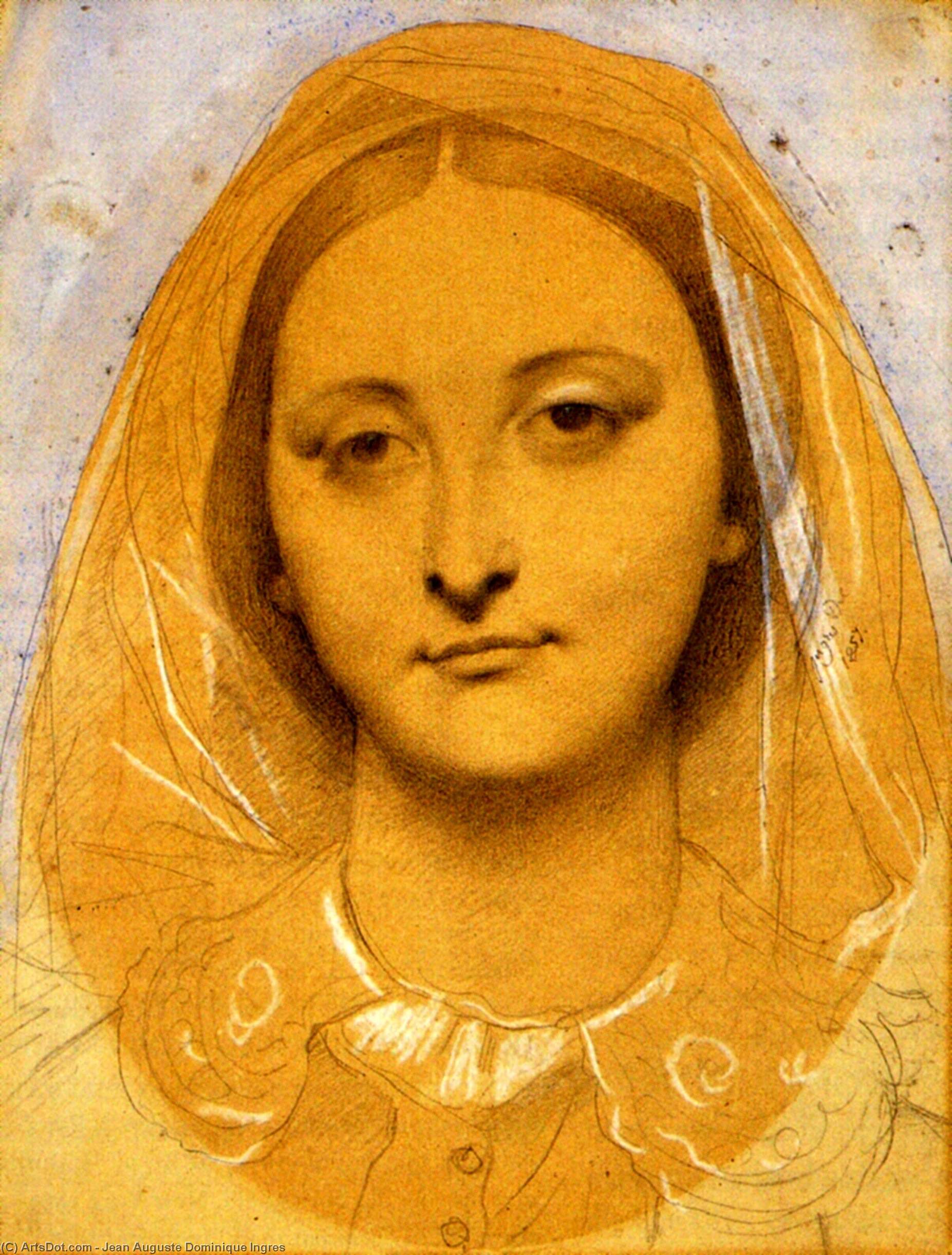
In the quiet, commanding presence of Mademoiselle Mary de Borderieux, we encounter the pinnacle of Jean-Auguste-Dominique Ingres’s mastery over line and form. This exquisite portrait serves as a profound window into the Neoclassical era, capturing not just a likeness, but an entire atmosphere of refined elegance. The subject, draped in a delicate veil that softens the contours of her features, gazes toward the viewer with a serious, almost enigmatic expression. Her eyes hold a depth of character that transcends the canvas, inviting a silent dialogue between the sitter and the observer. Through Ingres’s meticulous hand, the painting achieves a sculptural quality, where every fold of fabric and every strand of hair feels imbued with a life of its and permanence.
The composition is a masterclass in balanced storytelling. While the focus remains intensely on the luminous face of Mademoiselle de Borderieux, the artist subtly weaves secondary elements into the periphery to create a sense of lived reality. The presence of figures in the background—softly rendered and receding into the shadows—adds a layer of narrative complexity, suggesting a moment captured within a larger, bustling social sphere. A single book, positioned near the upper corner, hints at the intellectual pursuits and the cultured life of the subject, grounding her ethereal beauty in the tangible world of 19th-century French high society.
The Alchemy of Technique and Light
To behold this work is to witness the technical brilliance that defined Ingres as a titan of his age. The painting possesses a warm, golden patina, an aged tint that lends the piece a timeless, heirloom quality. This amber glow does more than suggest antiquity; it harmonizes the skin tones with the surrounding environment, creating a unified, atmospheric warmth. The artist’s technique is characterized by an almost invisible brushwork, where transitions between light and shadow are so seamless they appear as if sculpted from marble rather than painted with oil.
For the discerning collector or interior designer, this piece offers an unparalleled opportunity to introduce a sense of historical weight and sophisticated tranquility into a space. The interplay of textures—the sheer lightness of the veil against the solid, commanding presence of the subject—provides a visual richness that complements both classical and contemporary settings. Whether placed in a sunlit gallery or a moody, library-inspired study, the portrait acts as an anchor of prestige, evoking the grandeur of the Musée Ingres Bourdelle and the enduring legacy of French Neoclassicism.
An Emotional Resonance for Modern Spaces
Beyond its historical significance, Mademoiselle Mary de Borderieux resonates on a deeply emotional level. There is a certain stillness within the frame, a meditative quality that offers a respite from the frenetic pace of modern life. The serious expression of the subject does not convey sadness, but rather a profound dignity and self-possession. This emotional gravity makes the artwork an ideal centerpiece for those seeking to curate environments that inspire reflection, poise, and a sense of enduring beauty.
Investing in a high-quality reproduction of this masterpiece allows one to bring the soul of 19th-century France into the home. It is more than mere decoration; it is an invitation to inhabit a world of grace, where every line is intentional and every shadow tells a story. For those who appreciate the intersection of fine art history and exquisite interior aesthetics, this portrait stands as a testament to the power of the human spirit captured through the lens of perfection.