A Journey Through Sacred Narrative: The Flight into Egypt
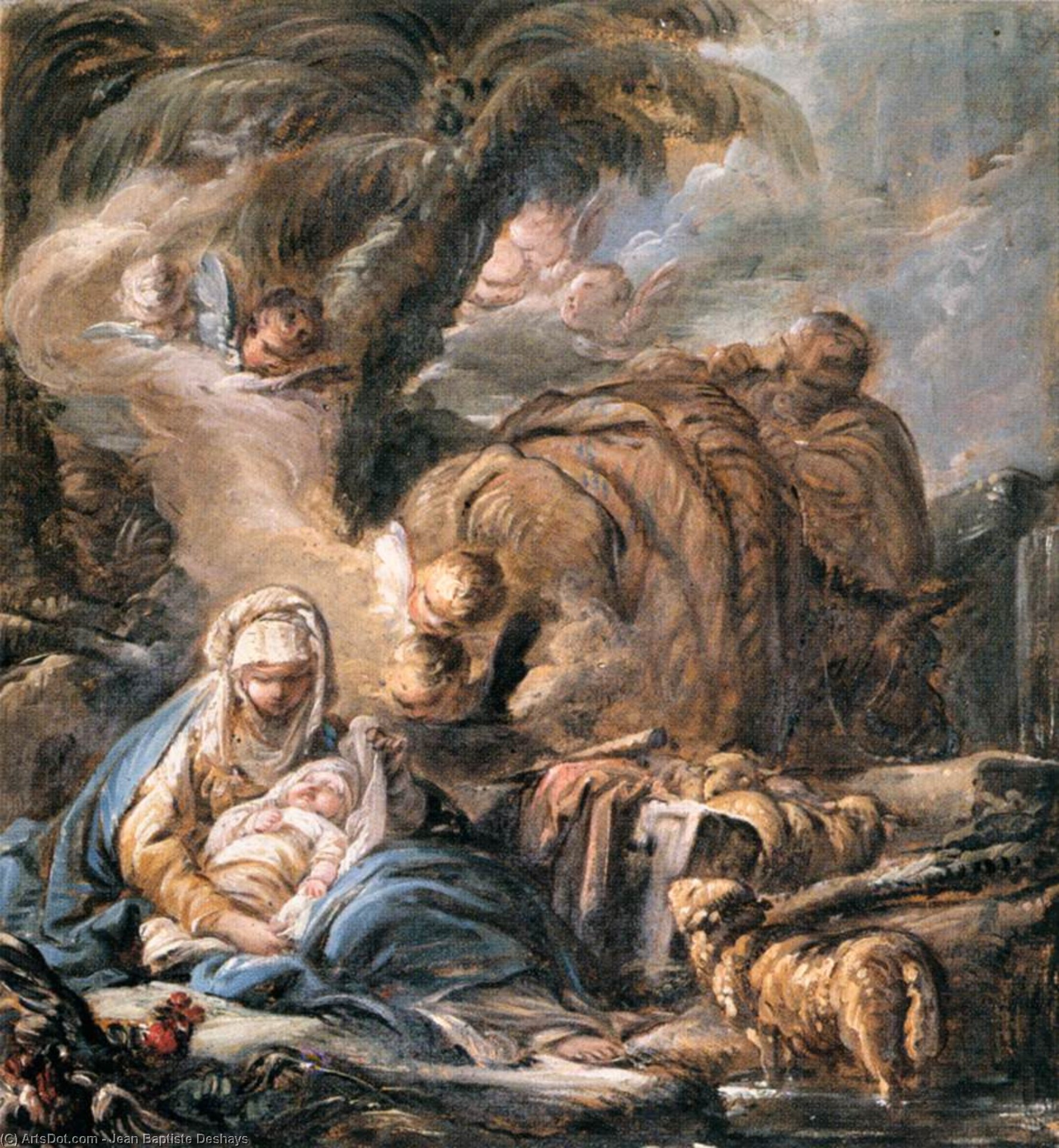
To gaze upon this depiction of "The Flight into Egypt" is to be transported to a moment suspended between divine promise and earthly peril. This painting captures not merely an event from sacred scripture, but the profound human experience of displacement, protection, and enduring faith. The composition immediately draws the eye to the central trio: Mary, cradling the infant Jesus in her arms, and Joseph standing guard nearby. Mary’s gentle bearing, contrasted with the protective stance of Joseph, speaks volumes about maternal devotion set against the backdrop of uncertainty. It is a scene steeped in quiet drama, where the weight of history meets the tenderness of new life.
Mastery of Light and Shadow: Technical Brilliance
The artist has employed oil on canvas with a visible richness that allows the viewer to appreciate the meticulous brushwork beneath the narrative surface. Notice how the light does not merely illuminate; it seems to emanate from the central figures themselves, creating an ethereal glow around Mary and Jesus. This masterful interplay between light and shadow is crucial to the painting's emotional resonance. The darker, brooding clouds gathering overhead suggest the immediate threat—the journey itself—while the focused illumination acts as a divine beacon of hope guiding the family forward. Complementing this drama are the flanking angels; one holding a scroll, perhaps reciting prophecy, and the other gazing heavenward with a staff, anchoring the spiritual dimension of their perilous trek.
Symbolism in the Landscape
The setting itself is imbued with potent symbolism. The rough path strewn with rocks and debris speaks to the hardship endured by refugees, while the prominent palm tree offers a vital, almost miraculous point of shelter amidst the wilderness. These elements ground the divine narrative in tangible reality. Furthermore, the inclusion of angels on either side frames the human drama within a celestial context. They are not mere decorations; they are witnesses and guides, transforming what could be seen as a simple escape into an epic, divinely orchestrated passage.
A Touch of Neoclassical Grace
While the subject matter is deeply rooted in religious tradition, the execution carries the hallmarks of Jean Baptiste Deshayes de Colleville’s style. His work beautifully bridges classical grandeur with an emerging emotional depth. One senses the careful balance and compositional structure characteristic of Neoclassicism, yet there is an expressive quality—a subtle yearning in the figures' gazes—that hints at the burgeoning Romantic spirit. This blend results in a piece that feels both timelessly formal and intensely personal, making it a captivating focal point for any sophisticated interior space.
Bringing Sacred Art Home
For collectors or designers seeking an artwork that whispers stories of resilience and grace, this reproduction offers unparalleled depth. The rich color palette and the dramatic narrative tension ensure that the piece will draw admiration in any setting. It is more than just a painting; it is a meditation on journey, faith, and the enduring light found even when traversing the darkest passages.