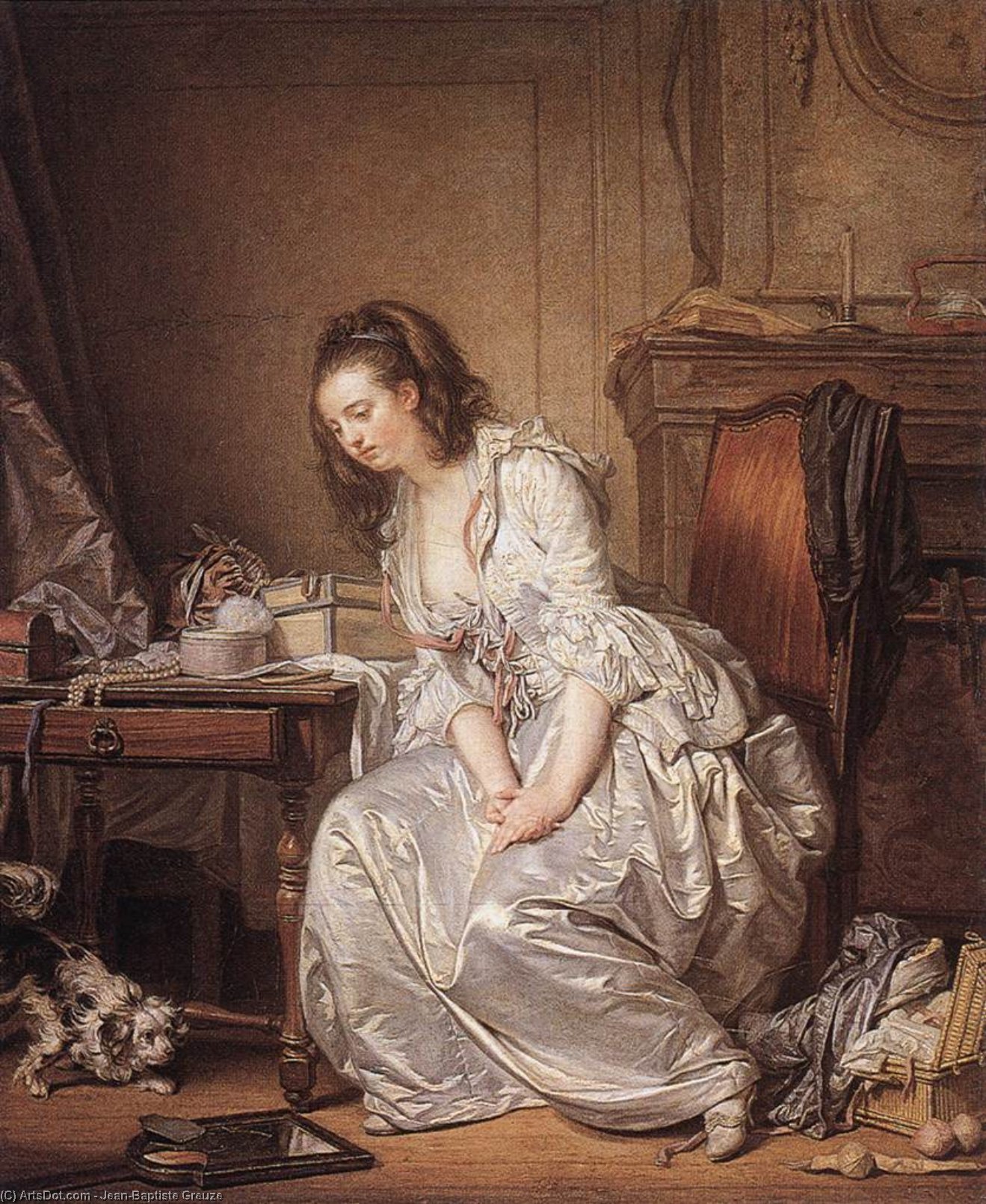
Jean-Baptiste Greuze’s “The Broken Mirror”: A Window into Sentiment and Rupture
Jean-Baptiste Greuze's "The Broken Mirror," painted around 1763, is not merely a depiction of shattered glass; it’s a profound exploration of moral consequence, societal expectations, and the devastating impact of transgression. This intimate genre scene, now residing within The Wallace Collection in London, offers a glimpse into the burgeoning sentimentalism that defined late 18th-century French art – an era obsessed with capturing raw emotion and exposing the vulnerabilities of human nature. Greuze, a master of eliciting pathos, doesn’t simply show us a broken mirror; he forces us to confront the shattered reputation and emotional wreckage it represents.
A Portrait of Moral Decay
The painting immediately draws the viewer in with its intensely focused composition. A young woman, dressed in a simple yet elegant gown, kneels before a large, ornate mirror. The reflection is fractured – not by an external force, but by her own actions. Her posture conveys profound regret and shame; her hands are clasped tightly together as if attempting to contain the damage she has wrought. The details surrounding her—a discarded shawl, a partially opened door—suggest a hasty departure and a desperate attempt to conceal her guilt. Greuze’s masterful use of light and shadow further emphasizes this sense of concealment and vulnerability, highlighting the woman's face and drawing attention to the broken reflection.
Technique and Sentiment: The Language of Emotion
Greuze’s technique is characterized by its remarkable realism combined with an almost theatrical intensity. He employed a direct painting method, working directly from life – a practice uncommon for artists of his time. This approach allowed him to capture the subtle nuances of human expression with astonishing accuracy. His brushstrokes are visible and deliberate, contributing to the overall sense of immediacy and emotional weight. The palette is muted, dominated by browns, grays, and creams, reflecting the somber mood of the scene. Crucially, Greuze’s skill lay not just in depicting reality but in imbuing it with a potent emotional charge – a hallmark of the sentimental style he championed.
Symbolism and the Shattered Ideal
The broken mirror itself is laden with symbolic meaning. Mirrors, throughout Western art history, have often represented vanity, self-reflection, and the illusion of perfection. In “The Broken Mirror,” however, this symbolism takes on a darker hue. The shattered reflection signifies not just a physical breakage but also the destruction of innocence, reputation, and perhaps even a future. The woman’s act – implied but not explicitly stated – likely involved a breach of societal norms or a betrayal of trust. It's a potent reminder that actions have consequences, and that even seemingly small transgressions can lead to irreversible damage.
A Legacy of Emotional Resonance
“The Broken Mirror” remains a powerful testament to Greuze’s ability to capture the complexities of human emotion. It's a scene that lingers in the mind long after viewing, prompting reflection on themes of morality, shame, and the fragility of reputation. Reproductions of this work continue to resonate with audiences today, offering a poignant reminder of the enduring power of art to explore the darker corners of the human experience. Its placement within The Wallace Collection underscores its significance as a pivotal piece in the development of French genre painting and a window into the sensibilities of a transformative era.