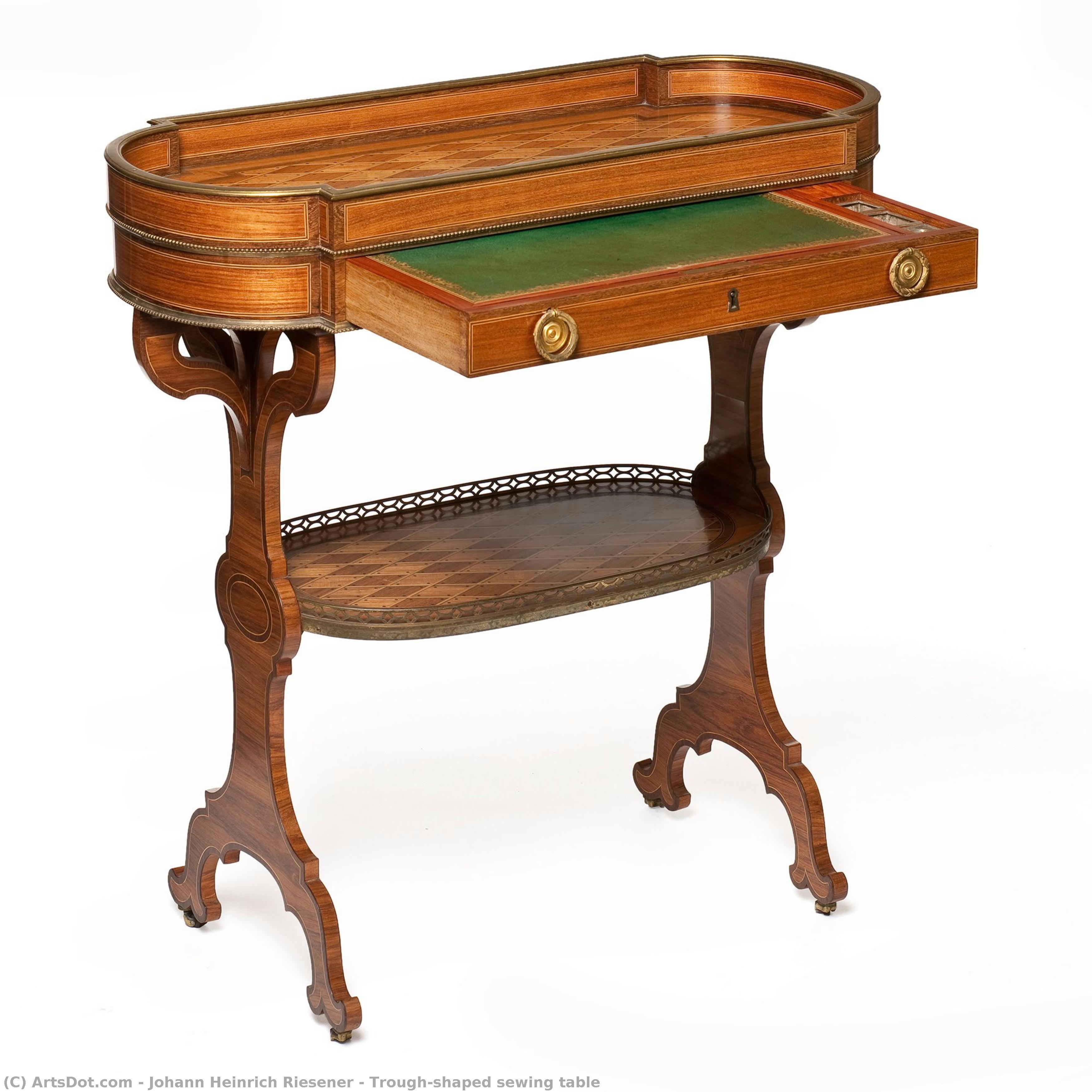
Jean-Henri Riesener’s exquisite trough-shaped sewing table captures the elegance of Louis XVI France through intricate marquetry and mosaic patterns—a testament to craftsmanship destined for Marie Antoinette's opulent Château de Saint-Cloud. Explore this stunning reproduction.
Explore Henri Riesener's captivating Napoleonic portraits & celebrity miniatures. French artist known for his refined style & iconic works at the Louvre.
Discover the Musée Nissim de Camondo in Paris: a stunning tribute to 18th-century French decorative arts & a poignant family legacy tragically impacted by war. Explore opulent rooms filled with furniture, porcelain & tapestries.
A Symphony of Craftsmanship: Jean Henri Riesener’s Trough-shaped Sewing Table
This exquisite trough-shaped sewing table, crafted by Jean Henri Riesener in 1788, stands as a testament to the opulent tastes and meticulous artistry of Louis XVI’s France. More than just functional furniture, it embodies the spirit of the era—a harmonious blend of practicality and decorative splendor designed for the Queen's private sanctuary at Saint-Cloud. The table’s form itself speaks volumes about its purpose: the gently sloping top with raised edges provides ample space for needlework, while a concealed drawer houses a silvered writing tablet, reflecting the dual roles expected of aristocratic women – domestic artistry alongside intellectual pursuits.
Technique and Material Palette
Riesener's mastery lies in his masterful application of marquetry and mosaic inlay techniques. The tabletop is adorned with intricate geometric patterns executed in contrasting shades of green and brown, meticulously inlaid into walnut wood. This technique—a hallmark of French aristocratic furniture making—demands painstaking precision and elevates the piece beyond mere utility. Complementing this visual richness are delicately crafted legs connected by an oval lower shelf, further emphasizing the table’s elegant proportions. The use of silvered metal for the writing tablet adds a touch of glamour and sophistication, mirroring the luxurious aesthetic prevalent in Marie Antoinette's court.
Historical Context: Saint Cloud and Adam Weisweiller’s Influence
The table’s significance extends beyond its decorative qualities; it represents a pivotal moment in French art history. Riesener collaborated with Adam Weisweiller to create a matching writing desk for Queen Marie Antoinette, demonstrating the interconnectedness of artistic endeavors during this period. This commission underscores the importance of patronage and reflects the prevailing stylistic trends—specifically, the “Italo-English” style championed by artists like Glover—which sought inspiration from classical ideals while embracing naturalistic observation. The meticulous replication of motifs across multiple pieces highlights the desire for visual coherence within aristocratic interiors.
Symbolism: Functionality Meets Aesthetic Expression
The trough shape itself is not merely a structural consideration but carries symbolic weight, representing stability and nurturing – qualities deemed desirable in a domestic setting. Similarly, the inclusion of a writing tablet symbolizes intellectual engagement and feminine empowerment, challenging traditional gender roles during the Enlightenment. The mosaic and dotted marquetry patterns symbolize order and harmony—values central to aristocratic culture and reflecting the belief that beauty should elevate both mind and body.
Emotional Impact: Capturing Light and Atmosphere
Like Glover’s landscapes, Riesener's trough-shaped sewing table strives to evoke a sense of tranquility and refinement. The careful attention to detail—from the smooth curves of the legs to the subtle sheen of the silvered metal—creates an immersive experience for the viewer. It invites contemplation and transports us back to a time when craftsmanship was revered, and beauty served as a conduit for conveying profound emotional resonance. This piece remains a captivating reminder of France’s artistic zenith and its enduring legacy in decorative arts.