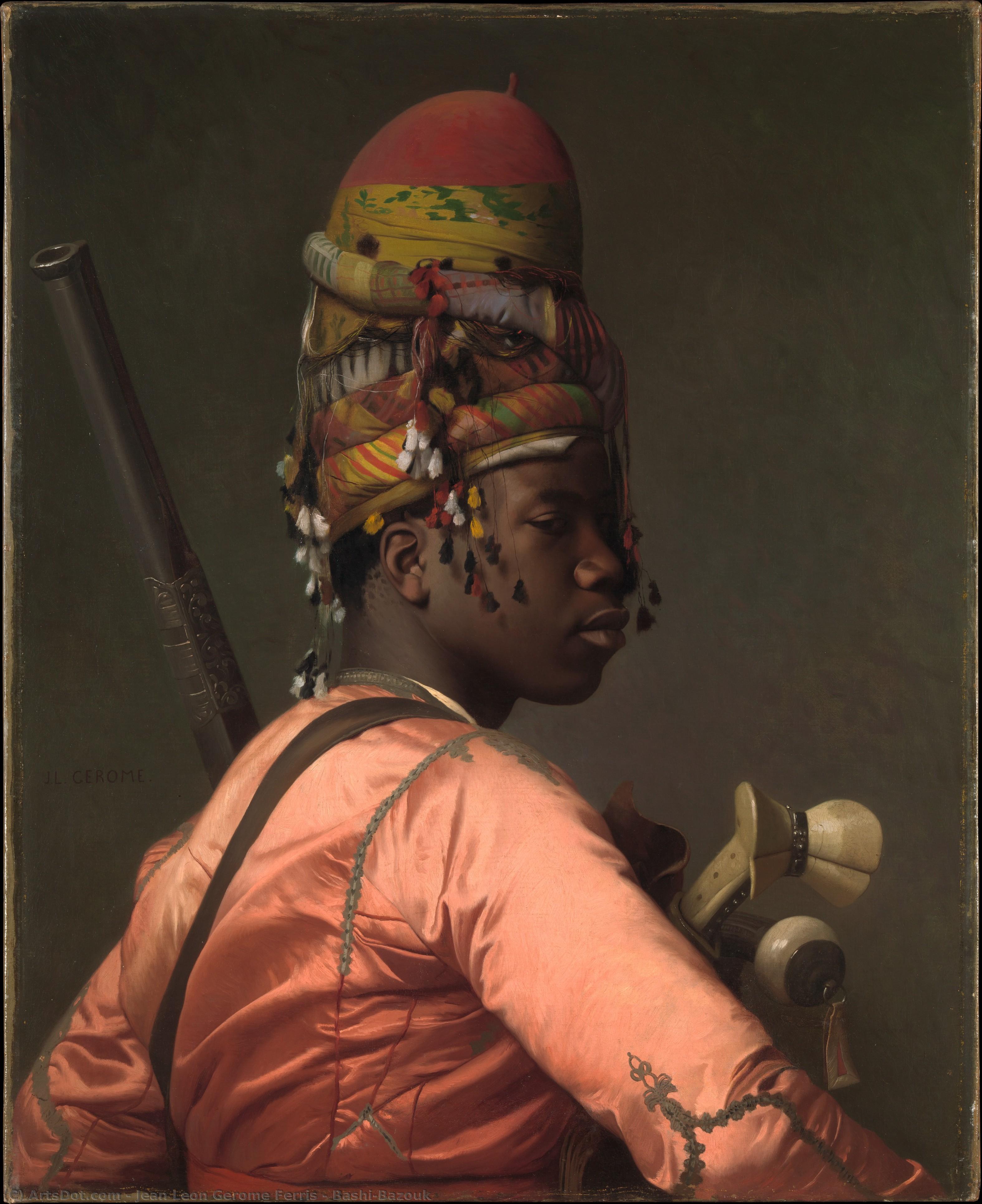
A Study in Plunder: Jean Leon Gerome’s “Bashi-Bazouk”
Jean Leon Gerome's "Bashi-Bazouk," painted in 1868, is more than a mere depiction of a soldier; it’s a meticulously crafted tableau brimming with the exotic allure and unsettling realities of the Near East. Returning from a transformative twelve-week journey to the region, Gerome channeled his observations directly into this arresting work, a testament to his burgeoning career and a poignant commentary on the era's fascination with Ottoman territories.
- Subject Matter: The central figure embodies the “Bashi-Bazouk,” a notorious band of auxiliary soldiers renowned for their ruthless pursuit of plunder under Ottoman command. This wasn’t a conventional army; it was a force driven by greed and fueled by a desperate need, a stark contrast highlighted by the man's opulent attire.
- Historical Context: The painting emerged during a period of intense European interest in the Middle East, largely spurred by political maneuvering and colonial ambitions. Gerome’s work reflects this fascination, albeit tinged with a critical awareness of the region’s darker aspects.
Virtuosic Technique and Textured Drama
Gerome's mastery is immediately apparent in his treatment of texture. The sumptuous silk tunic worn by the Bashi-Bazouk isn’t simply painted; it’s sculpted with a virtuosity that invites tactile engagement. The artist employs a rich palette, layering colors to create an almost three-dimensional effect – the sheen of the fabric, the weathered metal of the gun, and the smooth coolness of the fez all contribute to a heightened sense of realism. This technique was heavily influenced by Mariano Fortuny, whose use of layered glazes and dramatic lighting would become a hallmark of Gerome’s style.
- Color Palette: The dominant reds and browns evoke the heat and dust of the desert landscape, while subtle variations in tone create depth and dimension.
- Brushwork: Noticeable impasto techniques add to the textural richness, particularly evident in the folds of the tunic and the details of the accessories.
Symbolism and a Haunting Portrait
"Bashi-Bazouk" is laden with symbolic weight. The figure’s dignified bearing, despite his role as a plunderer, suggests a certain nobility or perhaps even a tragic fate. The inclusion of the gun and pipe isn't merely decorative; it reinforces the image of a mercenary, a man driven by material gain. The title itself – “headless” – is deliberately provocative, hinting at the expendability and dehumanization inherent in the Bashi-Bazouk’s existence. Gerome’s choice to depict this figure with such meticulous detail elevates him beyond a simple representation of a soldier; he becomes an emblem of a complex historical reality.
Dimensions & Acquisition
This exceptional reproduction, measuring 81 x 66 cm, captures the full impact of Gerome's original vision. It’s a piece that speaks to the enduring power of art to both reflect and shape our understanding of history and human nature.