 Preview
 Send
Send Share
Share
 Details

 Download
 Similars
 X-Ray
X-Ray Diaporama
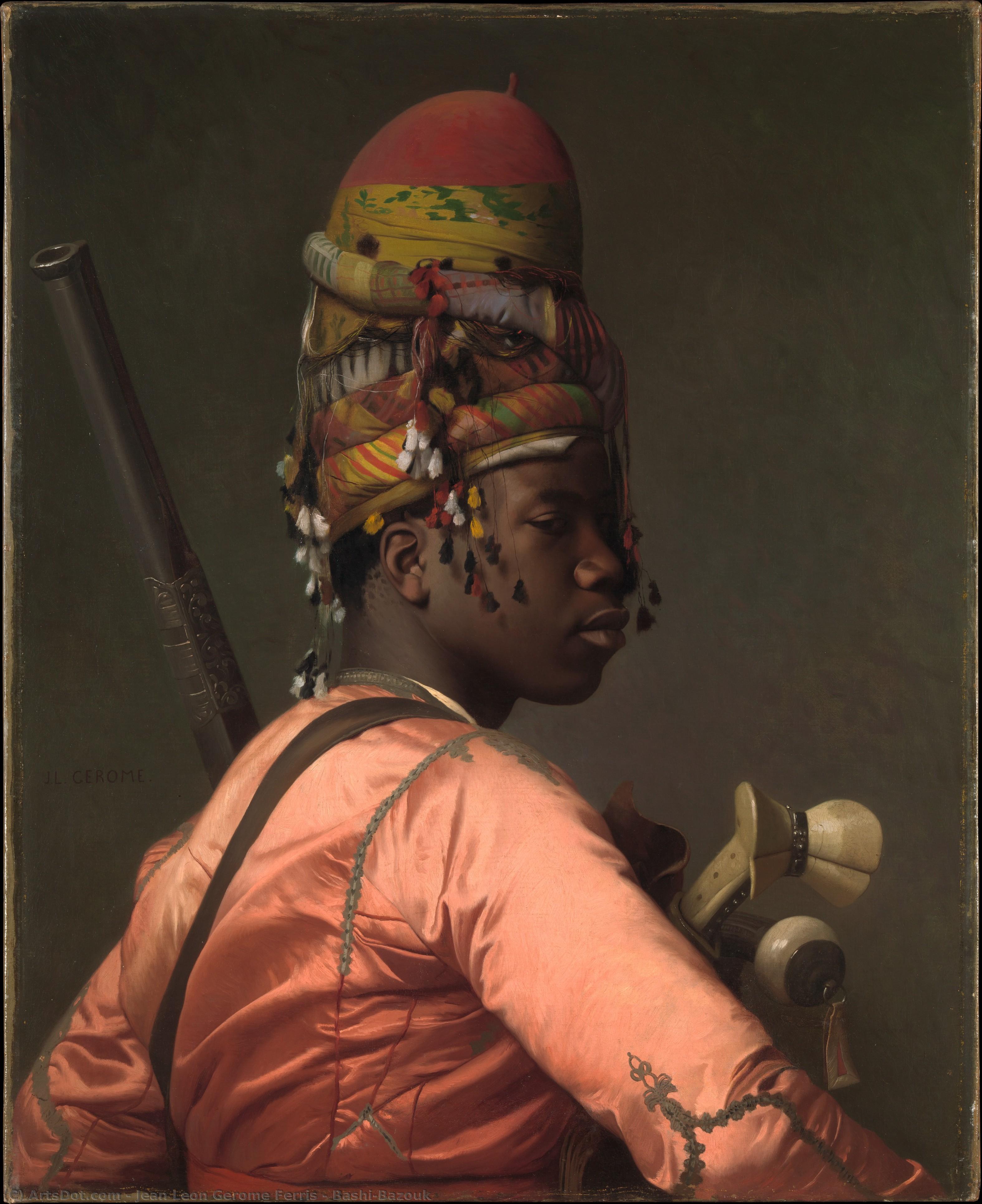
Bashi-Bazouk
 Acrylic On Canvas
- WallArt
- Academic Realism
 1868
1868- 19th Century
 81.0 x 66.0 cm
 Metropolitan Museum of Art
 Read More
Hand Made Oil Reproduction
Hand-painted oil on canvas in your size and frame, made to order by our artists. ( Buy Print Buy Image)




P118B $10

P118H $10

P118W $10

P438Z $10

P508JH $12

P508YH $12

P805H $10

P805Z $10

P919BZ $10

P919G $10

P919XJ $10

P959ZH $10

P968JZ $12

W106C $8

W218G $10

W218JH $8

W218Y $10

W307PJ $10

W316G $10

W316PJ $8

W316Y $10

W398PJ $8

W4111J $10

W500HY $15

W500JH $15

W692G $12

W849H $8

W940BG $15

W953PJ $8




Pick from our preset sizes that match the artwork's original proportions.

You may enter your own dimensions to fit a specific frame or space. If your selected size does not match the original image's proportions, we will either crop the artwork or extend the painting with additional hand-painted elements. A digital mockup will be sent for your approval before production begins.
Please note that the on-screen preview does not reflect the actual cropping or extension. Only the mockup will accurately show the final composition.
While custom sizes are available, we recommend selecting a dimension from the predefined list to preserve the original proportions.
After order, ArtsDot.com team will email client for instructions and provide a mockup preview
Worldwide Delivery () in 3/4 weeks instead of standard 5 weeks. (16 August). No compromise on quality.

Free Worldwide Express Shipping

High-Quality Linen Canvas

Full Shipping Insurance

Customs Tax Refund Guarantee

True Color Matching Guarantee

60-Day Return Policy (Defects Only)

100% Money-Back Guarantee

Bulk Discount Offer
 Glass option is only available in size under 110 CM

Bashi-Bazouk
Reproduction Medium
Reproduction Size
-


Total Price
$ 263
Artwork Description
A Study in Plunder: Jean Leon Gerome’s “Bashi-Bazouk”
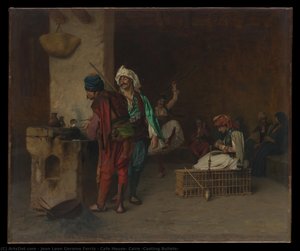
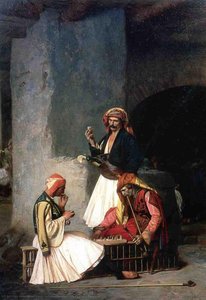
Jean Leon Gerome's "Bashi-Bazouk," painted in 1868, is more than a mere depiction of a soldier; it’s a meticulously crafted tableau brimming with the exotic allure and unsettling realities of the Near East. Returning from a transformative twelve-week journey to the region, Gerome channeled his observations directly into this arresting work, a testament to his burgeoning career and a poignant commentary on the era's fascination with Ottoman territories.
- Subject Matter: The central figure embodies the “Bashi-Bazouk,” a notorious band of auxiliary soldiers renowned for their ruthless pursuit of plunder under Ottoman command. This wasn’t a conventional army; it was a force driven by greed and fueled by a desperate need, a stark contrast highlighted by the man's opulent attire.
- Historical Context: The painting emerged during a period of intense European interest in the Middle East, largely spurred by political maneuvering and colonial ambitions. Gerome’s work reflects this fascination, albeit tinged with a critical awareness of the region’s darker aspects.
Virtuosic Technique and Textured Drama
Gerome's mastery is immediately apparent in his treatment of texture. The sumptuous silk tunic worn by the Bashi-Bazouk isn’t simply painted; it’s sculpted with a virtuosity that invites tactile engagement. The artist employs a rich palette, layering colors to create an almost three-dimensional effect – the sheen of the fabric, the weathered metal of the gun, and the smooth coolness of the fez all contribute to a heightened sense of realism. This technique was heavily influenced by Mariano Fortuny, whose use of layered glazes and dramatic lighting would become a hallmark of Gerome’s style.
- Color Palette: The dominant reds and browns evoke the heat and dust of the desert landscape, while subtle variations in tone create depth and dimension.
- Brushwork: Noticeable impasto techniques add to the textural richness, particularly evident in the folds of the tunic and the details of the accessories.
Symbolism and a Haunting Portrait
"Bashi-Bazouk" is laden with symbolic weight. The figure’s dignified bearing, despite his role as a plunderer, suggests a certain nobility or perhaps even a tragic fate. The inclusion of the gun and pipe isn't merely decorative; it reinforces the image of a mercenary, a man driven by material gain. The title itself – “headless” – is deliberately provocative, hinting at the expendability and dehumanization inherent in the Bashi-Bazouk’s existence. Gerome’s choice to depict this figure with such meticulous detail elevates him beyond a simple representation of a soldier; he becomes an emblem of a complex historical reality.
Dimensions & Acquisition
This exceptional reproduction, measuring 81 x 66 cm, captures the full impact of Gerome's original vision. It’s a piece that speaks to the enduring power of art to both reflect and shape our understanding of history and human nature.
Related Artworks
![Indian Tobacco Shop Sign [reverse, Indian Facing Right] — Winslow Homer, Contemporary Realism](/media/artworks/images/thumbnails/64/50/64503c03f780433687607891aba35c23.jpg)
Artist Biography
Jean Leon Gerome Ferris: Chronicler of American History
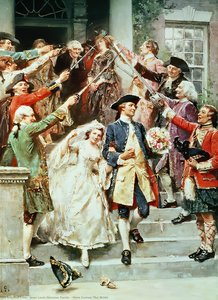
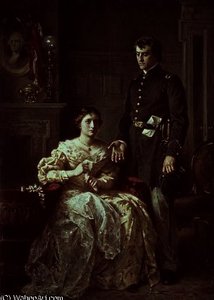
Jean Leon Gerome Ferris (1863 – 1930) stands as a singular figure in the landscape of American art history, primarily recognized for his monumental ‘Pageant of a Nation’ series—the largest undertaking of its kind by a single artist during the late nineteenth century. Born in Philadelphia, Pennsylvania, Ferris inherited an artistic lineage steeped in tradition and nurtured by exceptional mentors; his father, Stephen James Ferris, was himself a portrait painter deeply influenced by Jean-Léon Gérôme, and equally captivated by Mariano Fortuny—a connection that profoundly shaped Ferris’s artistic trajectory. Growing up amidst this vibrant artistic milieu instilled within him an unwavering dedication to the craft, culminating in formal training at the Pennsylvania Academy of Fine Arts and subsequent studies at the Académie Julian under William-Adolphe Bouguereau. Crucially, he encountered his namesake, Jean Léon Gérôme, whose artistic vision served as a cornerstone for Ferris’s ambition to depict pivotal moments from American history. As Ferris eloquently stated, “axiom was that one would paint best that with which he is most familiar,” and he chose to immerse himself in the narrative of his nation—a decision that yielded extraordinary results.- Early Influences & Training: Ferris’s artistic education began under his father's tutelage, alongside the mentorship of his uncles Edward Moran and Thomas Moran – both celebrated marine painters who championed a distinctly Romantic aesthetic. This formative period solidified his understanding of artistic technique and instilled in him an appreciation for dramatic composition and emotive expression.
- Orientalist Beginnings: Like many artists of his era, Ferris initially pursued subjects rooted in Orientalism—a fashionable movement characterized by exotic landscapes and idealized portrayals of Eastern cultures. His painting “Feeding the Ibis” (1882), valued at $600, exemplifies this stylistic inclination and demonstrates a masterful command of color and detail.
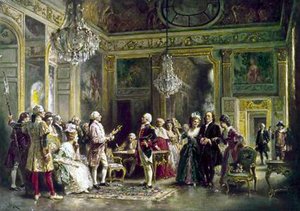
- The Pageant of a Nation: Ferris’s magnum opus commenced in 1895 with the ambitious undertaking to chronicle American history through a series of seventy-eight paintings—a project that would define his artistic legacy. Driven by an unwavering belief in the power of visual storytelling, he meticulously researched historical events and translated them into emotionally resonant depictions.
The Pursuit of Narrative Painting & Commercial Success
Ferris’s commitment to portraying history wasn't merely aesthetic; it stemmed from a conviction that art could serve as a vehicle for educating the public and fostering patriotism. Recognizing the limitations inherent in presenting individual scenes in isolation, he strategically partnered with publishing companies to secure reproduction rights—a decision that propelled his work into widespread circulation. Lithographic prints, postcards, calendars, and trade cards featuring images from “The Pageant of a Nation” became ubiquitous advertising mediums throughout the 1920s and beyond, ensuring that Ferris’s artistic vision reached audiences far beyond the confines of the art world. Remarkably, laminated reproductions of his paintings were still available for sale as late as 1984—a testament to the enduring appeal of his historical narratives and their ability to transcend time.Notable Works & Artistic Style
Ferris’s artistic style was characterized by a meticulous attention to detail, informed by Bouguereau's academic tradition yet infused with an expressive dynamism reminiscent of Gérôme’s influence. His paintings captured idealized representations of significant historical events—scenes from the American Revolution, Civil War battles, and explorations of the West—presented with unwavering realism and imbued with moral grandeur. Among his most celebrated pieces are “Napoleon in Egypt,” “Dancer with an Apple,” and “Painting Breathes Life into Sculpture”—each demonstrating Ferris’s exceptional skill in conveying emotion through gesture and posture, alongside masterful rendering of texture and light.Legacy & Historical Significance
Jean Leon Gerome Ferris's contribution to American art history extends beyond his artistic achievements; he established a precedent for ambitious historical painting projects—a genre that had largely faded from prominence by the early twentieth century. His ‘Pageant of a Nation’ series remains an unparalleled achievement in visual storytelling, capturing the spirit of its time and cementing Ferris’s place as one of America's foremost chroniclers of history. Furthermore, his success in securing commercial reproductions ensured that his artwork continued to inspire generations of artists and viewers alike—a remarkable feat considering the challenges faced by artists attempting to disseminate their vision during a period marked by shifting artistic tastes and evolving cultural priorities.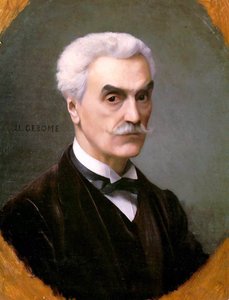
Jean Leon Gerome Ferris
1863 - 1930 , United States of America
Quick Facts
- Artistic Movement Or Style: Academic Painting
- Artists Or Movements Influenced By This Artist: ['Orientalism']
- Artists Who Influenced This Artist:
- Jean Leon Gerome
- Mariano Fortuny
- Date Of Birth: Philadelphia, USA (1863)
- Date Of Death: 1930
- Full Name: Jean Leon Gerome Ferris
- Nationality: American
- Notable Artworks:
- Napoleon in Egypt
- Dancer with an Apple
- Painting Breathes Life into Sculpture
- Place Of Birth: Philadelphia, Pennsylvania
Related Articles
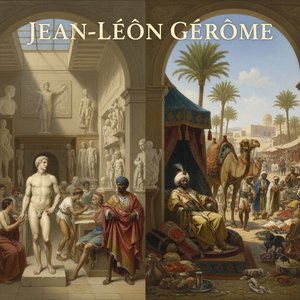
Jean-Léon Gérôme: Academic Rigor & Orientalist Visions Shaping 19th-Century French Painting
Explore the captivating world of Jean-Léon Gérôme, a master of 19th-century academic painting & orientalism. Discover his historical works, artistic techniques, and lasting influence on art history.
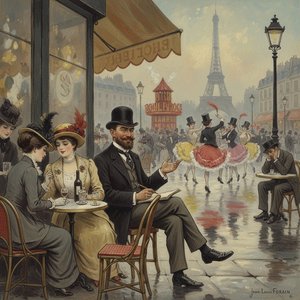
Jean-Louis Forain: Capturing Parisian Life with Wit & Realism
Explore the captivating world of Jean-Louis Forain, a master Impressionist chronicler of Belle Époque Paris. Discover his satirical paintings, realistic scenes & lasting legacy. Learn about collecting Forain's art today!
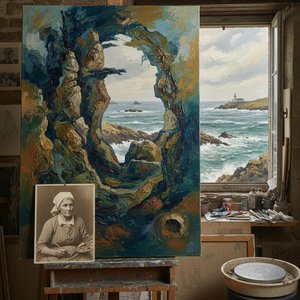
Yvonne Jean Haffen: A Breton Vision of Post-War Abstraction
Discover the captivating world of Yvonne Jean Haffen, a leading figure in post-war French abstraction. Explore her unique style, vibrant color palettes, and investment potential with ArtsDot.
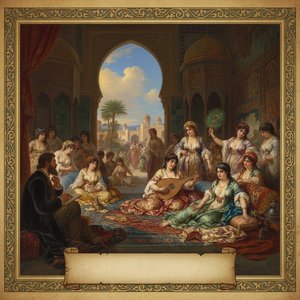
The Allure of the Exotic: Orientalism in 19th-Century Art
Explore the captivating world of 19th-century Orientalist art! Discover iconic painters like Gérôme & Benjamin-Constant, key themes, and collecting insights. Expert analysis at ArtsDot.
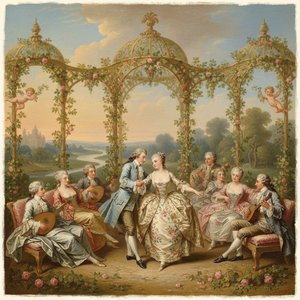
Jean-Baptiste Pater: Rococo Charm & Ephemeral Beauty of 18th-Century France
Explore the captivating world of Jean-Baptiste Pater, a master of Rococo painting. Discover his elegant *fête galante* scenes and shimmering portraits – a glimpse into 18th-century French aristocracy. Learn about his legacy & find high-quality reproductions.