Jean Malouel was a pivotal Dutch artist during the Burgundian Renaissance, renowned for his innovative approach to painting and his role in establishing Dijon as a center of artistic excellence. He is best known for the Pietà tondo and the Martyrdom of St Denis altarpiece, both masterpieces reflecting the International Gothic style.
A Celestial Embrace: The Virgin and Child with Angels
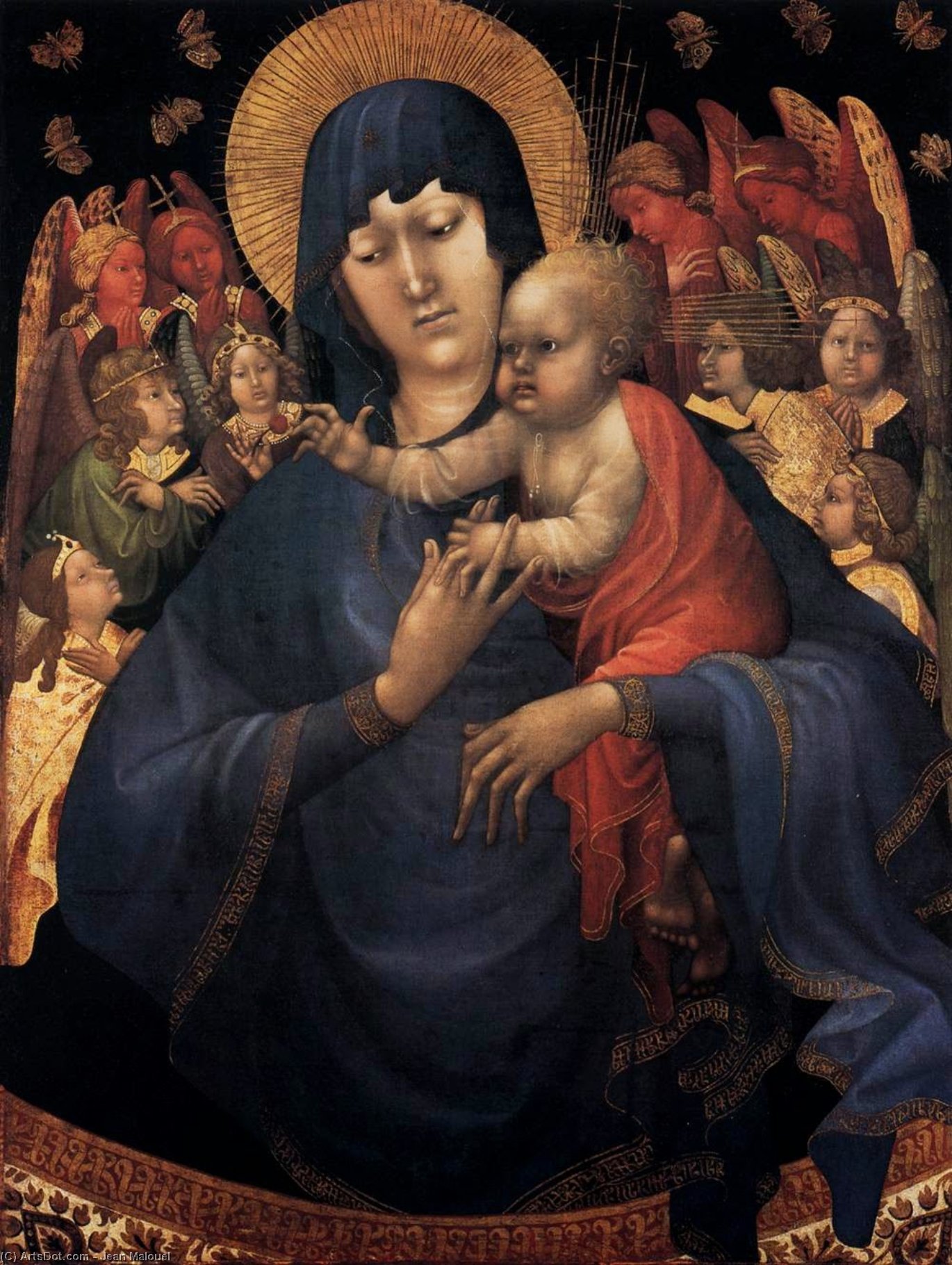
To gaze upon this depiction of the Virgin and Child is to step directly into a moment suspended between earthly devotion and divine glory. Jean Malouel’s Virgin and Child with Angels is not merely a portrait; it is an unfolding narrative of heavenly protection and maternal grace. The central figures—the serene Madonna, robed in deep celestial blue, cradling the innocent Christ Child—are enveloped by a chorus of angels whose presence elevates the scene from a simple devotional piece to an overwhelming vision of divine love. One senses the quiet majesty of the Burgundian court reflected here, where piety and exquisite artistry converged.
Mastery in Transition: Style and Technique
Painted around 1410, this work captures Jean Malouel at a pivotal juncture in art history—the very threshold between the lingering elegance of the Gothic tradition and the burgeoning naturalism of the Renaissance. While the composition retains a certain devotional formality characteristic of its era, observe the subtle modeling of flesh and drapery; there is an emerging concern for volume and human emotion that speaks to the future masters. Malouel’s technique allows the rich pigments to breathe, giving depth to the Virgin's blue mantle while lending ethereal luminosity to the wings and robes of the surrounding angels. The careful placement of every figure suggests a highly skilled hand at work, balancing narrative weight with delicate execution.
Symbolism Woven in Gold and Blue
The symbolism within this painting is as rich as its palette. The Virgin Mary, crowned and central, embodies both earthly royalty and divine motherhood. Her blue garments traditionally allude to purity and heaven itself. The angels surrounding her are not mere decoration; they function as celestial witnesses, their gazes fixed upon the sacred bond between mother and child. They represent the omnipresent chorus of heavenly praise, guiding and protecting this holy unit. Every fold in the drapery, every gentle gesture of an outstretched hand, speaks to established theological iconography filtered through a highly personal artistic lens.
An Echo for the Modern Collector
Owning a reproduction of Virgin and Child with Angels is acquiring more than just wall art; it is curating a piece of historical resonance. For the discerning collector or designer, this work offers an unparalleled blend of profound spirituality and sophisticated aesthetic appeal. It possesses the gravitas of Old Master painting while its subject matter—the enduring bond between parent and child—remains universally relatable. Imagine this luminous scene gracing a drawing-room or chapel; it brings with it an immediate sense of calm, history, and sublime beauty, inviting contemplation upon the eternal.