 Preview
 Send
Send Share
Share
 Details

 Download
 Similars
 X-Ray
X-Ray Diaporama
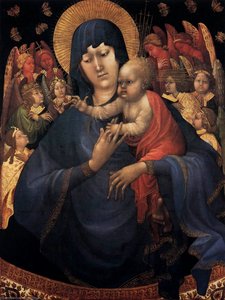
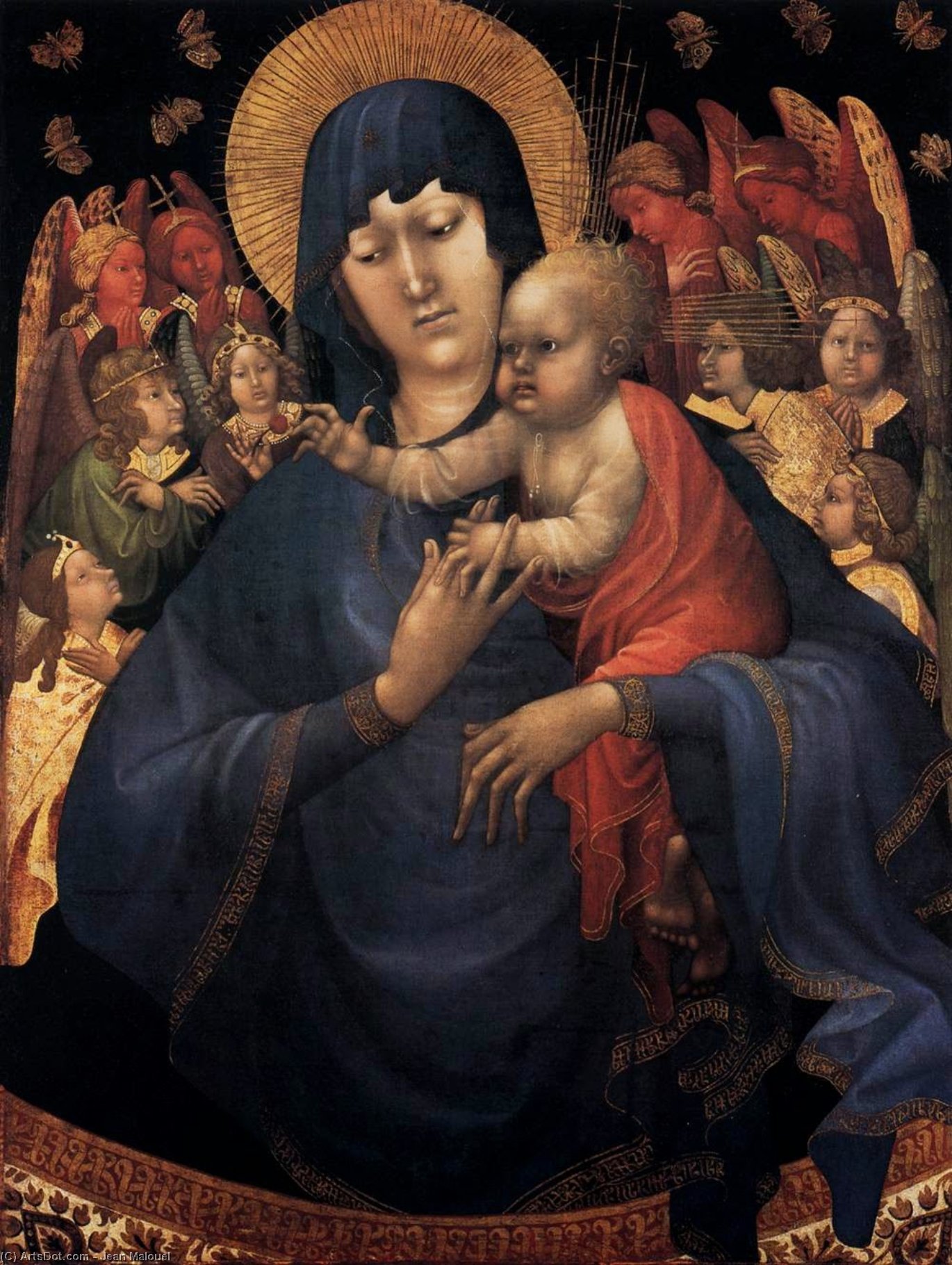
Virgin and Child with Angels
 Oil On Canvas
- WallArt
- International Gothic
 1410
1410- Late Medieval
 107.0 x 81.0 cm
 Staatliche Museen
 Read More
Hand Made Oil Reproduction
Hand-painted oil on canvas in your size and frame, made to order by our artists. ( Buy Print Buy Image)




P118B $10

P118H $10

P118W $10

P438Z $10

P508JH $12

P508YH $12

P805H $10

P805Z $10

P919BZ $10

P919G $10

P919XJ $10

P959ZH $10

P968JZ $12

W106C $8

W218G $10

W218JH $8

W218Y $10

W307PJ $10

W316G $10

W316PJ $8

W316Y $10

W398PJ $8

W4111J $10

W500HY $15

W500JH $15

W692G $12

W849H $8

W940BG $15

W953PJ $8




Pick from our preset sizes that match the artwork's original proportions.

You may enter your own dimensions to fit a specific frame or space. If your selected size does not match the original image's proportions, we will either crop the artwork or extend the painting with additional hand-painted elements. A digital mockup will be sent for your approval before production begins.
Please note that the on-screen preview does not reflect the actual cropping or extension. Only the mockup will accurately show the final composition.
While custom sizes are available, we recommend selecting a dimension from the predefined list to preserve the original proportions.
After order, ArtsDot.com team will email client for instructions and provide a mockup preview
Worldwide Delivery () in 3/4 weeks instead of standard 5 weeks. (17 August). No compromise on quality.

Free Worldwide Express Shipping

High-Quality Linen Canvas

Full Shipping Insurance

Customs Tax Refund Guarantee

True Color Matching Guarantee

60-Day Return Policy (Defects Only)

100% Money-Back Guarantee

Bulk Discount Offer
 Glass option is only available in size under 110 CM

Virgin and Child with Angels
Reproduction Medium
Reproduction Size
-


Total Price
$ 263
Artwork Description
A Celestial Embrace: The Virgin and Child with Angels
To gaze upon this depiction of the Virgin and Child is to step directly into a moment suspended between earthly devotion and divine glory. Jean Malouel’s Virgin and Child with Angels is not merely a portrait; it is an unfolding narrative of heavenly protection and maternal grace. The central figures—the serene Madonna, robed in deep celestial blue, cradling the innocent Christ Child—are enveloped by a chorus of angels whose presence elevates the scene from a simple devotional piece to an overwhelming vision of divine love. One senses the quiet majesty of the Burgundian court reflected here, where piety and exquisite artistry converged.
Mastery in Transition: Style and Technique
Painted around 1410, this work captures Jean Malouel at a pivotal juncture in art history—the very threshold between the lingering elegance of the Gothic tradition and the burgeoning naturalism of the Renaissance. While the composition retains a certain devotional formality characteristic of its era, observe the subtle modeling of flesh and drapery; there is an emerging concern for volume and human emotion that speaks to the future masters. Malouel’s technique allows the rich pigments to breathe, giving depth to the Virgin's blue mantle while lending ethereal luminosity to the wings and robes of the surrounding angels. The careful placement of every figure suggests a highly skilled hand at work, balancing narrative weight with delicate execution.
Symbolism Woven in Gold and Blue
The symbolism within this painting is as rich as its palette. The Virgin Mary, crowned and central, embodies both earthly royalty and divine motherhood. Her blue garments traditionally allude to purity and heaven itself. The angels surrounding her are not mere decoration; they function as celestial witnesses, their gazes fixed upon the sacred bond between mother and child. They represent the omnipresent chorus of heavenly praise, guiding and protecting this holy unit. Every fold in the drapery, every gentle gesture of an outstretched hand, speaks to established theological iconography filtered through a highly personal artistic lens.
An Echo for the Modern Collector
Owning a reproduction of Virgin and Child with Angels is acquiring more than just wall art; it is curating a piece of historical resonance. For the discerning collector or designer, this work offers an unparalleled blend of profound spirituality and sophisticated aesthetic appeal. It possesses the gravitas of Old Master painting while its subject matter—the enduring bond between parent and child—remains universally relatable. Imagine this luminous scene gracing a drawing-room or chapel; it brings with it an immediate sense of calm, history, and sublime beauty, inviting contemplation upon the eternal.
Related Artworks

Artist Biography
A Life at the Burgundian Court
Jean Malouel, or Jan Maelwael as he was known in his native Netherlands, occupies a fascinating, pivotal position in the transition from Gothic to Renaissance art. Born around 1375 in Nijmegen, a city then part of the Duchy of Guelders, his life unfolded against the backdrop of burgeoning artistic patronage and shifting cultural currents. He wasn’t merely a painter; he was a courtier, an innovator, and a key figure in establishing the Burgundian court as a center of artistic excellence. The seeds of his artistry were sown within a family tradition – both his father, Willem Maelwael, and an uncle practiced the craft, providing young Jan with early training and exposure to the workshop environment. By 1382, records indicate he was already actively working as an artist, demonstrating a precocious talent that would soon draw him into the orbit of powerful patrons.From Paris to Dijon: Ascending Through Royal Circles
Malouel’s career took its first significant turn in 1396-97 when he found himself working in Paris, tasked with painting armorial decorations for Isabelle of Bavaria, the Queen of France. This commission wasn't simply about heraldry; it was an introduction to the world of royal commissions and a demonstration of his skill in detailed, decorative work. However, it was his move to Dijon in 1397 that truly cemented his destiny. He succeeded Jean de Beaumetz as court painter to Philip the Bold, Duke of Burgundy, a position he held with distinction until his death. This appointment wasn’t merely a job; it came with the prestigious rank of *valet de chambre*, signifying his close proximity to the Duke and his importance within the Burgundian household. His salary reflected this esteem, exceeding that of even renowned sculptors like Claus Sluter, underscoring the value Philip placed on Malouel's artistic abilities. A brief return to Nijmegen in 1405 allowed him to marry Heilwig van Redinchaven before he resumed his duties at the Burgundian court, a testament to his commitment to both family and patronage.Master of Innovation: Style and Major Works
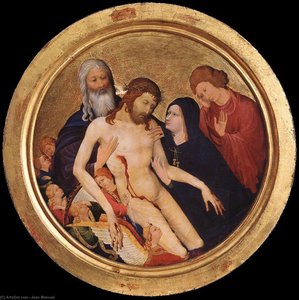
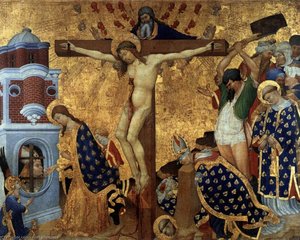
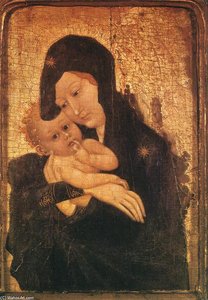
Malouel’s artistic style is firmly rooted in the International Gothic tradition – characterized by elegant figures, rich colors, and meticulous detail. Yet, within this framework, he demonstrated a forward-thinking approach, particularly in his adoption of glazing techniques that foreshadowed the innovations of oil painting pioneered later by Jan van Eyck. His most celebrated work, the Pietà Tondo (Louvre), is considered a landmark achievement – arguably the first true tondo of the Renaissance. This circular composition, with its depiction of the Virgin Mary cradling the body of Christ, blends Northern European and Sienese artistic influences into a harmonious whole. The use of glazing lends a remarkable luminosity to the scene, enhancing its emotional impact. Other significant works attributed to him include the Martyrdom of St Denis Altarpiece (Louvre), though authorship is debated, with some scholars believing Henri Bellechose completed it after Malouel’s death. The *Portrait of Philip the Bold*, while only surviving in later copies, was highly esteemed during its time and served as a model for subsequent depictions of the Duke. His Virgin and Child (Berlin Gemäldegalerie), believed to be part of a diptych with a portrait of John the Fearless, represents an early example of this increasingly popular format.A Lasting Legacy: Bridging Eras
Jean Malouel’s influence extended beyond his own paintings. He played a crucial role in introducing the Limbourg brothers – Herman, Paul, and Johan – to Philip the Bold's service around 1400. This introduction proved transformative for the brothers, launching their careers as celebrated manuscript illuminators and significantly impacting the artistic landscape of the Burgundian court. Malouel’s commissions within the palaces were numerous, and his work on projects like the Well of Moses, sculpted by Claus Sluter, demonstrated his collaborative spirit and mastery of decorative techniques. He wasn't simply executing designs; he was actively shaping the visual identity of the Burgundian court. While uncertainties surrounding attribution continue to fuel scholarly debate regarding the full extent of his *oeuvre*, Malouel’s contributions to the artistic landscape of the late Middle Ages are undeniable. He stands as a pivotal figure, bridging the gap between the refined elegance of Gothic art and the burgeoning naturalism that would define the Renaissance, leaving an indelible mark on the history of European painting.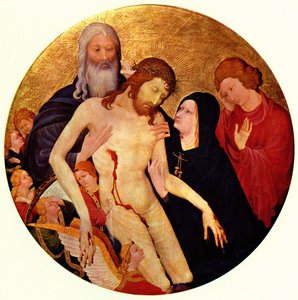
Jean Malouel
1375 - 1415 , Netherlands
Quick Facts
- Artistic Movement Or Style: International Gothic
- Artists Or Movements Influenced By This Artist:
- Limbourg brothers
- Early Renaissance painting
- Date Of Birth: c. 1375
- Date Of Death: 1415
- Full Name: Jean Malouel
- Nationality: Netherlandish (Dutch)
- Notable Artworks:
- Pietà Tondo
- Martyrdom of St Denis Altarpiece
- Virgin and Child
- Place Of Birth: Nijmegen, Netherlands
Related Articles
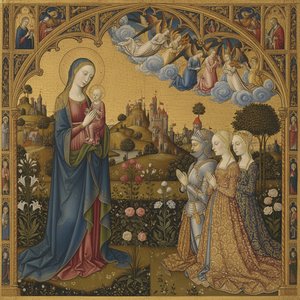
Beyond Borders: The Spiritual & Stylistic Innovations of International Gothic Art
Explore the exquisite beauty & spiritual depth of International Gothic art. Discover key artists like Simone Martini & Pol de Limbourg, its origins, symbolism, and lasting influence on European painting. Expert insights at ArtsDot.
The Radiant Dusk of Medieval Vision: Exploring Late Gothic Art's Synthesis of Faith, Form & Emotionality (c. 1300-1500)
Explore the exquisite beauty & spiritual depth of Late Gothic art (c. 1300-1500). Discover key artists, symbolism, and its lasting influence on the Renaissance. Expert insights at ArtsDot.
Illuminating the Fourteenth Century: Art, Innovation & Enduring Legacies (1300-1400)
Explore the transformative art of the 14th century! Discover Gothic masterpieces, International Style innovations, and the precursors to the Renaissance. Expert insights & historical context at ArtsDot.
The Shadow of Faith: Exploring Gothic Art's Spiritual Intensity & Architectural Innovation
Explore the spiritual intensity & architectural innovation of Gothic art! Discover the symbolism behind cathedrals, stained glass & master artists like Giotto and Monet. A deep dive into medieval history & artistic expression.
Jean-Louis Forain: Capturing Parisian Life with Wit & Realism
Explore the captivating world of Jean-Louis Forain, a master Impressionist chronicler of Belle Époque Paris. Discover his satirical paintings, realistic scenes & lasting legacy. Learn about collecting Forain's art today!