The Dawn of Gothic Refinement: From Romanesque Roots to Early Gothic Innovations
Gothic art was a style of medieval art that developed in Northern France out of Romanesque art in the 12th century, led by the concurrent development of Gothic architecture. It spread to all of Western Europe, and much of Northern, Southern and Centr...
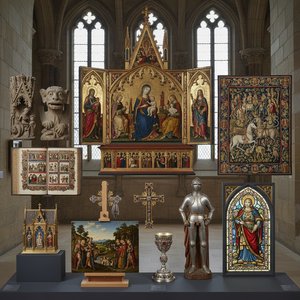
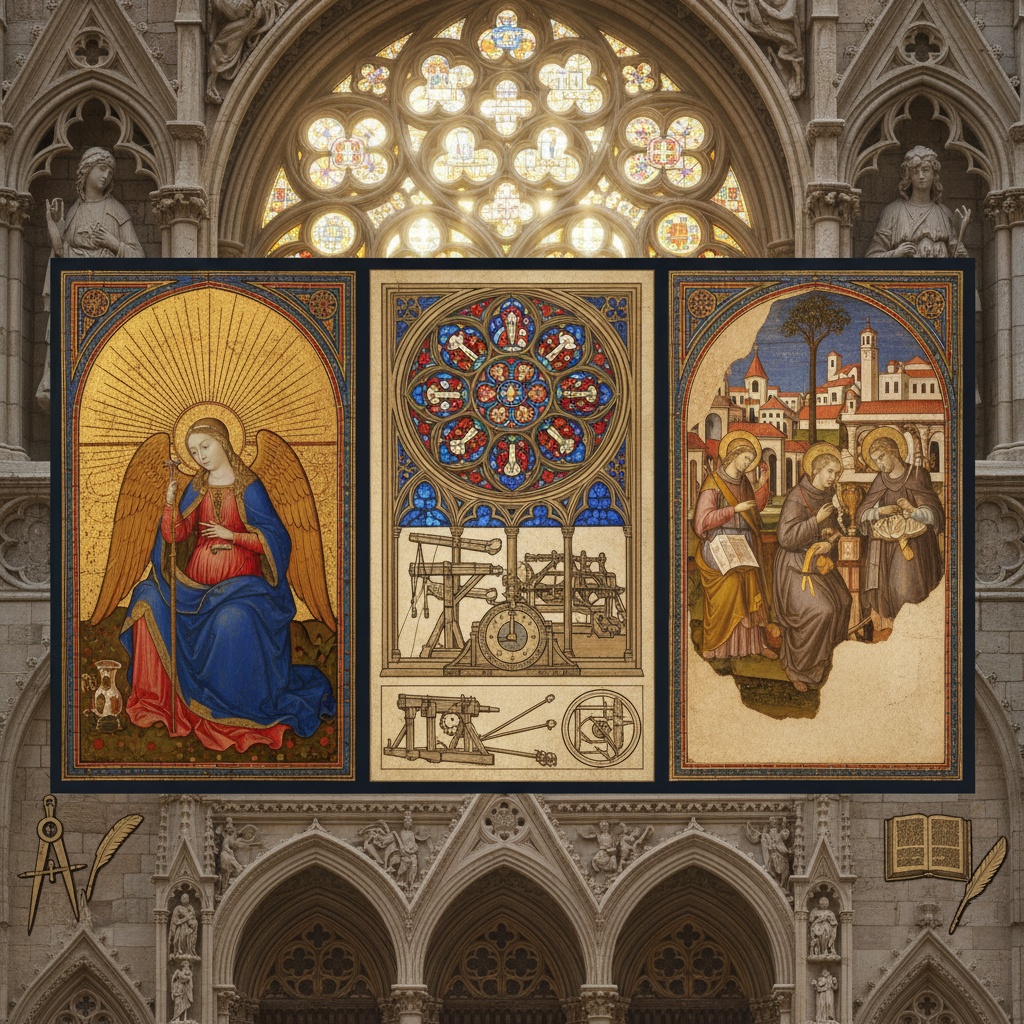
The thirteenth century witnessed a profound shift in the artistic landscape of Europe, a transition from the robust solidity of Romanesque art to the soaring elegance of Gothic. This wasn’t an abrupt rupture, but rather a gradual evolution born within the walls of ecclesiastical architecture. The Abbey Church of Saint-Denis, under the visionary Abbot Suger, is rightfully considered the birthplace of Gothic—a space conceived not merely as a house of worship, but as a vessel for divine light. Suger's ambition was to flood the interior with luminosity, believing that light itself was a manifestation of God. This pursuit led to groundbreaking structural innovations: pointed arches distributing weight more efficiently than their rounded Romanesque counterparts, ribbed vaults allowing for higher ceilings, and flying buttresses transferring the load outwards, freeing up wall space for expansive stained-glass windows. These weren’t simply engineering feats; they were theological statements, transforming the very experience of religious devotion. Early Gothic sculpture, initially integrated into architectural frameworks, began to move away from the stylized forms of the Romanesque period, exhibiting a nascent naturalism and a growing interest in portraying human emotion. While still didactic—serving as visual narratives for biblical stories—the figures possessed a newfound grace and individuality.
Courtly Splendor & International Style: The Rise of a Pan-European Aesthetic
International Gothic is a period of Gothic art that began in Burgundy, France, and northern Italy in the late 14th and early 15th century. It then spread very widely across Western Europe, hence the name for the period, which was introduced by the Fr...
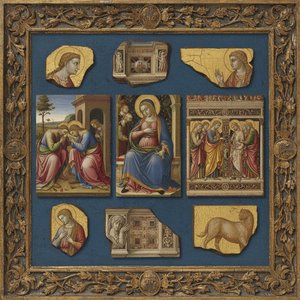
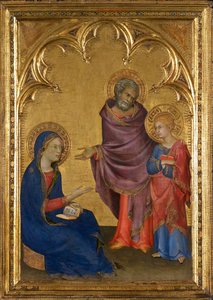
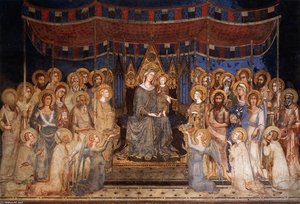
By the late fourteenth century, a remarkable phenomenon began to unfold: the emergence of an “International Gothic” style. This wasn’t tied to a single geographic location but rather flourished across Burgundy, northern Italy, and beyond, spreading through royal courts and the networks of patronage that connected them. The key to its dissemination lay in the portability of certain art forms—illuminated manuscripts, small-scale panel paintings, and tapestries—easily transported by artists moving between courts. Royal marriages played a crucial role; for example, the union of Richard II of England with Anne of Bohemia facilitated the exchange of artistic ideas between Prague and London. The style is characterized by its refined elegance, rich decorative detailing, elongated figures, and a sophisticated use of color. Artists prioritized graceful lines, luxurious materials—gold leaf being particularly prominent—and intricate compositions that often depicted scenes of courtly life alongside religious themes. The emphasis shifted from monumental grandeur to intimate beauty, reflecting the tastes of an increasingly affluent and discerning clientele. This period saw a remarkable consensus among artists and patrons regarding aesthetic preferences, resulting in a reduction of regional variations and a shared visual language across Europe.
Illuminated Manuscripts and the Art of Devotion: A Golden Age of Book Painting
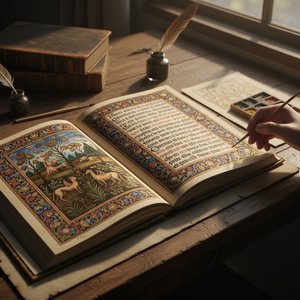
The fourteenth century represents a zenith for illuminated manuscripts. Monasteries continued to be important centers of production, but secular workshops also flourished, catering to the demands of noble courts and wealthy merchants. These manuscripts weren’t merely books; they were objects of extraordinary beauty, meticulously crafted with vibrant pigments, delicate gold leaf, and intricate calligraphy. The *Très Riches Heures du Duc de Berry*, commissioned by Jean, Duke of Berry, stands as a quintessential example—a calendar illuminated with breathtaking scenes of rural life, courtly activities, and religious devotion. The attention to detail is astonishing: realistic depictions of plants and animals, accurate astronomical charts, and portraits of the duke himself. Beyond their aesthetic splendor, these manuscripts served as powerful tools for personal piety. They allowed owners to engage directly with biblical narratives and devotional texts, fostering a more intimate relationship with faith. The figures within these pages are often imbued with a gentle humanity, reflecting a growing emphasis on emotional resonance.
Sculpture in Transition: Naturalism, Emotion, and the Pursuit of Realism
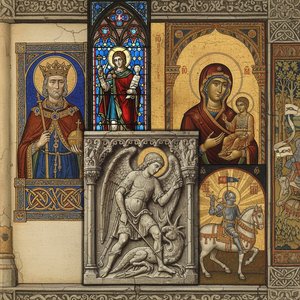
While architecture and painting flourished during this period, sculpture underwent its own significant transformation. The rigid formality of earlier Gothic sculpture gradually gave way to a more naturalistic approach. Artists began to pay closer attention to anatomy, drapery, and facial expressions, striving to convey a greater sense of realism and emotional depth. This pursuit wasn’t simply about replicating the human form; it was about imbuing their creations with life and personality. Sculptors experimented with new techniques for rendering textures and creating dynamic poses. The influence of classical sculpture—rediscovered through archaeological finds—can be detected in certain works, particularly in Italy. However, Gothic sculpture retained its inherent spirituality, often depicting saints and biblical figures as vessels of divine grace. The integration of sculpture into architectural settings remained important, but freestanding statues also gained prominence, allowing for a more intimate engagement with the viewer.
The Proto-Renaissance in Italy: Giotto and the Seeds of Artistic Revolution
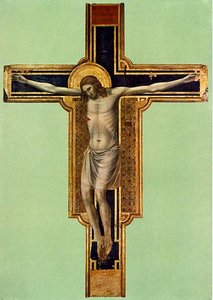
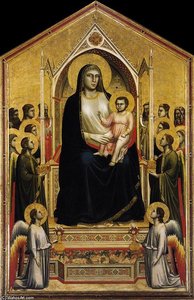
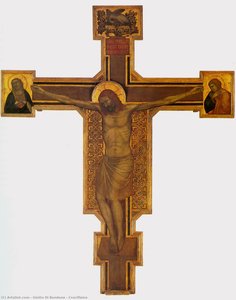
While the International Gothic style dominated much of Northern Europe, Italy embarked on a different trajectory—a path that would ultimately lead to the Renaissance. Giotto di Bondone (c. 1267–1337) is widely regarded as the pivotal figure in this transition. His frescoes in the Scrovegni Chapel in Padua represent a radical departure from the stylized conventions of Byzantine art. Giotto introduced a new level of naturalism, depicting figures with volume, weight, and emotional depth. He pioneered techniques for creating realistic perspective and spatial relationships, imbuing his compositions with a sense of drama and immediacy. His *Bóveda* exemplifies this innovative approach—a stunning display of gold detailing, Byzantine influence, and revolutionary perspective. Giotto’s work wasn't merely about technical skill; it was about conveying human emotion and telling compelling stories. He laid the groundwork for the Renaissance emphasis on realism, individual expression, and classical ideals.
Legacy & Influence: How Fourteenth-Century Art Shaped the Renaissance
The art of the fourteenth century served as a crucial bridge between the medieval world and the burgeoning Renaissance. The innovations in painting, sculpture, and architecture—the pursuit of naturalism, emotional depth, and realistic perspective—laid the foundation for the artistic achievements of the fifteenth and sixteenth centuries. The International Gothic style, with its emphasis on elegance and refined detail, continued to influence artists well into the early Renaissance period. Artists like Michelino da Besozzo, a master illuminator of the Lombard School, exemplify this continuity, blending detailed naturalism with dynastic themes in his exquisite manuscripts. The rediscovery of classical texts and artistic principles during the Renaissance built upon the foundations laid by Giotto and other proto-Renaissance masters. The legacy of fourteenth-century art is not simply a matter of stylistic influence; it’s about a fundamental shift in artistic values—a growing emphasis on humanism, individual expression, and the pursuit of beauty as a reflection of divine order. At ArtsDot, we celebrate this rich heritage by offering high-quality reproductions of masterpieces from this transformative era, allowing you to experience the splendor and innovation of fourteenth-century art in your own home.