A Pioneer’s Dream: Unveiling the Spirit of Early Flight
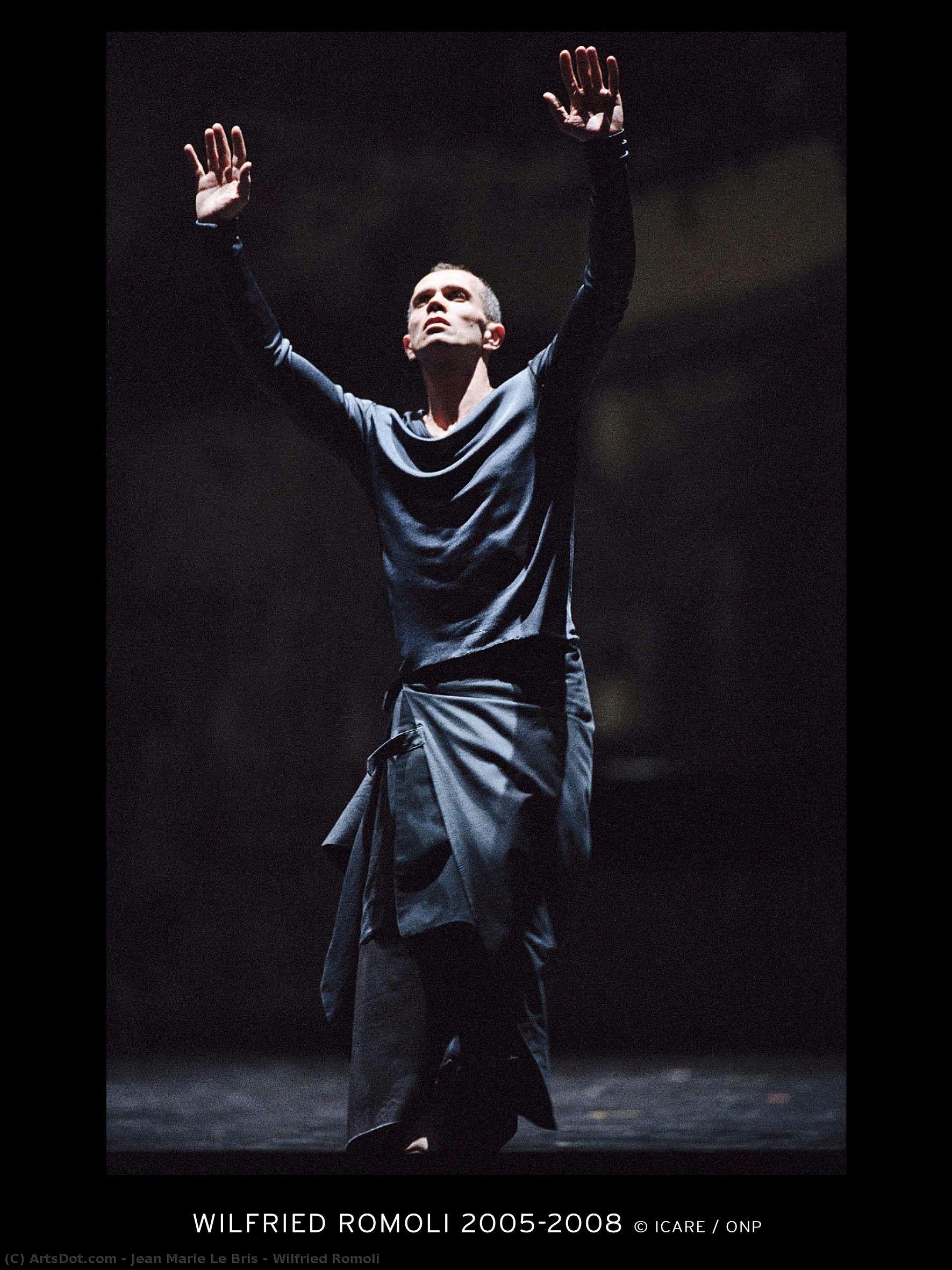
The photograph, titled “Wilfried Romoli” by Jean Marie Le Bris, isn't merely a depiction of a man raising his arms; it’s a potent distillation of ambition, ingenuity, and the audacious pursuit of defying gravity. Captured in stark black and white, the image possesses an arresting immediacy – a frozen moment of intense concentration and nascent triumph. The subject, positioned centrally against a backdrop of muted darkness, embodies the spirit of a man on the cusp of revolutionizing human understanding of flight. The composition itself is deceptively simple: a solitary figure dominating the frame, his posture radiating both determination and vulnerability, hinting at the immense challenges he faced.
Le Bris’s work stands as a remarkable testament to the early days of aviation experimentation. Born in 1817 in Concarneau, Brittany, France, he wasn't simply an inventor; he was a deeply observant individual, captivated by the mechanics of birds and fueled by the romantic visions of Jules Verne. His creation of rudimentary gliders – the “Winged Boat” and later, the “Albatross” – represents a pivotal moment in history, predating many subsequent advancements in powered flight. These early attempts weren’t about immediate success; they were about rigorous investigation, meticulous design, and an unwavering belief in the possibility of human-powered aerial navigation.
The Mechanics of Motion: Deconstructing the Image
A careful examination reveals a masterful use of photographic technique. The dramatic lighting, originating from above and slightly to one side, sculpts the subject’s form with sharp contrasts – highlighting his musculature and emphasizing the powerful gesture of his raised arms. This chiaroscuro effect not only draws attention to the central figure but also imbues the image with a sense of drama and urgency. The background, deliberately dark and indistinct, serves to amplify the impact of the subject, creating an isolating yet compelling portrait.
Beyond the technical aspects, the photograph’s texture is equally noteworthy. The folds in the man's clothing – a simple shirt and draped material – are rendered with subtle detail, suggesting both the practicality of his attire and the inherent roughness of the endeavor. Similarly, the slight sheen on his skin hints at the physical exertion involved in this pioneering activity. The lines of the composition—particularly the diagonal thrust created by his raised arms—speak to a dynamic energy, conveying a sense of forward momentum and aspiration.
Symbolism and Historical Context
More than just a portrait, “Wilfried Romoli” is laden with symbolism. The gesture of the raised arms can be interpreted as a declaration of triumph – a moment of successful experimentation – or perhaps as an expression of supplication, seeking validation for his audacious dream. The stark black and white palette lends the image a timeless quality, stripping away any specific temporal context and elevating it to a universal representation of human ambition. It’s a visual echo of the Romantic era's fascination with nature, exploration, and the pursuit of the sublime.
Le Bris’s work is inextricably linked to the broader history of aviation. His experiments, though ultimately unsuccessful in achieving sustained flight, laid crucial groundwork for later pioneers like Cayley and Stringfellow. The photograph serves as a poignant reminder that innovation often arises from persistent experimentation, even when faced with seemingly insurmountable obstacles. It's a testament to the enduring human desire to conquer the skies.
A Legacy of Innovation
Further research reveals Jean Marie Le Bris’s significant contributions to early aviation. His patented designs for gliders demonstrated an understanding of aerodynamics far ahead of his time, and he even secured photographic documentation of his Albatross glider in 1868 – a rare and invaluable record of this pioneering effort. His story is one of relentless curiosity, unwavering dedication, and the courage to pursue a dream against prevailing skepticism. The image captured by Romoli immortalizes not just a man, but an era of audacious exploration and the birth of a revolutionary technology.