 Preview
 Send
Send Share
Share
 Details

 Download
 Similars
 X-Ray
X-Ray Diaporama
Wilfried Romoli


 Read More
Hand Made Oil Reproduction
Hand-painted oil on canvas in your size and frame, made to order by our artists. ( Buy Print Buy Image)




P118B $10

P118H $10

P118W $10

P438Z $10

P508JH $12

P508YH $12

P805H $10

P805Z $10

P919BZ $10

P919G $10

P919XJ $10

P959ZH $10

P968JZ $12

W106C $8

W218G $10

W218JH $8

W218Y $10

W307PJ $10

W316G $10

W316PJ $8

W316Y $10

W398PJ $8

W4111J $10

W500HY $15

W500JH $15

W692G $12

W849H $8

W940BG $15

W953PJ $8




Pick from our preset sizes that match the artwork's original proportions.

You may enter your own dimensions to fit a specific frame or space. If your selected size does not match the original image's proportions, we will either crop the artwork or extend the painting with additional hand-painted elements. A digital mockup will be sent for your approval before production begins.
Please note that the on-screen preview does not reflect the actual cropping or extension. Only the mockup will accurately show the final composition.
While custom sizes are available, we recommend selecting a dimension from the predefined list to preserve the original proportions.
After order, ArtsDot.com team will email client for instructions and provide a mockup preview
Worldwide Delivery () in 3/4 weeks instead of standard 5 weeks. (16 August). No compromise on quality.

Free Worldwide Express Shipping

High-Quality Linen Canvas

Full Shipping Insurance

Customs Tax Refund Guarantee

True Color Matching Guarantee

60-Day Return Policy (Defects Only)

100% Money-Back Guarantee

Bulk Discount Offer
 Glass option is only available in size under 110 CM

Wilfried Romoli
Reproduction Medium
Reproduction Size
-


Total Price
$ 263
Artwork Description
A Pioneer’s Dream: Unveiling the Spirit of Early Flight
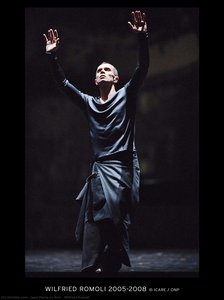
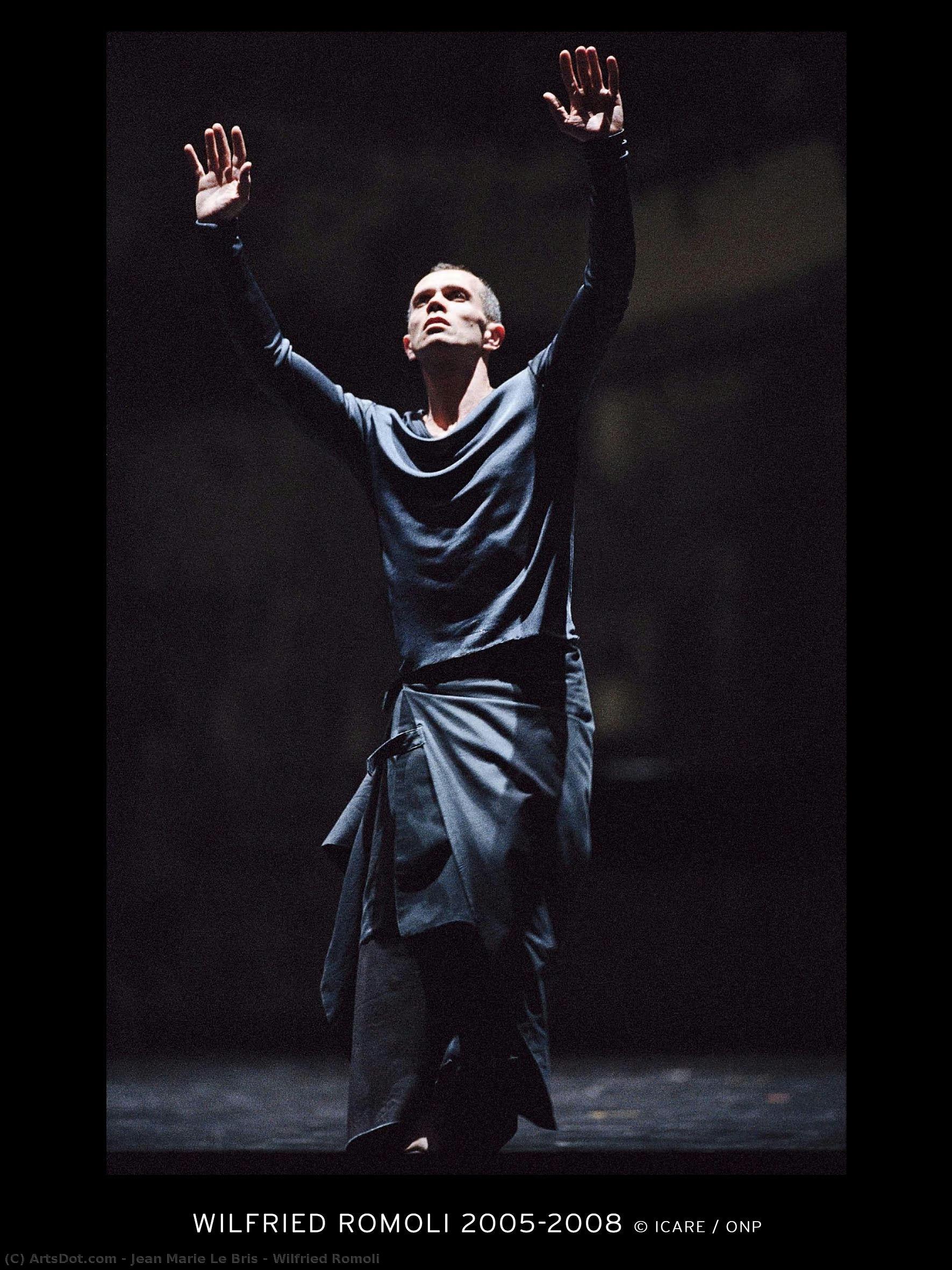
The photograph, titled “Wilfried Romoli” by Jean Marie Le Bris, isn't merely a depiction of a man raising his arms; it’s a potent distillation of ambition, ingenuity, and the audacious pursuit of defying gravity. Captured in stark black and white, the image possesses an arresting immediacy – a frozen moment of intense concentration and nascent triumph. The subject, positioned centrally against a backdrop of muted darkness, embodies the spirit of a man on the cusp of revolutionizing human understanding of flight. The composition itself is deceptively simple: a solitary figure dominating the frame, his posture radiating both determination and vulnerability, hinting at the immense challenges he faced.
Le Bris’s work stands as a remarkable testament to the early days of aviation experimentation. Born in 1817 in Concarneau, Brittany, France, he wasn't simply an inventor; he was a deeply observant individual, captivated by the mechanics of birds and fueled by the romantic visions of Jules Verne. His creation of rudimentary gliders – the “Winged Boat” and later, the “Albatross” – represents a pivotal moment in history, predating many subsequent advancements in powered flight. These early attempts weren’t about immediate success; they were about rigorous investigation, meticulous design, and an unwavering belief in the possibility of human-powered aerial navigation.
The Mechanics of Motion: Deconstructing the Image
A careful examination reveals a masterful use of photographic technique. The dramatic lighting, originating from above and slightly to one side, sculpts the subject’s form with sharp contrasts – highlighting his musculature and emphasizing the powerful gesture of his raised arms. This chiaroscuro effect not only draws attention to the central figure but also imbues the image with a sense of drama and urgency. The background, deliberately dark and indistinct, serves to amplify the impact of the subject, creating an isolating yet compelling portrait.
Beyond the technical aspects, the photograph’s texture is equally noteworthy. The folds in the man's clothing – a simple shirt and draped material – are rendered with subtle detail, suggesting both the practicality of his attire and the inherent roughness of the endeavor. Similarly, the slight sheen on his skin hints at the physical exertion involved in this pioneering activity. The lines of the composition—particularly the diagonal thrust created by his raised arms—speak to a dynamic energy, conveying a sense of forward momentum and aspiration.
Symbolism and Historical Context
More than just a portrait, “Wilfried Romoli” is laden with symbolism. The gesture of the raised arms can be interpreted as a declaration of triumph – a moment of successful experimentation – or perhaps as an expression of supplication, seeking validation for his audacious dream. The stark black and white palette lends the image a timeless quality, stripping away any specific temporal context and elevating it to a universal representation of human ambition. It’s a visual echo of the Romantic era's fascination with nature, exploration, and the pursuit of the sublime.
Le Bris’s work is inextricably linked to the broader history of aviation. His experiments, though ultimately unsuccessful in achieving sustained flight, laid crucial groundwork for later pioneers like Cayley and Stringfellow. The photograph serves as a poignant reminder that innovation often arises from persistent experimentation, even when faced with seemingly insurmountable obstacles. It's a testament to the enduring human desire to conquer the skies.
A Legacy of Innovation
Further research reveals Jean Marie Le Bris’s significant contributions to early aviation. His patented designs for gliders demonstrated an understanding of aerodynamics far ahead of his time, and he even secured photographic documentation of his Albatross glider in 1868 – a rare and invaluable record of this pioneering effort. His story is one of relentless curiosity, unwavering dedication, and the courage to pursue a dream against prevailing skepticism. The image captured by Romoli immortalizes not just a man, but an era of audacious exploration and the birth of a revolutionary technology.
Related Artworks


Artist Biography
Jean Marie Le Bris: Pioneer of Breton Aviation
Jean Marie Le Bris (1817-1872), affectionately known as Yann Vari Ar Briz in Breton, stands as a remarkable figure in the annals of aeronautical history – specifically, the nascent stages of French aviation. Born in Concarneau, Brittany, he wasn’t merely an inventor; he was a passionate dreamer who dared to defy gravity and transform theoretical concepts into tangible machines. His legacy resides not just in constructing rudimentary gliders but in embodying the spirit of experimentation and unwavering belief in human ingenuity during a period when powered flight remained firmly beyond reach.- Early Life & Education: Le Bris’s formative years were steeped in Breton culture, fostering an appreciation for craftsmanship and observation of natural phenomena – qualities that would undoubtedly inform his later endeavors.
- The Birth of Aviation Dreams: Driven by a fascination with Jules Verne's novels and fueled by the burgeoning excitement surrounding aeronautical advancements elsewhere in Europe, Le Bris began to contemplate the possibility of achieving sustained flight. This ambition wasn’t simply whimsical; it stemmed from a deep understanding of aerodynamics and mechanics.
Construction of Early Gliders – A Breton Innovation
Le Bris's groundbreaking contribution to aviation materialized in his meticulous construction of two glider aircraft—remarkable achievements considering the technological limitations of the time. These weren’t mere toys; they were painstakingly crafted machines designed according to principles gleaned from scientific observation and practical experimentation. His first glider, completed in late 1856, achieved a notable flight duration, marking him as one of the earliest pioneers of powered flight.Influences & Theoretical Foundations
Le Bris’s inventive spirit wasn't born in isolation. He drew inspiration from prominent thinkers and inventors of his era, including Jules Verne, whose imaginative tales captivated the public imagination and spurred scientific curiosity. Furthermore, he diligently studied the aerodynamic theories championed by George Cayley—considered the “father of aeronautics”—recognizing the importance of harnessing airflow to generate lift.Achievements & Recognition
Though Le Bris’s glider flights garnered limited publicity during his lifetime, they nonetheless cemented his place in aviation history. His unwavering dedication to pursuing audacious ideas—coupled with his demonstrable success in overcoming engineering challenges—served as an inspiration for future generations of aeronautical innovators. While he didn't achieve the monumental breakthroughs of later aviators like Otto Lilienthal or Wilbur Wright, Le Bris’s pioneering efforts undeniably propelled the field forward.Historical Significance & Legacy
Jean Marie Le Bris represents more than just an individual inventor; he embodies the spirit of scientific inquiry and audacious ambition that characterized the Victorian age. His work foreshadowed the transformative potential of flight, demonstrating that even seemingly insurmountable obstacles could be overcome through perseverance and intellectual rigor. Today, Le Bris is remembered as a pivotal figure in the history of aviation—a Breton visionary who dared to reach for the skies and forever altered our understanding of human capability.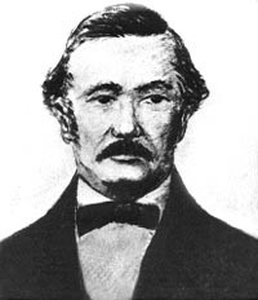
jean marie le bris
1817 - 1872 , France
Quick Facts
- Artistic Movement Or Style: Early Aviation
- Date Of Birth: 1817
- Date Of Death: 1872
- Full Name: Jean Marie Le Bris
- Nationality: French
- Notable Artworks: ['Glider Design']
- Place Of Birth: Concarnneau, France
Related Articles
Vigée Le Brun: Portraiture, Patronage & Feminine Identity in 18th-Century France
Explore the life & art of Louise Élisabeth Vigée Le Brun, Marie Antoinette’s renowned portraitist. Discover her Rococo style, self-portraits, and influence on 18th-century French painting. A deep dive into patronage & feminine identity.

Jacob Henricus Maris: A Master of Dutch Atmospheric Realism & the Intimate Landscape
Explore the captivating world of Jacob Henricus Maris, a leading figure of the Dutch Hague School. Discover his atmospheric landscapes, signature brushstrokes & lasting influence on 19th-century art. Learn more at ArtsDot.

Henri Le Sidaner: Evoking Atmosphere & Intimacy in Post-Impressionist Landscapes
Discover the evocative world of Henri Le Sidaner, a master of Intimist painting. Explore his tranquil landscapes & atmospheric interiors – a celebration of light and intimacy. Learn about his life, style, and lasting legacy.

Mary Vaux Walcott: Botanical Precision & Artistic Vision in American Conservation
Discover the exquisite botanical watercolors of Mary Vaux Walcott, celebrated as the 'Audubon of Botany.' Explore her life, art, and lasting impact on American conservation through detailed illustrations & Smithsonian contributions.
Charles Le Brun: Master of French Baroque Classicism & His Enduring Legacy
Explore the life & art of Charles Le Brun, master of French Baroque Classicism. Discover his royal commissions, influence on Versailles, and enduring legacy through detailed analysis & stunning artworks.