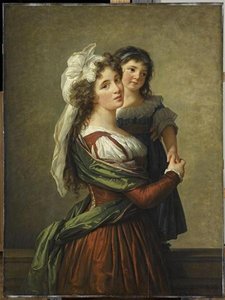
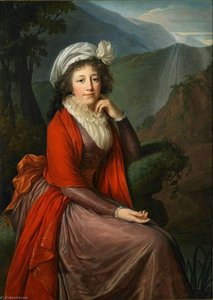
The Rise of Vigée Le Brun: Early Life & Artistic Training
 Wikipedia: Élisabeth Vigée Le Brun
Élisabeth Louise Vigée Le Brun (French: [elizabɛt lwiz viʒe lə bʁœ̃]; née Vigée; 16 April 1755 – 30 March 1842), also known as Louise Élisabeth Vigée Le Brun or simply as Madame Le Brun, was a French painter who mostly specialized in portrait paintin...
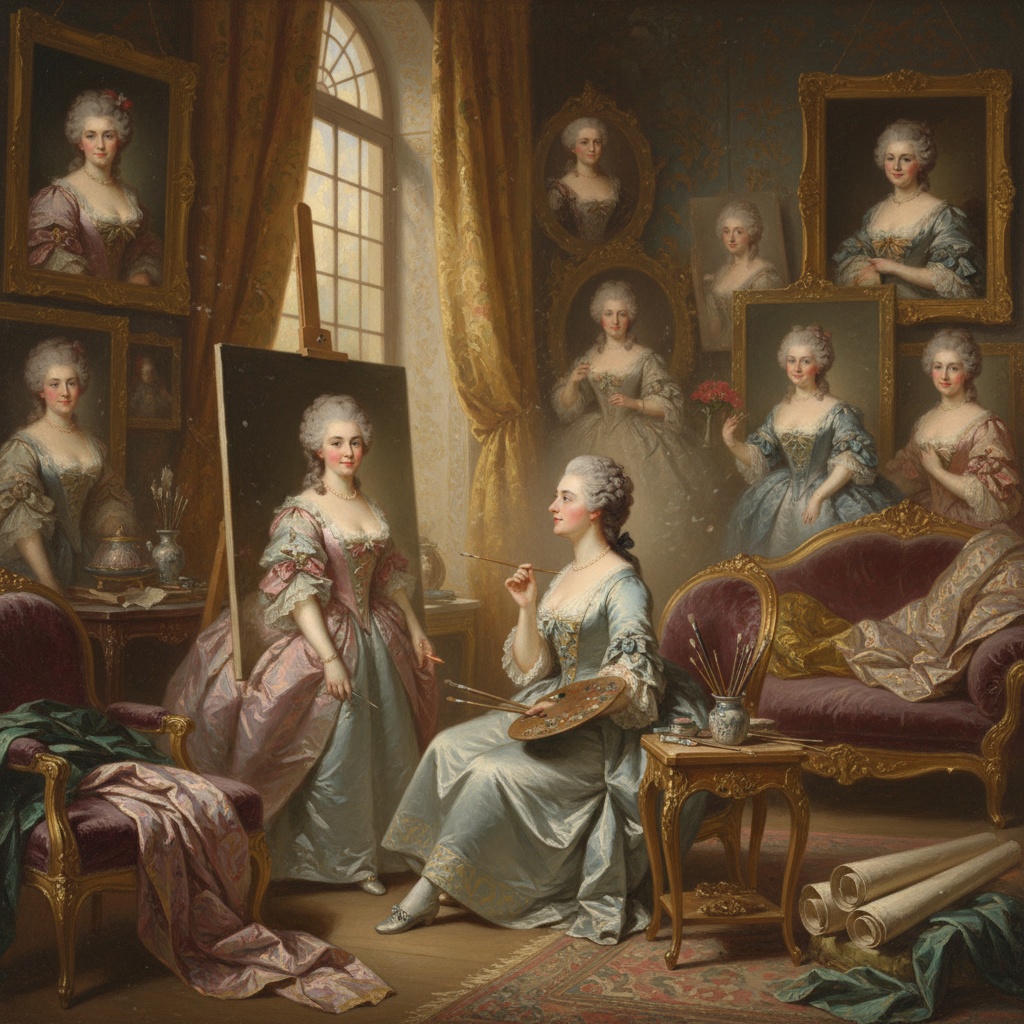
Élisabeth Louise Vigée Le Brun’s story is one woven with threads of exceptional talent, astute self-promotion, and a remarkable ability to capture not merely likeness, but the very *essence* of her sitters. Born in Paris in 1755, she entered a world already steeped in artistic tradition; her father, Louis Vigée, was a portraitist himself, though one whose ambitions perhaps found fuller expression through his daughter. From a young age, Élisabeth displayed an innate gift for drawing, sketching with a precocious skill that delighted her father and spurred him to provide early lessons. This initial encouragement, however, contrasted sharply with her mother’s more pragmatic views, who seemingly perceived little promise in her daughter's artistic inclinations. Despite this familial discord, Vigée Le Brun’s passion persevered, fueled by visits to the Louvre where she meticulously copied the works of masters like Rubens and Van Dyck – a formative education that instilled within her an appreciation for both technical brilliance and psychological depth.
Her early training wasn't confined to formal instruction. She benefited from the guidance of several established artists, including Gabriel François Doyen, whose influence can be detected in some of her earlier works. However, it was a self-directed study—a relentless pursuit of observation and refinement—that truly shaped her burgeoning style. She absorbed the prevailing aesthetic currents, yet already demonstrated a nascent desire to move beyond mere imitation, seeking instead to imbue her portraits with a unique sense of personality and grace.
Marie Antoinette's Portraitist: Navigating Royal Patronage
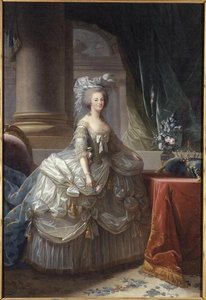 Marie Antoinette d'Autriche, reine de France (1755 1793), en robe à paniers vers 1785
Admire Marie Antoinette in this stunning Rococo portrait by Louise Elisabeth Vigée Le Brun. Explore its opulent details, muted colors & elegant style – a masterpiece of 18th-century art.
The turning point in Vigée Le Brun’s career arrived in 1778 when she was summoned to Versailles. Word had reached Queen Marie Antoinette of the young artist’s growing reputation, and the Queen herself requested a portrait. This commission wasn't merely an opportunity for artistic recognition; it was entry into a world of immense power, privilege, and scrutiny. The resulting portrait, *Marie Antoinette en robe à paniers*, is a testament to Vigée Le Brun’s skill in portraying both majesty and vulnerability. The Queen stands resplendent in opulent silks and towering coiffure, yet her gaze—slightly averted, subtly melancholic—hints at the burdens of her position.
Securing royal patronage was a delicate dance. Vigée Le Brun understood that pleasing Marie Antoinette meant not only technical proficiency but also an ability to present the Queen in a manner that reinforced her image – one of regal authority and feminine charm. She became adept at subtly flattering her sitter, softening harsh lines and emphasizing her most appealing features. This wasn’t simply about creating beautiful images; it was about navigating the complex politics of the court, where appearances were paramount and artistic representation served as a powerful tool for maintaining power. The Queen's enthusiastic response—ordering copies for other European monarchs—cemented Vigée Le Brun’s position as her official portraitist, launching her into an unprecedented era of success.
Rococo Refinement & Neoclassical Influences in Her Style
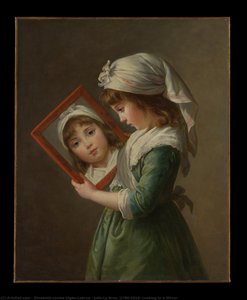
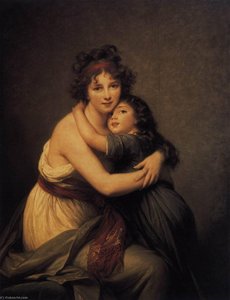 Self Portrait with Her Daughter, Julie
Experience 'Self Portrait with Her Daughter,' a stunning Rococo-Neoclassical masterpiece by Vigée Le Brun. Admire its timeless elegance & maternal love – perfect for art collectors.
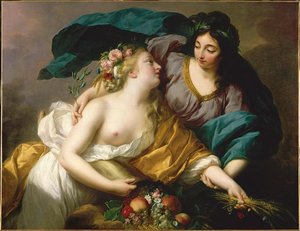
Vigée Le Brun’s artistic style is often described as a bridge between the waning Rococo and the emerging Neoclassical movements. While deeply rooted in the Rococo tradition—characterized by its pastel palettes, ornate details, and emphasis on elegance and frivolity—her work also displays elements of a growing classical sensibility. Her subject matter frequently embraced the lightheartedness and decorative flourishes associated with Rococo, yet her technique evolved towards a greater clarity of form and a more restrained emotionalism.
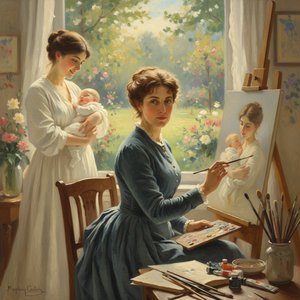
Consider *Self-Portrait with Her Daughter, Julie*. The painting exemplifies this delicate balance. The soft lighting, flowing fabrics, and intimate portrayal of maternal affection are hallmarks of the Rococo aesthetic. However, the composition is less overtly theatrical than many of her contemporaries, and there’s a sense of psychological realism that foreshadows the Neoclassical emphasis on naturalism. She masterfully employed *chiaroscuro* – the dramatic interplay of light and shadow—to sculpt form and create depth, adding a subtle gravitas to her portraits. This ability to blend stylistic elements allowed her to appeal to a broad audience while maintaining a distinctive artistic voice.
Self-Portraiture as Self-Fashioning: Identity and Agency
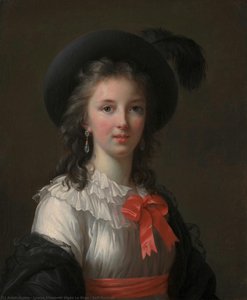
Throughout her career, Vigée Le Brun created an extraordinary number of self-portraits—more than thirty are known today. These weren’t merely exercises in technical skill; they were acts of self-fashioning, carefully constructed representations designed to project a specific image to the world. In a society where female artists often struggled for recognition, self-portraiture became a powerful tool for asserting her professional identity and challenging conventional expectations.
Self-Portrait in a Straw Hat, painted in 1789 on the eve of the French Revolution, is particularly revealing. She presents herself as an artist—brush in hand, palette at the ready—but also as a woman of intelligence and refinement. The direct gaze, confident pose, and elegant attire convey a sense of self-assurance that was rare for female artists of the period. These portraits weren’t simply about *looking* like an artist; they were about *being* seen as one – a deliberate attempt to claim her place within the predominantly male art world.
Beyond the Court: Exile, Resilience, and Lasting Legacy
The outbreak of the French Revolution in 1789 irrevocably altered Vigée Le Brun’s life. Her close association with Marie Antoinette made her a target of suspicion and hostility, forcing her to flee France in disguise. She embarked on a decade-long exile, traveling throughout Italy, Austria, and Russia, continuing to paint portraits of European aristocracy. This period was marked by both hardship and opportunity. While she missed the security and prestige of her former life at Versailles, it also allowed her to broaden her artistic horizons and develop new connections.
Despite the upheaval, Vigée Le Brun remained remarkably resilient. She adapted to changing circumstances, cultivating a diverse clientele and maintaining her reputation as one of Europe’s leading portraitists. Her autobiography, *Souvenirs*, published in three volumes towards the end of her life, provides invaluable insights into her artistic process, personal relationships, and the social world of 18th-century France. Today, Vigée Le Brun is celebrated not only for her technical brilliance but also for her ability to capture the inner lives of her sitters—a legacy that continues to inspire artists and art lovers alike. Explore her masterpieces at ArtsDot.com, where you can experience the timeless elegance and enduring power of her work.