Jean-Paul Laurens (1838-1921) was a leading French Academic painter known for dramatic historical & religious scenes, often conveying republican ideals. A master of detail and composition, he revitalized history painting & decorated iconic Parisian l
Explore the Chrysler Museum of Art's stunning collection spanning millennia – from Tiffany glass to European masters and American icons! Free admission & engaging programs await visitors in Norfolk, Virginia.
A Portrait of Decline: Jean-Paul Laurens’ “The Late Empire: Honorius”
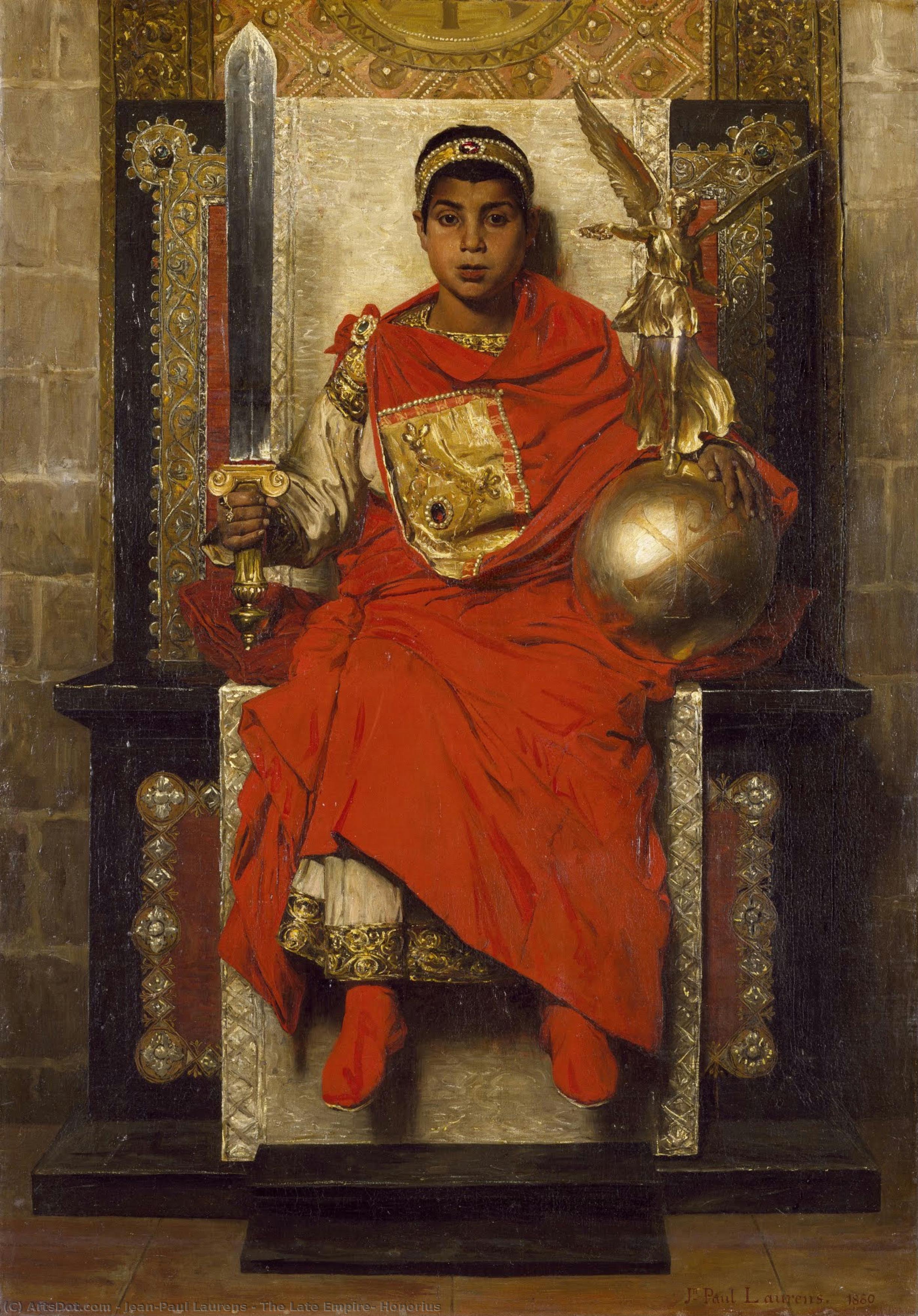
Jean-Paul Laurens's "The Late Empire: Honorius" isn’t merely a depiction of an emperor; it’s a carefully constructed meditation on the crumbling edifice of Roman power and, by extension, the moral anxieties of its time. Painted around 1905, this monumental canvas embodies the very spirit of Academic history painting—a genre dedicated to elevating historical narratives through meticulous observation and idealized representation. Laurens, deeply influenced by republican ideals and a profound respect for classical scholarship, sought to capture not just what happened but *why* it mattered, imbuing his artwork with layers of symbolic significance that resonate powerfully even today.
The Subject Matter: Innocence Amidst Ruin
At its core, the painting portrays Honorius Flavius, the boy emperor who ascended to the throne at the tender age of eleven—a figure representing the vulnerability inherent in leadership and the devastating consequences of unchecked ambition. Laurens deliberately presents Honorius as a child, his feet barely touching the floor, emphasizing his helplessness against the overwhelming forces of history. This compositional choice isn’t accidental; it serves as a poignant emblem of Rome's predicament – a glorious empire beset by internal divisions and external threats, destined to succumb to inevitable decline. The emperor’s regal attire—a scarlet robe adorned with gold trim—contrasts sharply with his diminutive stature, highlighting the disparity between perceived grandeur and actual reality.
Style and Technique: Academic Precision
Laurens adhered rigorously to the conventions of Academic painting, prioritizing anatomical accuracy and perspectival realism above all else. The artist’s masterful brushwork meticulously renders the textures of fabric and metal, capturing the opulent materiality of imperial regalia with breathtaking detail. Notice the careful layering of pigments—a technique characteristic of the era—that creates a luminous surface and imbues the scene with an ethereal quality. Laurens's unwavering commitment to classical ideals is evident in his meticulous attention to proportion and anatomical correctness, mirroring the artistic sensibilities of Michelangelo and Raphael.
Historical Context: Echoes of Moral Decay
“The Late Empire: Honorius” emerged during a period marked by intense debate regarding the legacy of Rome—a discussion fueled by anxieties about societal corruption and the erosion of traditional values. Laurens’s depiction aligns perfectly with this intellectual climate, reflecting the prevailing belief that history served as a moral parable, illustrating the cyclical nature of civilizations and reminding viewers of the importance of virtue and responsibility. The inclusion of swords symbolizes strength and defense—a futile effort to ward off the inexorable march of time, mirroring Rome's desperate attempts to preserve its dominion amidst encroaching barbarism.
Symbolic Resonance: A Timeless Meditation
Beyond its formal qualities, “The Late Empire: Honorius” speaks volumes about the human condition. The boy emperor embodies innocence and vulnerability—qualities tragically absent in those who wield power. Laurens’s masterful portrayal compels us to confront uncomfortable truths about leadership, ambition, and the inevitability of decay. It's a painting that lingers in the mind long after viewing, prompting contemplation on the enduring relevance of classical wisdom and the importance of safeguarding moral integrity—themes that continue to resonate powerfully across generations.