 Preview
 Send
Send Share
Share
 Details

 Download
 Similars
 X-Ray
X-Ray Diaporama
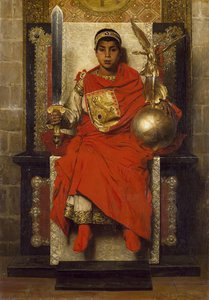
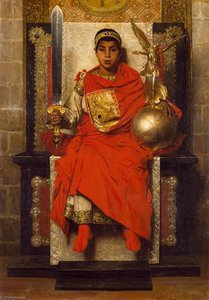
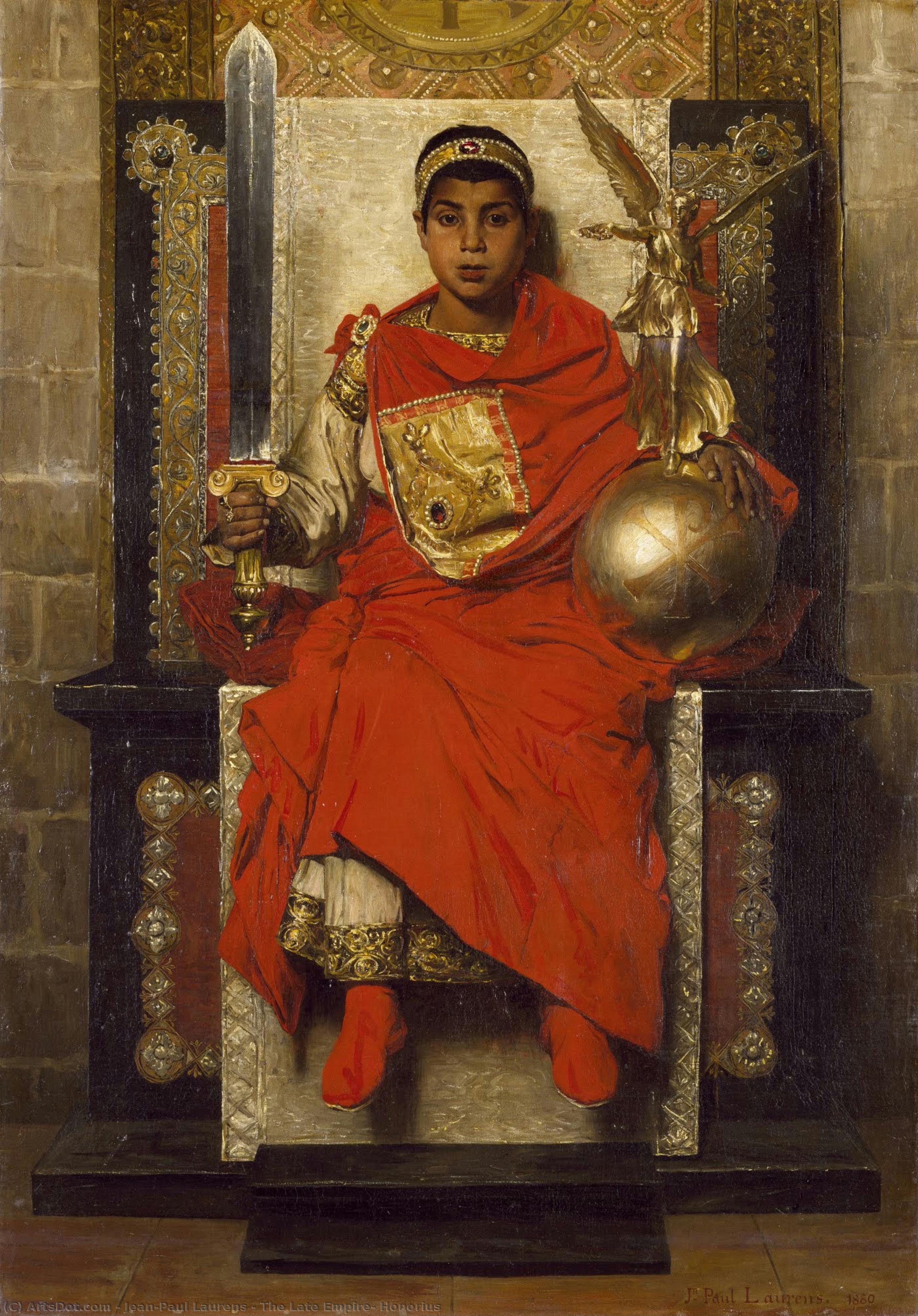
The Late Empire: Honorius
 Acrylic On Canvas
- WallArt
- Academic History Painting
 153.0 x 108.0 cm
 Chrysler Museum of Art
 Read More
Hand Made Oil Reproduction
Hand-painted oil on canvas in your size and frame, made to order by our artists. ( Buy Print Buy Image)




P118B $10

P118H $10

P118W $10

P438Z $10

P508JH $12

P508YH $12

P805H $10

P805Z $10

P919BZ $10

P919G $10

P919XJ $10

P959ZH $10

P968JZ $12

W106C $8

W218G $10

W218JH $8

W218Y $10

W307PJ $10

W316G $10

W316PJ $8

W316Y $10

W398PJ $8

W4111J $10

W500HY $15

W500JH $15

W692G $12

W849H $8

W940BG $15

W953PJ $8




Pick from our preset sizes that match the artwork's original proportions.

You may enter your own dimensions to fit a specific frame or space. If your selected size does not match the original image's proportions, we will either crop the artwork or extend the painting with additional hand-painted elements. A digital mockup will be sent for your approval before production begins.
Please note that the on-screen preview does not reflect the actual cropping or extension. Only the mockup will accurately show the final composition.
While custom sizes are available, we recommend selecting a dimension from the predefined list to preserve the original proportions.
After order, ArtsDot.com team will email client for instructions and provide a mockup preview
Worldwide Delivery () in 3/4 weeks instead of standard 5 weeks. (17 August). No compromise on quality.

Free Worldwide Express Shipping

High-Quality Linen Canvas

Full Shipping Insurance

Customs Tax Refund Guarantee

True Color Matching Guarantee

60-Day Return Policy (Defects Only)

100% Money-Back Guarantee

Bulk Discount Offer
 Glass option is only available in size under 110 CM

The Late Empire: Honorius
Reproduction Medium
Reproduction Size
-


Total Price
$ 263
Artwork Description
A Portrait of Decline: Jean-Paul Laurens’ “The Late Empire: Honorius”
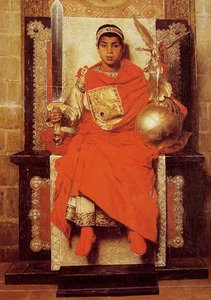
Jean-Paul Laurens's "The Late Empire: Honorius" isn’t merely a depiction of an emperor; it’s a carefully constructed meditation on the crumbling edifice of Roman power and, by extension, the moral anxieties of its time. Painted around 1905, this monumental canvas embodies the very spirit of Academic history painting—a genre dedicated to elevating historical narratives through meticulous observation and idealized representation. Laurens, deeply influenced by republican ideals and a profound respect for classical scholarship, sought to capture not just what happened but *why* it mattered, imbuing his artwork with layers of symbolic significance that resonate powerfully even today.The Subject Matter: Innocence Amidst Ruin
At its core, the painting portrays Honorius Flavius, the boy emperor who ascended to the throne at the tender age of eleven—a figure representing the vulnerability inherent in leadership and the devastating consequences of unchecked ambition. Laurens deliberately presents Honorius as a child, his feet barely touching the floor, emphasizing his helplessness against the overwhelming forces of history. This compositional choice isn’t accidental; it serves as a poignant emblem of Rome's predicament – a glorious empire beset by internal divisions and external threats, destined to succumb to inevitable decline. The emperor’s regal attire—a scarlet robe adorned with gold trim—contrasts sharply with his diminutive stature, highlighting the disparity between perceived grandeur and actual reality.Style and Technique: Academic Precision
Laurens adhered rigorously to the conventions of Academic painting, prioritizing anatomical accuracy and perspectival realism above all else. The artist’s masterful brushwork meticulously renders the textures of fabric and metal, capturing the opulent materiality of imperial regalia with breathtaking detail. Notice the careful layering of pigments—a technique characteristic of the era—that creates a luminous surface and imbues the scene with an ethereal quality. Laurens's unwavering commitment to classical ideals is evident in his meticulous attention to proportion and anatomical correctness, mirroring the artistic sensibilities of Michelangelo and Raphael.Historical Context: Echoes of Moral Decay
“The Late Empire: Honorius” emerged during a period marked by intense debate regarding the legacy of Rome—a discussion fueled by anxieties about societal corruption and the erosion of traditional values. Laurens’s depiction aligns perfectly with this intellectual climate, reflecting the prevailing belief that history served as a moral parable, illustrating the cyclical nature of civilizations and reminding viewers of the importance of virtue and responsibility. The inclusion of swords symbolizes strength and defense—a futile effort to ward off the inexorable march of time, mirroring Rome's desperate attempts to preserve its dominion amidst encroaching barbarism.Symbolic Resonance: A Timeless Meditation
Beyond its formal qualities, “The Late Empire: Honorius” speaks volumes about the human condition. The boy emperor embodies innocence and vulnerability—qualities tragically absent in those who wield power. Laurens’s masterful portrayal compels us to confront uncomfortable truths about leadership, ambition, and the inevitability of decay. It's a painting that lingers in the mind long after viewing, prompting contemplation on the enduring relevance of classical wisdom and the importance of safeguarding moral integrity—themes that continue to resonate powerfully across generations.Related Artworks
Artist Biography
The Grandeur of History: The Life and Legacy of Jean-Paul Laurens
Jean-Paul Laurens (1838–1921) stands as a monumental figure in the final flowering of French Academic art, embodying both its grandeur and its inherent contradictions. Born in Fourques, France, he emerged from the prestigious tutelage of Léon Cogniet and Alexandre Bida, inheriting a staunch republican spirit tempered by an unwavering devotion to artistic tradition. Laurens’s worldview was profoundly shaped by his opposition to monarchical authority and clerical dogma—themes that consistently permeated his oeuvre, serving as conduits for a fervent belief in social justice and liberty. His formative years instilled within him a meticulous attention to detail and a profound understanding of anatomy and perspective, skills honed through rigorous self-discipline and fueled by an intellectual curiosity that spanned classical literature and philosophy.
The artistry of Laurens was never merely about visual representation; it was an intellectual endeavor designed to elevate historical moments into moral narratives. His stylistic evolution mirrored the broader currents of Romanticism, yet he resolutely championed a disciplined approach to technique, prioritizing realism alongside theatrical grandeur. This unique synthesis allowed him to breathe life into the past, transforming cold historical records into visceral, emotional experiences for his audience. Whether through the somber shadows of a tragic execution or the luminous sanctity of a religious icon, Laurens utilized light and composition to guide the viewer toward a deeper contemplation of human destiny and political consequence.
Mastery of the Canvas: Themes and Technical Brilliance
Laurens's prolific output encompassed monumental canvases that defined the aesthetic of the Third Republic. His ability to navigate between the sacred and the secular allowed him to command the most prestigious spaces in France. One of his most celebrated achievements includes his religious works, such as the depiction of Saint Genevieve in the apse of the Panthéon, where he utilized a majestic scale to inspire awe. Simultaneously, he was a master of the historical tragedy, capturing moments of profound political upheaval with a realism that felt both immediate and timeless.
His repertoire of significant works demonstrates a remarkable range of emotional depth:
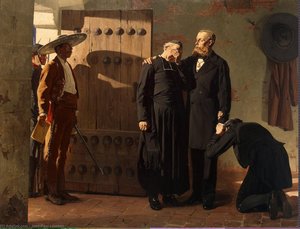
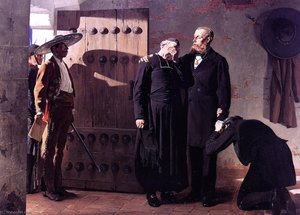
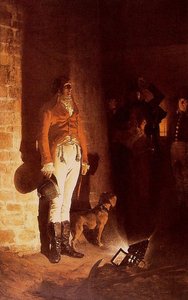
- Emperor Maximilian of Mexico before the Execution: A highly detailed, realistic historical painting that captures a poignant moment of imperial tragedy, showcasing his ability to render intense psychological states.
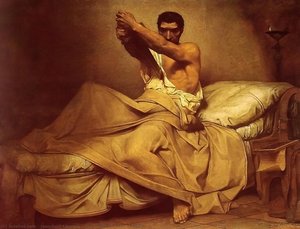
- The Death of the Duc d'Enghien: A powerful composition that utilizes dramatic lighting and masterful technique to convey the gravity of this pivotal historical event.
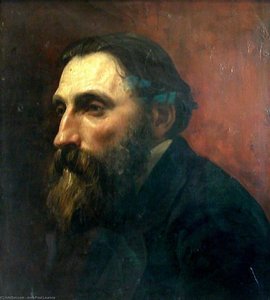
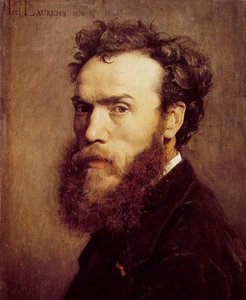
- Autoportrait: A striking self-portrait that serves as a testament to his mastery of the human form and his commitment to the republican ideals that defined his identity.
Beyond large-scale oil paintings, Laurens demonstrated an extraordinary capacity for storytelling through his illustrations. His work for Augustin Thierry's Récrits des Temps Mérovingiens showcased a refined ability to translate historical text into evocative imagery, proving that his talent for detail was as effective in the intimate medium of illustration as it was on the massive canvases of Parisian halls.
A National Icon and Historical Significance
The significance of Jean-Paul Laurens extends far beyond the borders of the art gallery. As a commissioned artist for the Third Republic, his work adorned iconic Parisian landmarks such as City Hall and the Odéon Theater, cementing his reputation as a national artist committed to civic duty. He did not merely paint history; he helped construct the visual identity of a nation seeking to define itself through the values of liberty and republicanism.
His legacy remains etched in the annals of art history as a bridge between the rigid traditions of the Academy and the burgeoning realism of the modern era. By infusing classical techniques with a contemporary political consciousness, Laurens ensured that his paintings would serve as more than just decorations; they became enduring monuments to the human struggle for justice. Today, his works continue to captivate collectors and historians alike, offering a window into a transformative period of French history through the eyes of a master who saw the profound drama in every brushstroke.
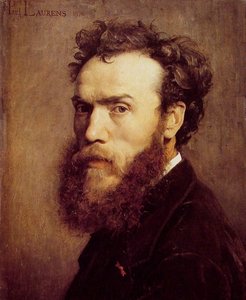
Jean-Paul Laurens
1838 - 1921 , France
Quick Facts
- Artistic Movement Or Style: French Academic Art
- Artists Or Movements Influenced By This Artist: ['Romanticism']
- Artists Who Influenced This Artist:
- Léon Cogniet
- Alexandre Bida
- Date Of Birth: Fourques, France (1838)
- Date Of Death: 1921
- Full Name: Jean-Paul Laurens
- Nationality: French
- Notable Artworks:
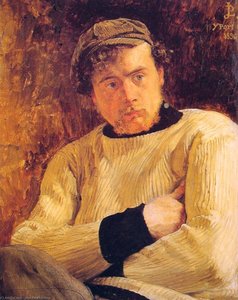
- Portrait of JeanPierre Laurens
- Autoportrait
- Emperor Maximilian of Mexico before the Execution
- Place Of Birth: Fourques
Related Articles
Paul Klee's Masterpieces: Explore 25 Iconic Paintings & Prints | ArtsDot
Journey through Paul Klee's 25 most iconic paintings & prints. Explore his abstract style, Bauhaus influence, and vibrant color palettes. Find museum-quality art reproductions & decor ideas at ArtsDot.com. Discover all masterpieces online.

Cézanne's Masterpieces: 25 Iconic Artworks to Transform Your Space
Journey through 25 iconic artworks by Paul Cézanne – a master of Impressionism and Post-Impressionism. Explore his landscapes, still lifes, and the stories behind these timeless masterpieces. Discover museum-quality reproductions & curated decor at ArtsDot.com.
Paul Klee: A Poetics of Form and Color – Exploring the Inner Landscape of a Modern Master
Explore the captivating world of Paul Klee! Discover his innovative art, Bauhaus influence, & unique symbolic language. Expert analysis & high-quality reproductions at ArtsDot.
Paul César Helleu: Capturing Belle Époque Elegance & Artistic Innovation
Explore the captivating world of Paul César Helleu, master portraitist of the Belle Époque. Discover his innovative techniques, iconic works like 'Portrait of Margaret Kelly,' and investment potential with ArtsDot.
Jean-Baptiste Debret: Witnessing Brazil’s Emergence Through Art & Identity
Explore the captivating art of Jean-Baptiste Debret, a key witness to Brazil’s imperial era. Discover his iconic portraits, historical scenes & insightful depictions of Brazilian life. Learn about his legacy and find museum-quality reproductions at ArtsDot.